Books
about Stanley L. Jaki
Obituaries
•
Biographies
•
Reviews
•
Essays
•
Articles
•
Books
•
Quotes
•
Pictures
•
Home Page
2026 — Paul Haffner / Joseph Laracy (eds.) — Stanley Jaki Foundation International Congress 2024
2025 — Bognár Gergely, Sárai-Szabó Kelemen (eds.) A tudomány megváltója konferencia tanulmánykötete
— The Proceedings of the Savior of Science Conference
2025 — Bognár Gergely, Sárai-Szabó Kelemen (eds.) — A tudomány látóhatára
— Jáki L. Szaniszló OSB születésének 100. évfordulójára rendezett emlékkonferencia kötete
2024 — Stanley Jaki — La materia di una mente: Un’autobiografia intellettuale
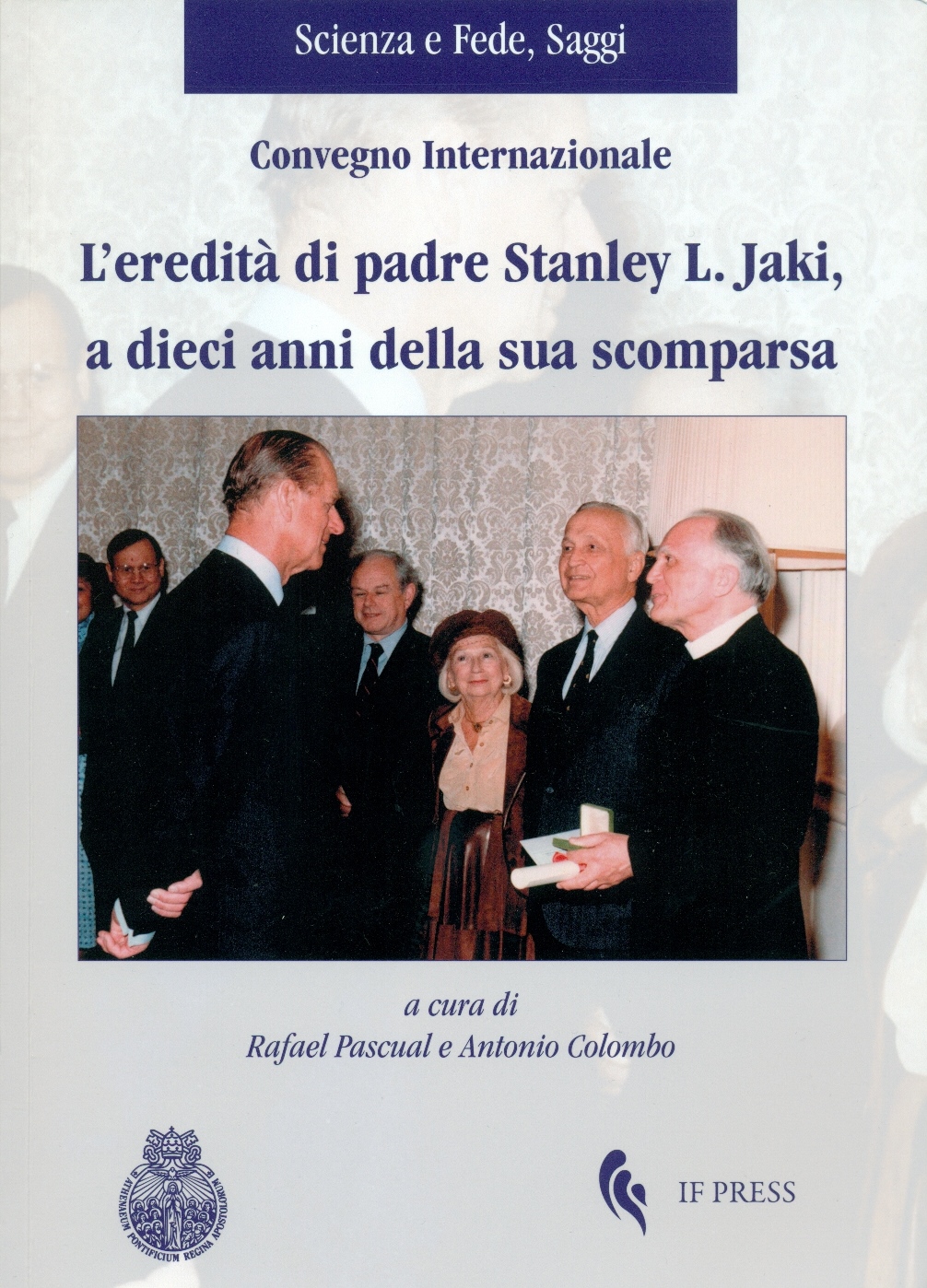
2022 — Rafael Pascual, Antonio Colombo (eds.) — L’eredità di Padre Stanley L. Jaki, a dieci anni dalla sua scomparsa
— The Legacy of Fr. Stanley L. Jaki, ten years after his death
2022 — Paul Peter Abim Rom — The Rationality of the Christian Faith and the Rationality of Science
2021 — Gergely Bognár, Ágnes Szabady, Márta Sárdi (eds.) — Egy Templeton-díjas lábnyomain
— Jáki Szaniszló László OSB emlékére rendezett konferencia tanulmánykötete
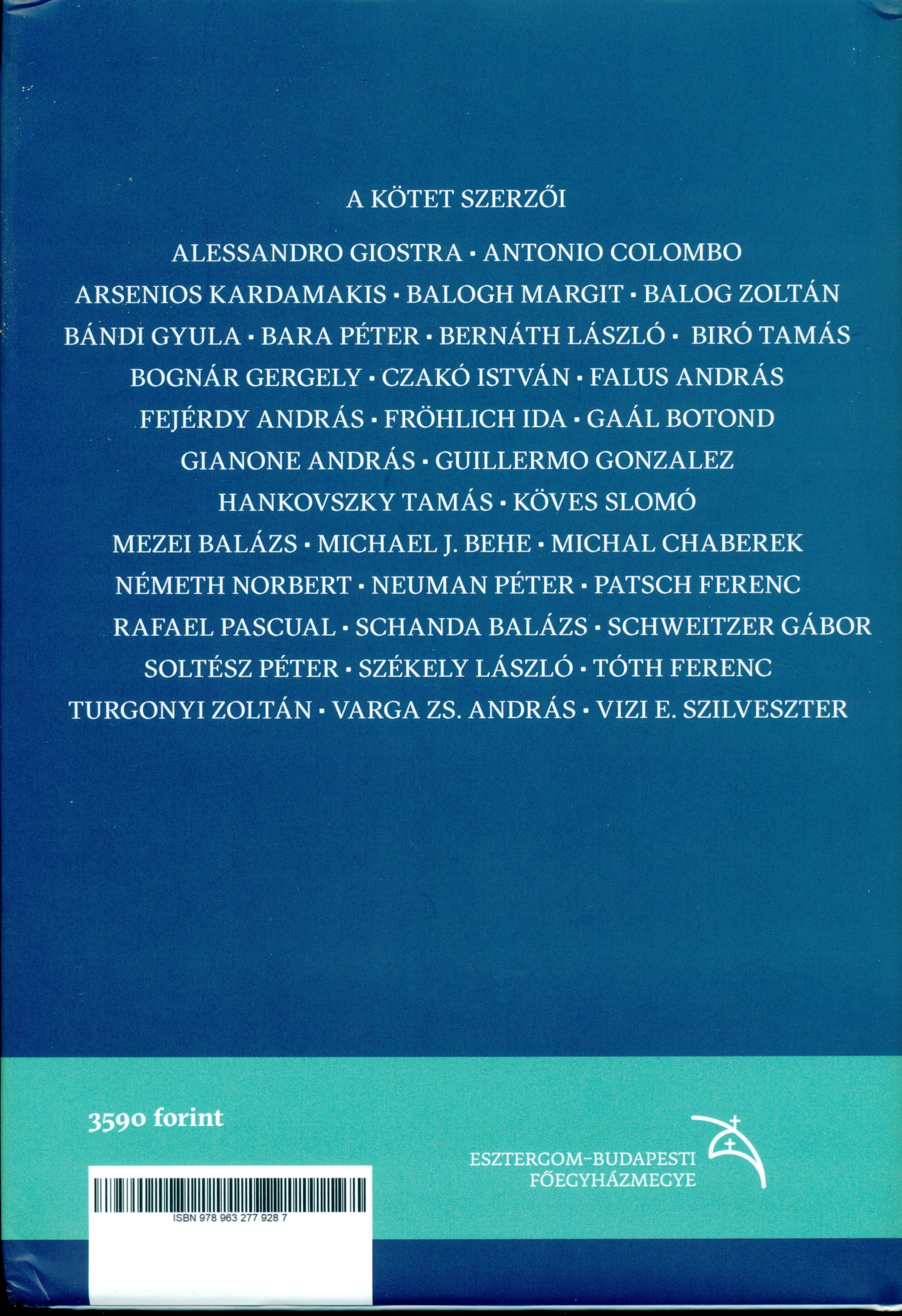
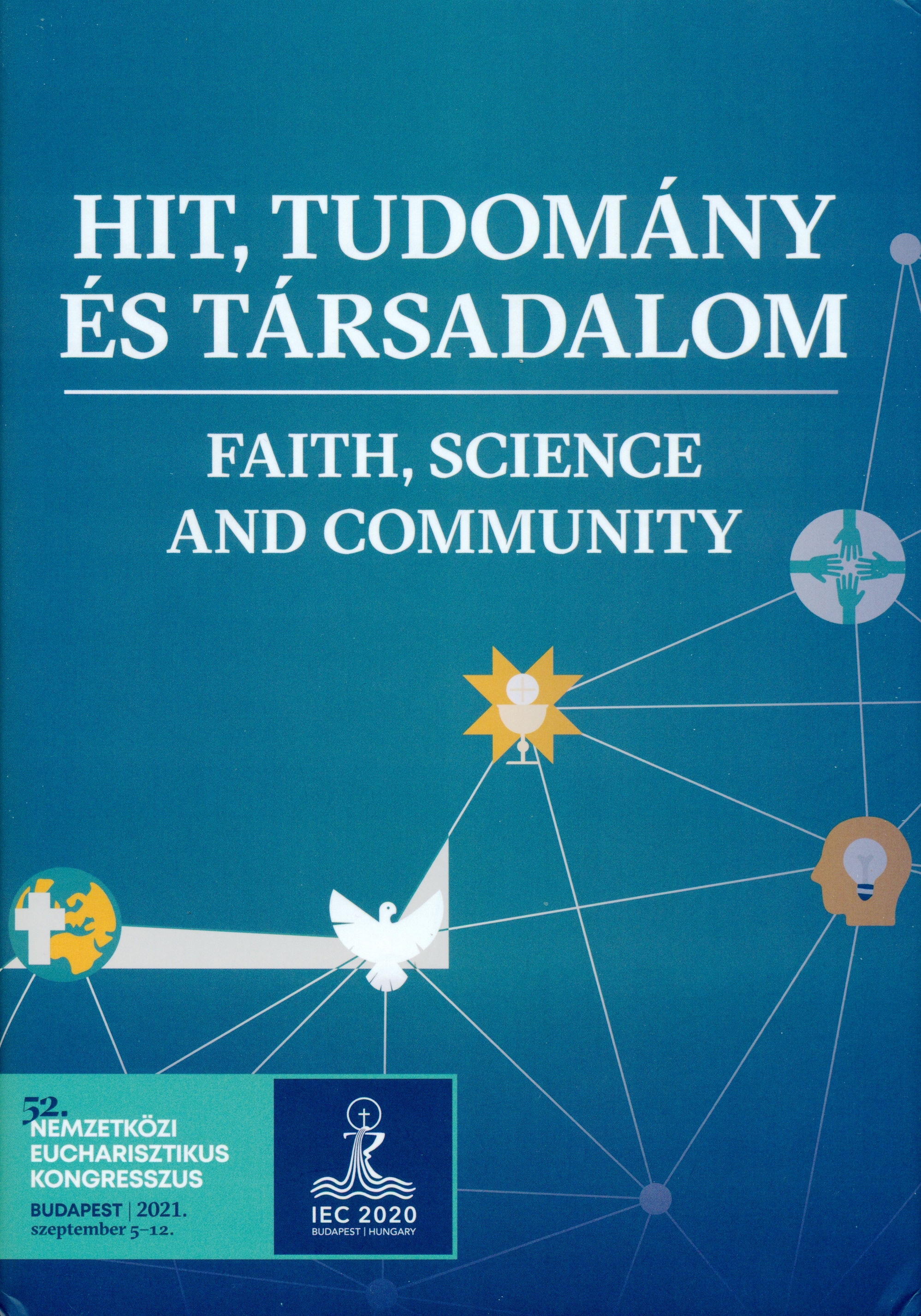
2021 — E. Szilveszter Vizi, et al. — Hit, tudomány és társadalom — Faith, science and community
2020 — Paul Haffner / Joseph Laracy (eds.) — Acts of the Stanley Jaki Foundation International Congress 2015
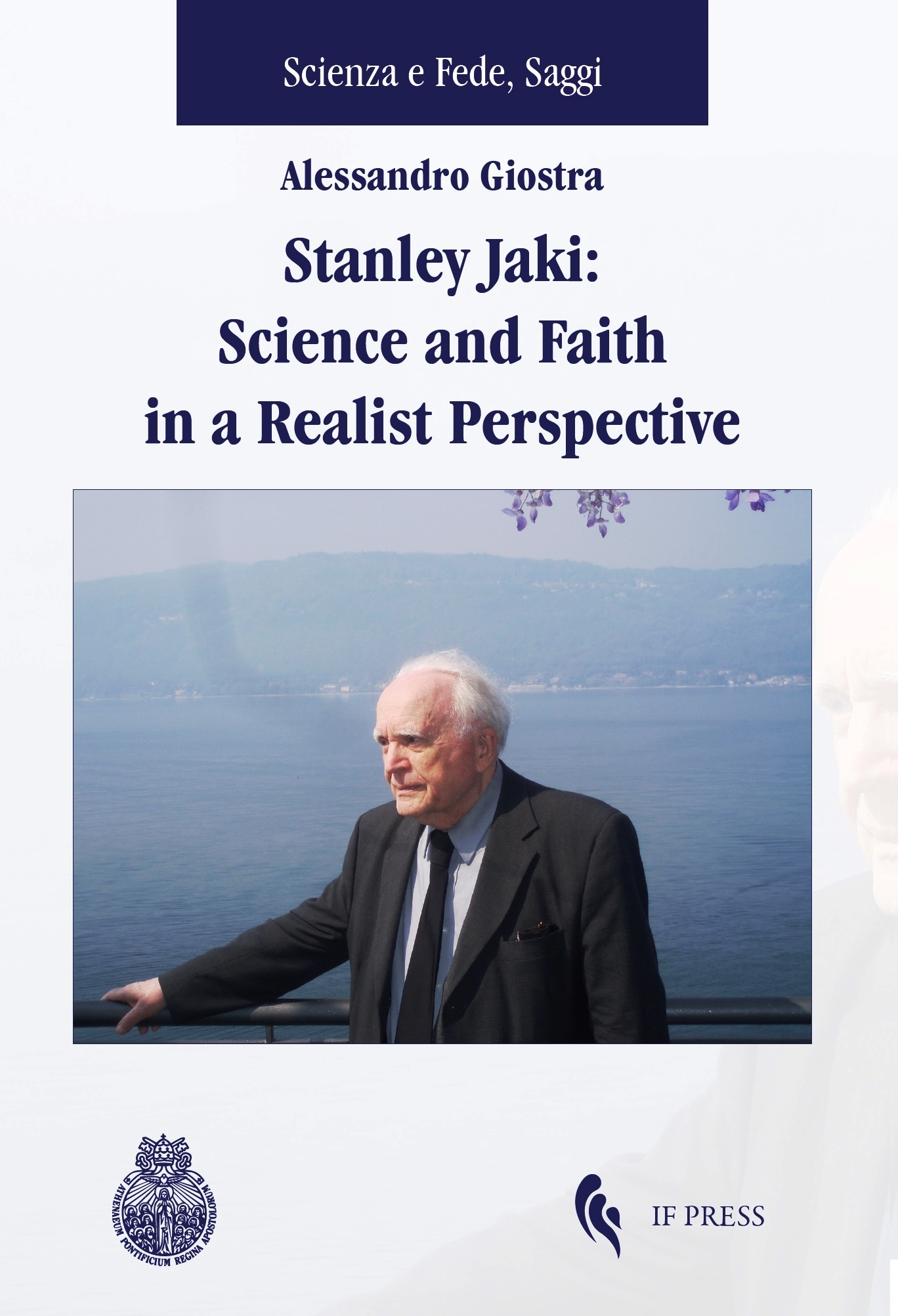
2019 — Alessandro Giostra — Stanley Jaki: Science and Faith in a Realist Perspective
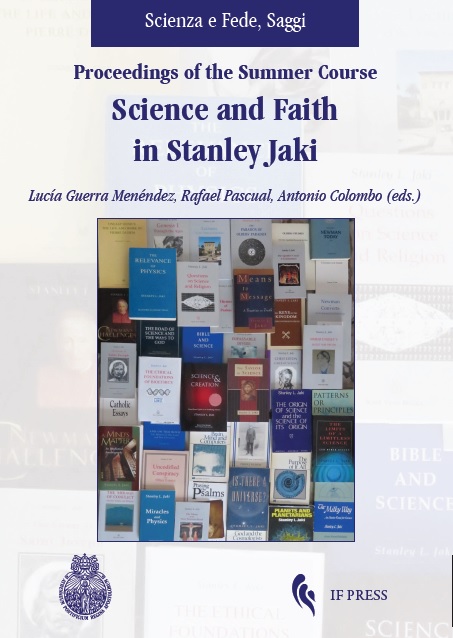
2017 — Lucía Guerra Menéndez, Rafael Pascual, Antonio Colombo (eds.)
— Proceedings of the Summer Course “Science and Faith in Stanley Jaki” Madrid, July 11-13, 2011
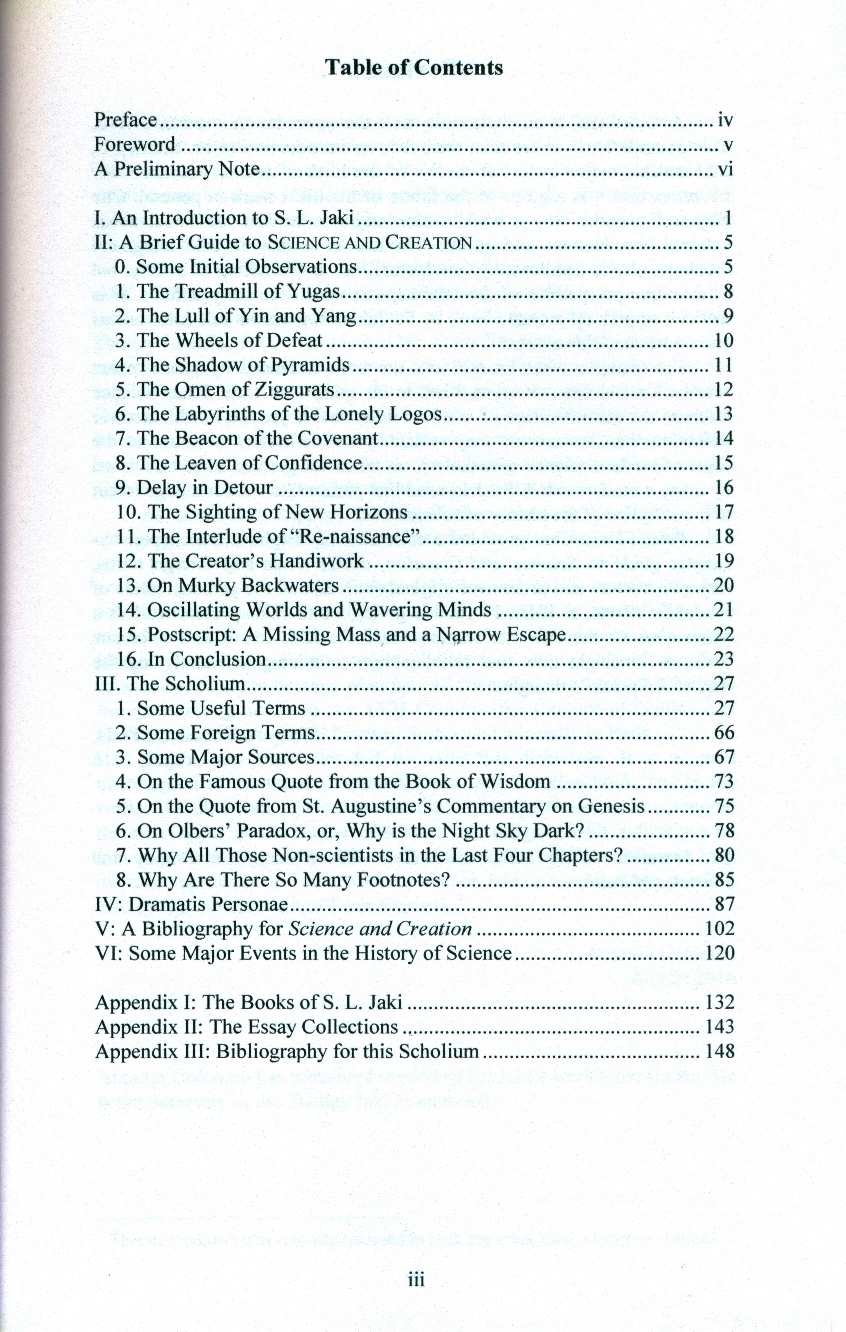
2017 — Peter Floriani — A Scholium to S. L: Jaki’s SCIENCE AND CREATION
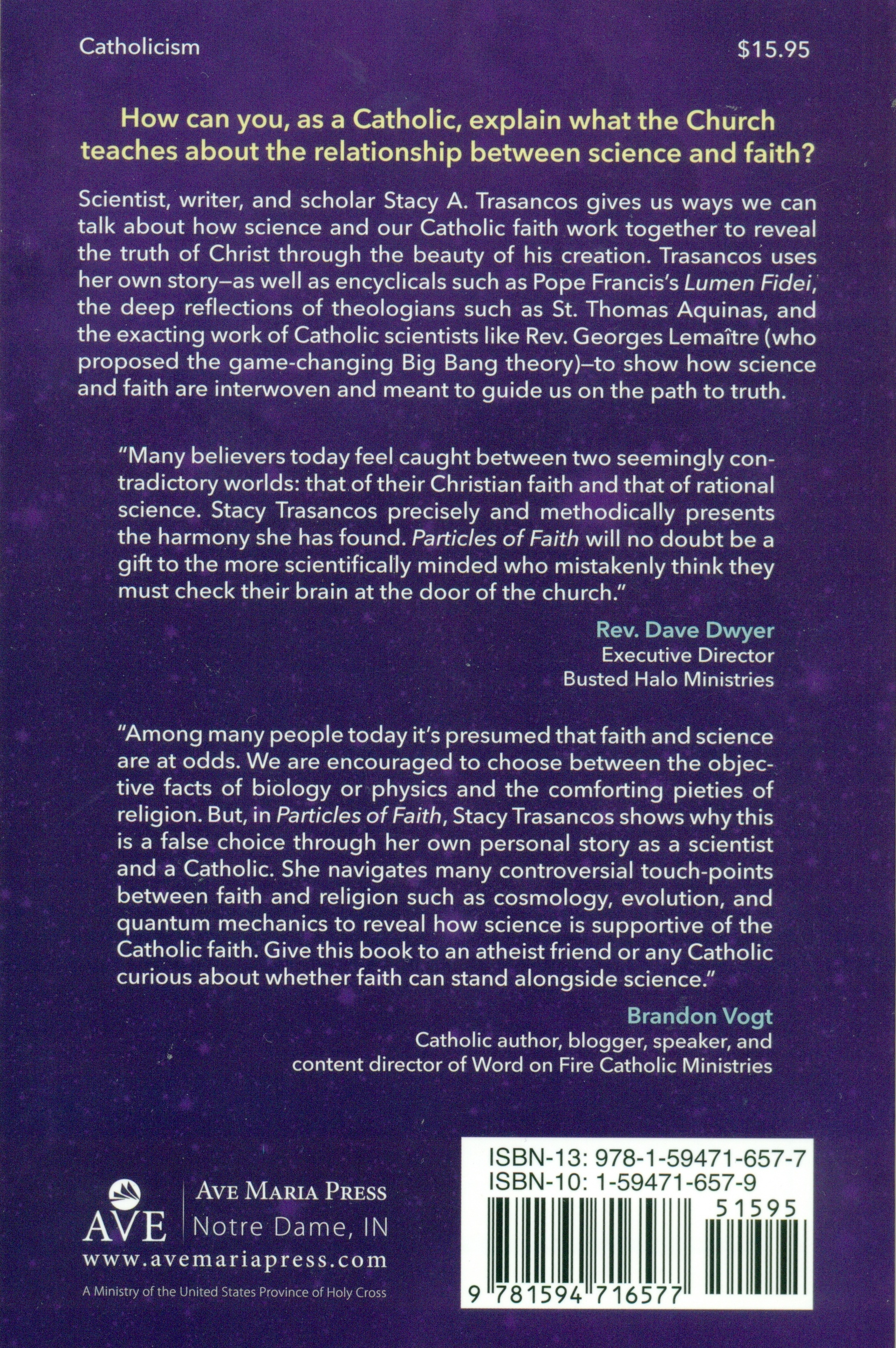
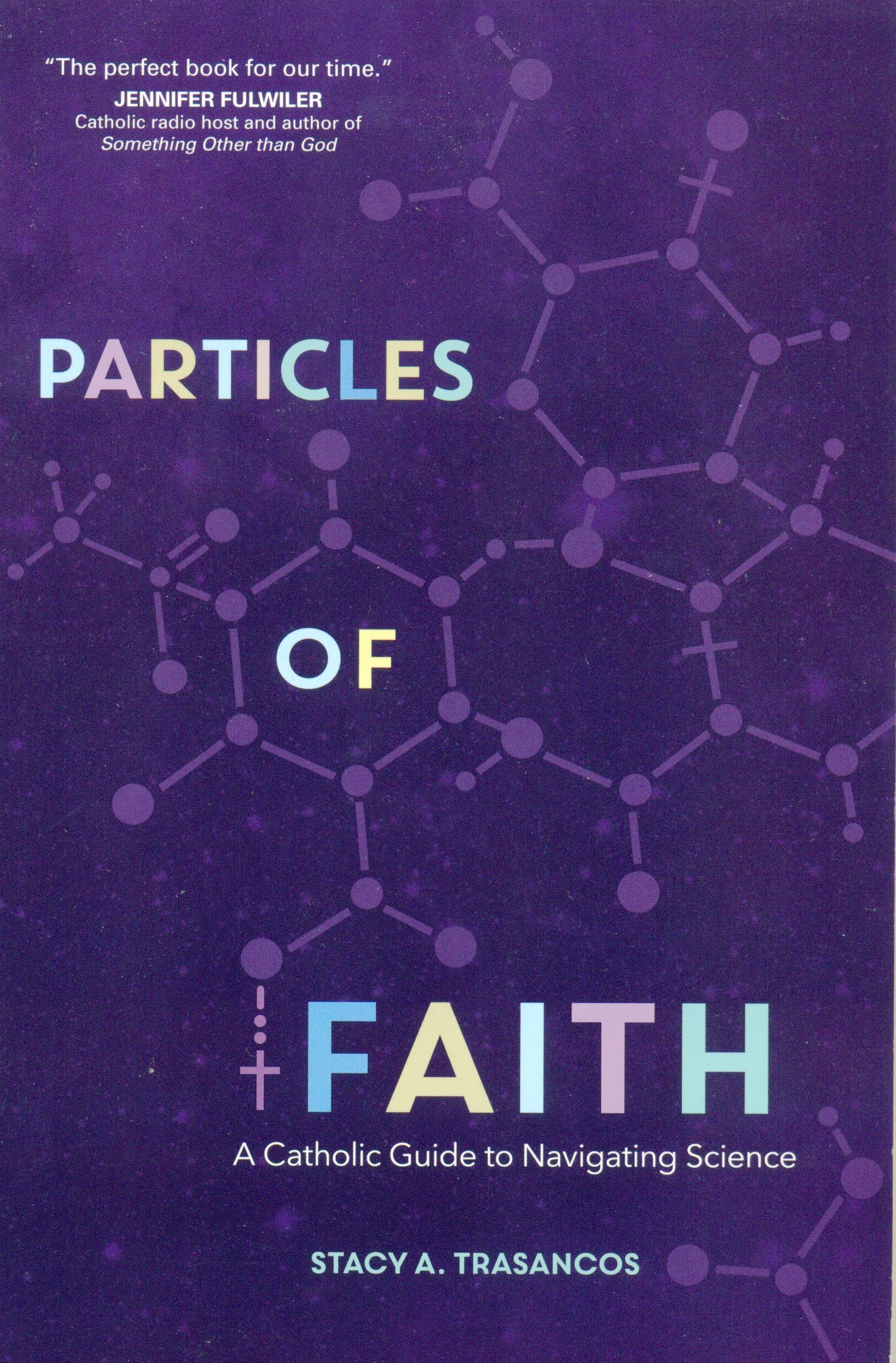
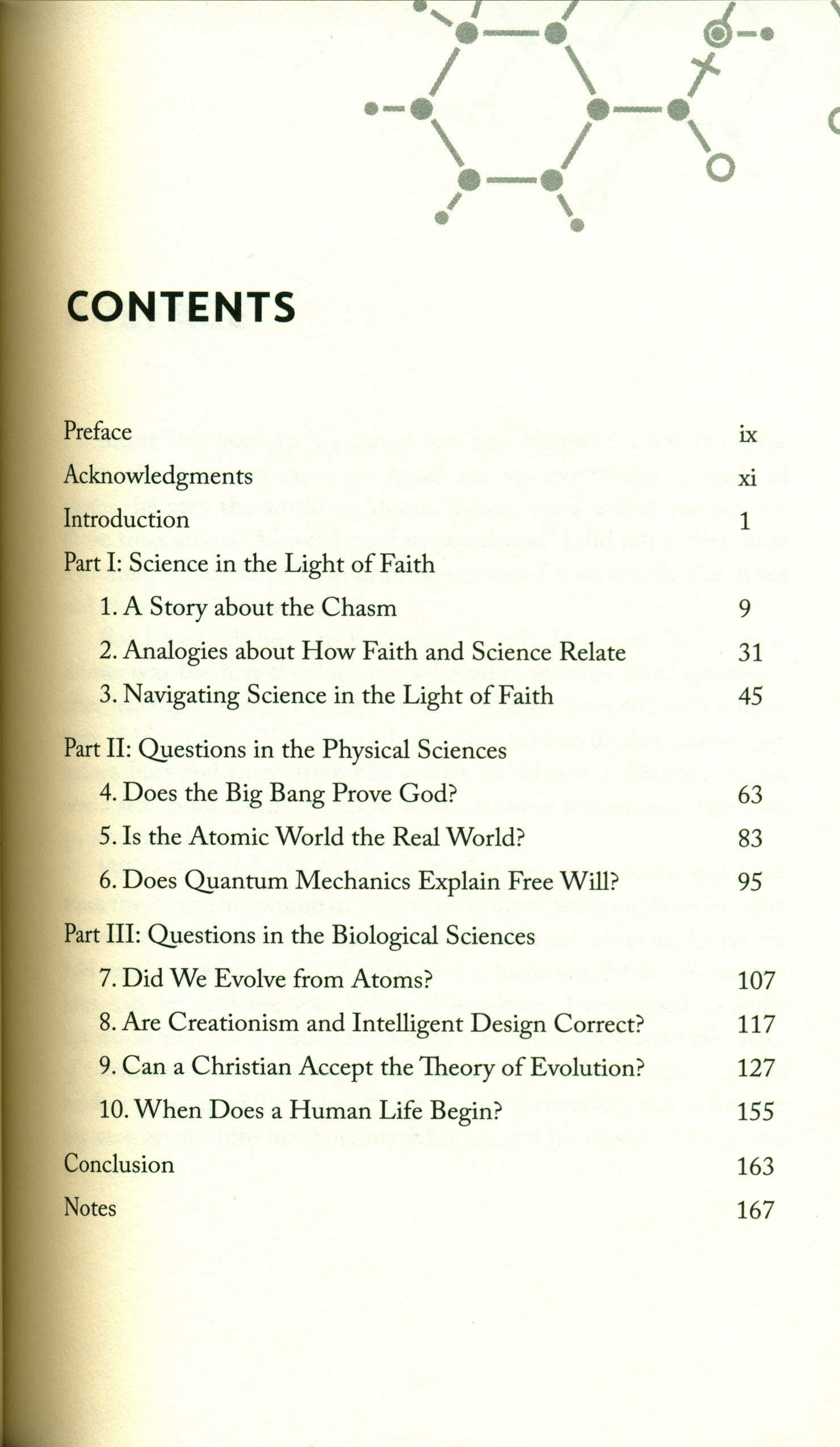
2016 — Stacy Ann Trasancos — Particles of Faith: A Catholic Guide to Navigating Science
2014 — Rafael Pascual, Antonio Colombo (eds.) — Commemorazione di Padre Stanley Jaki OSB nel primo anniversario della sua morte
2014 — Stacy Ann Trasancos — Science Was Born of Christianity: The Teaching of Fr. Stanley Jaki
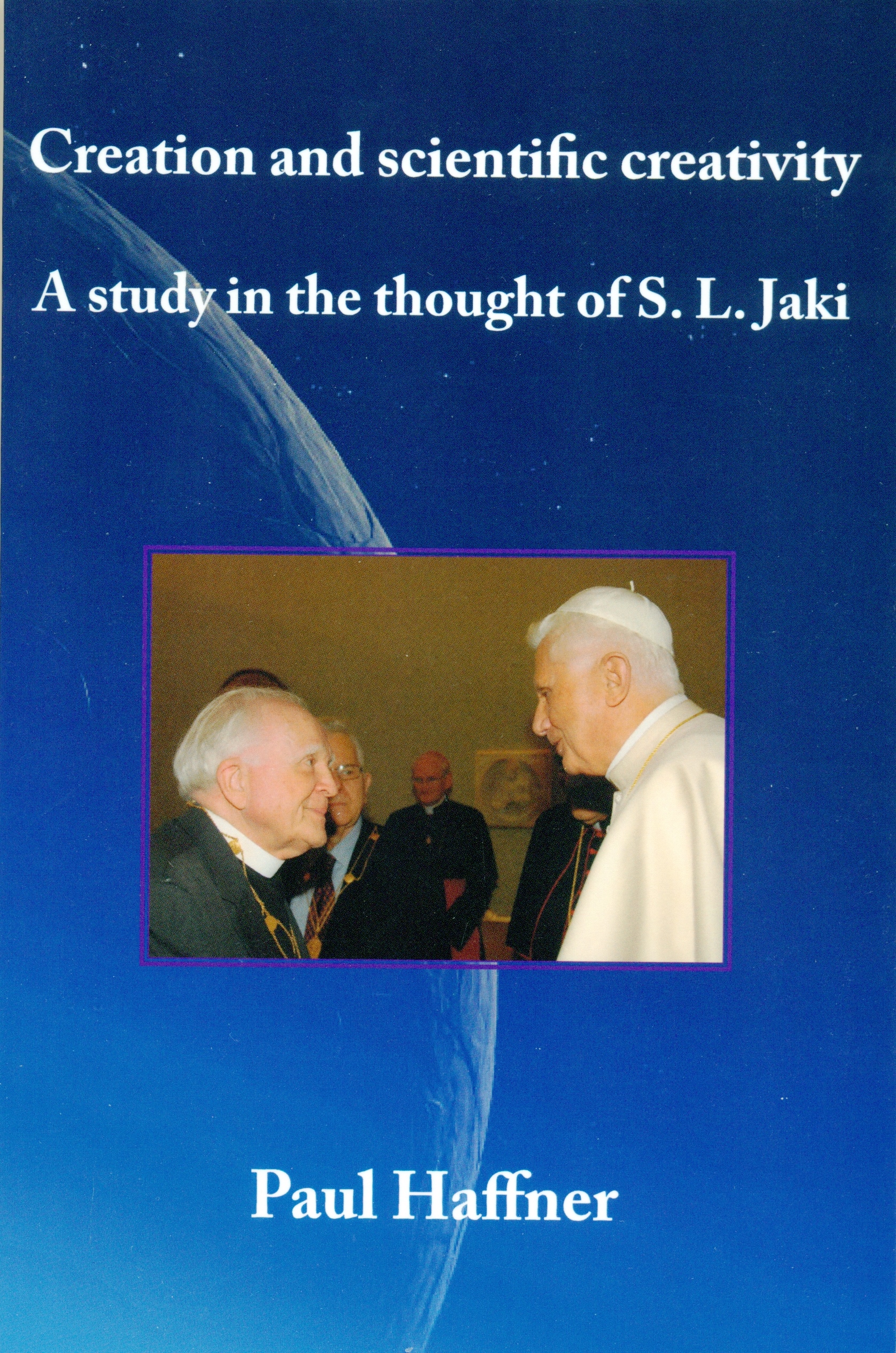
2009 — Paul Haffner — Creation and Scientific Creativity: A Study in the Thought of S.L. Jaki
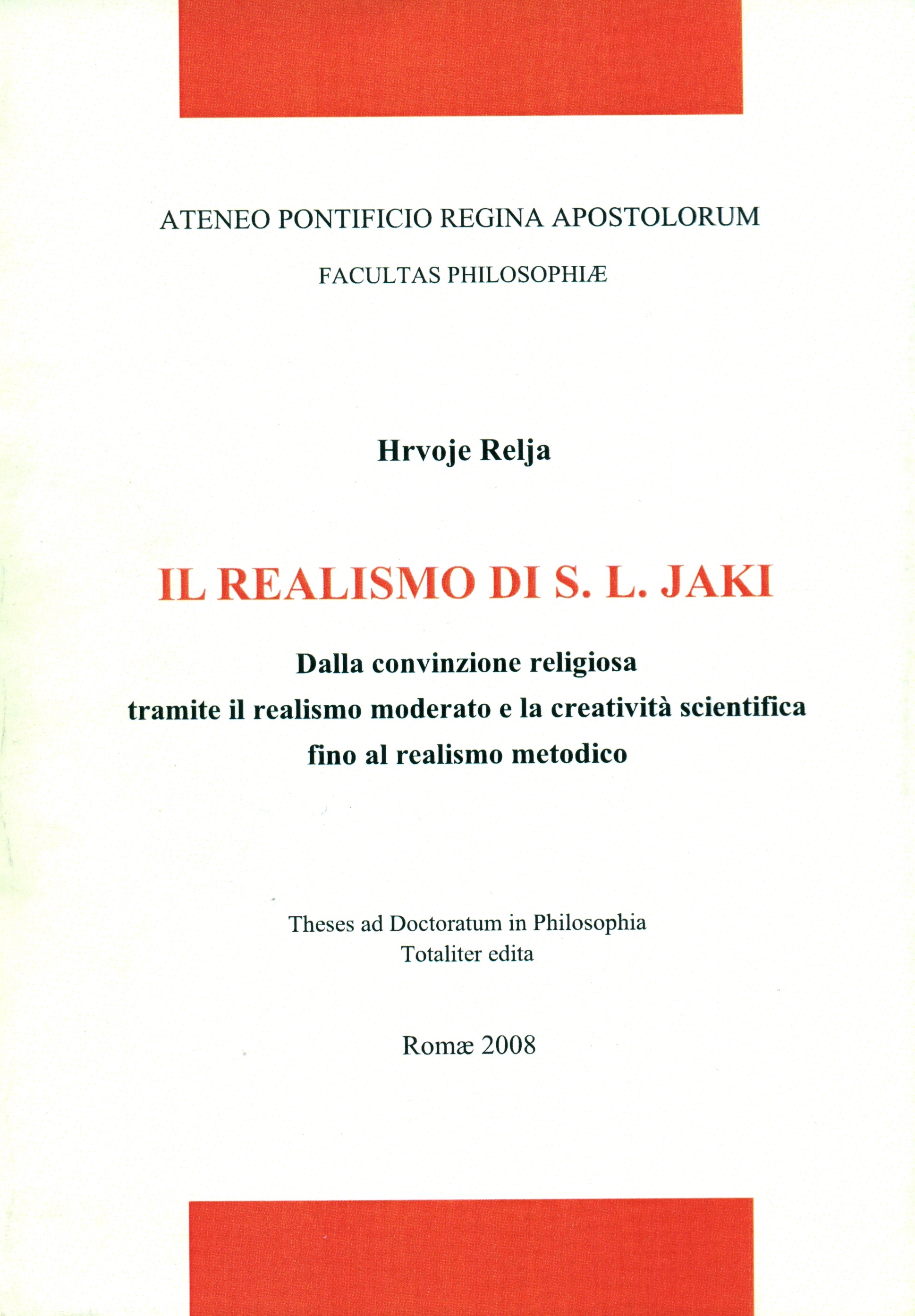
2008 — Hrvoje Relja — Il realismo di S.L. Jaki: Dalla convinzione religiosa tramite il realismo moderato e la creatività scientifica
— fino al realismo metodico
2003 — Jáki Szaniszló László — Egy elme világa - Szellemi önéletrajz hitről és tudományról
2002 — Stanley Jaki — A Mind’s Matter: An Intellectual Autobiography
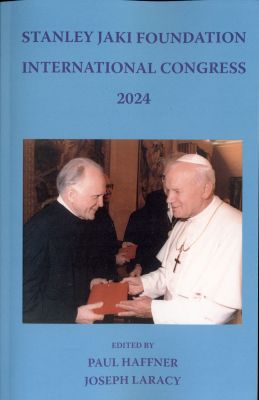
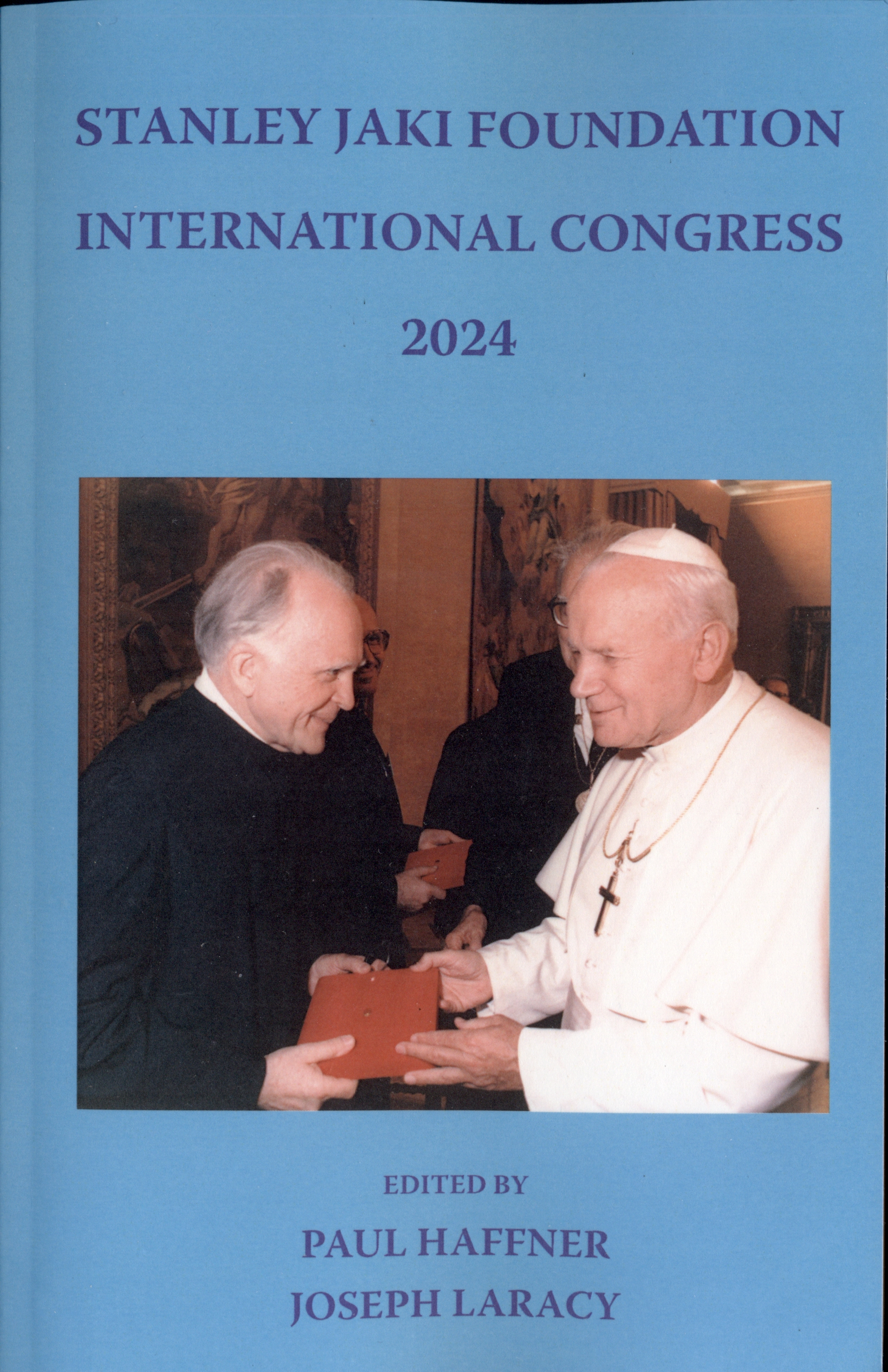
Paul Haffner / Joseph Laracy (eds.)
Acts of the
Stanley Jaki Foundation
International Congress 2024
(Leominster: Gracewing, 2026), xlv + 473pp.
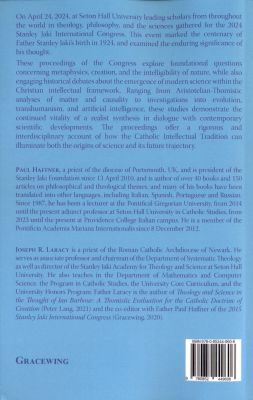
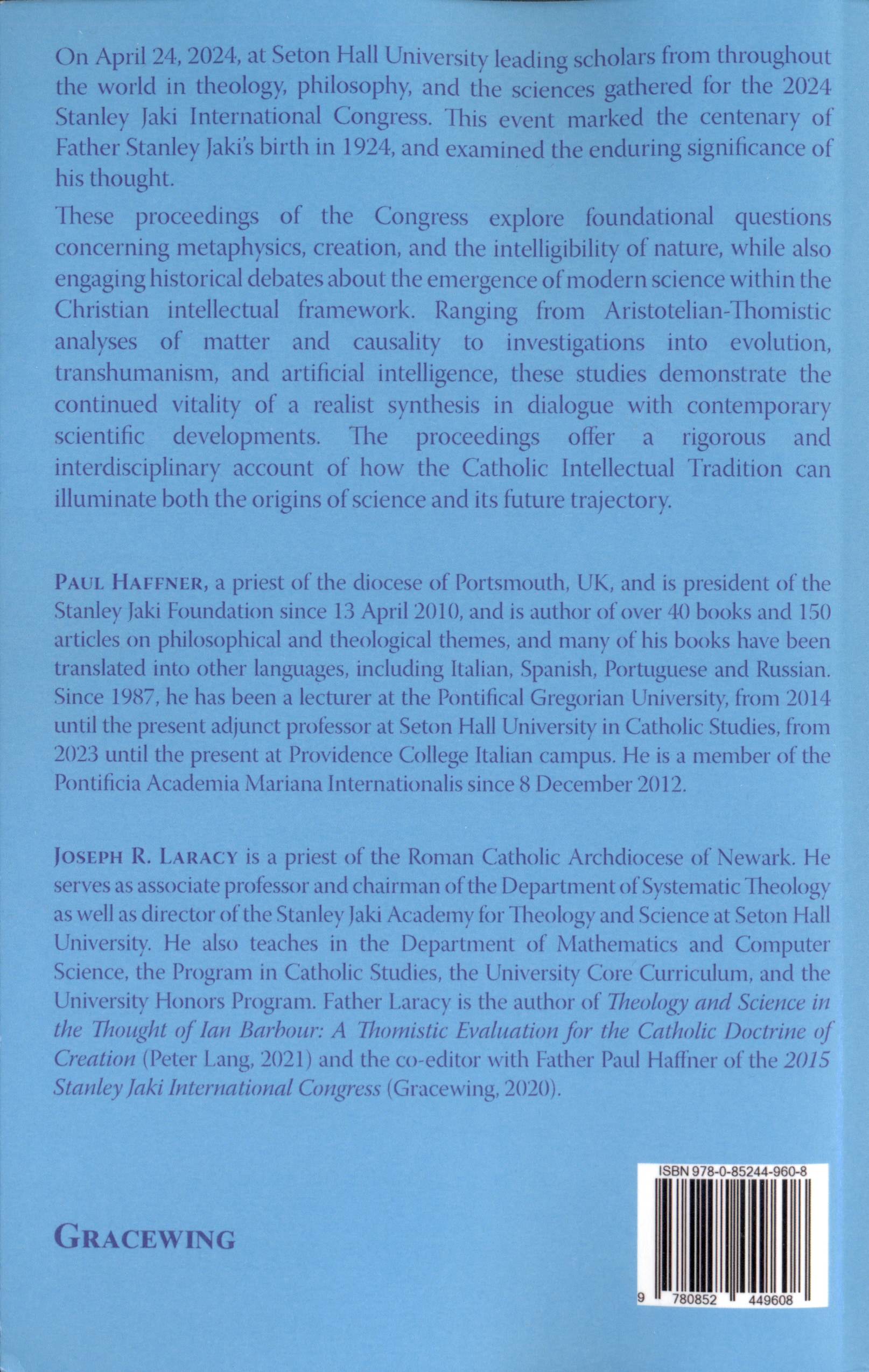
 On April 24, 2024, at Seton Hall University leading scholars from throughout
the world in theology, philosophy, and the sciences gathered for the 2024
Stanley Jaki International Congress. This event marked the centenary of
Father Stanley Jaki’s birth in 1924, and examined the enduring significance of
his thought.
On April 24, 2024, at Seton Hall University leading scholars from throughout
the world in theology, philosophy, and the sciences gathered for the 2024
Stanley Jaki International Congress. This event marked the centenary of
Father Stanley Jaki’s birth in 1924, and examined the enduring significance of
his thought.
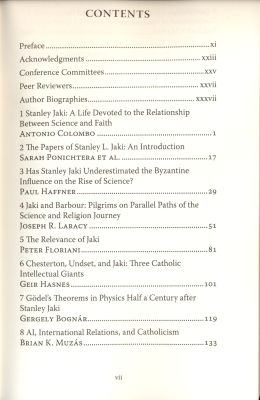
These proceedings of the Congress explore foundational questions
concerning metaphysics, creation, and the intelligibility of nature, while also
engaging historical debates about the emergence of modern science within the
Christian intellectual framework. Ranging from Aristotelian-Thomistic
analyses of matter and causality to investigations into evolution,
transhumanism, and artificial intelligence, these studies demonstrate the
continued vitality of a realist synthesis in dialogue with contemporary
scientific developments. The proceedings offer a rigorous and
interdisciplinary account of how the Catholic Intellectual Tradition can
illuminate both the origins of science and its future trajectory.
PAUL HAFFNER, a priest of the diocese of Portsmouth, UK, and is president of the
Stanley Jaki Foundation since 13 April 2010, and is author of over 40 books and 150
articles on philosophical and theological themes, and many of his books have been
translated into other languages, including Italian, Spanish, Portuguese and Russian.
Since 1987, he has been a lecturer at the Pontifical Gregorian University, from 2014
until the present adjunct professor at Seton Hall University in Catholic Studies, from
2023 until the present at Providence College Italian campus. He is a member of the
Pontificia Academia Mariana Internationalis since 8 December 2012.
JOSEPH R. LARACY is a priest of the Roman Catholic Archdiocese of Newark. He
serves as associate professor and chairman of the Department of Systematic Theology
as well as director of the Stanley Jaki Academy for Theology and Science at Seton Hall
University. He also teaches in the Department of Mathematics and Computer
Science, the Program in Catholic Studies, the University Core Curriculum, and the
University Honors Program. Father Laracy is the author of Theology and Science in
the Thought of Ian Barbour: A Thomistic Evaluation for the Catholic Doctrine of
Creation (Peter Lang, 2021) and the co-editor with Father Paul Haffner of the 2015
Stanley Jaki International Congress (Gracewing, 2020).
The book is available
here.
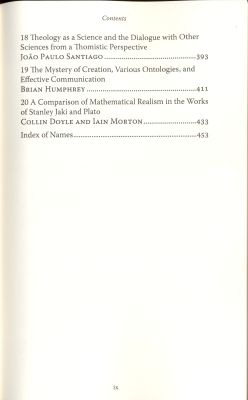
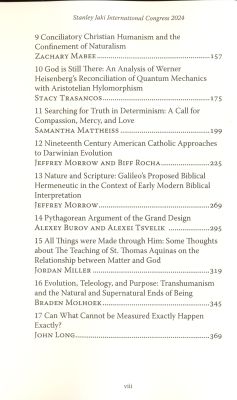
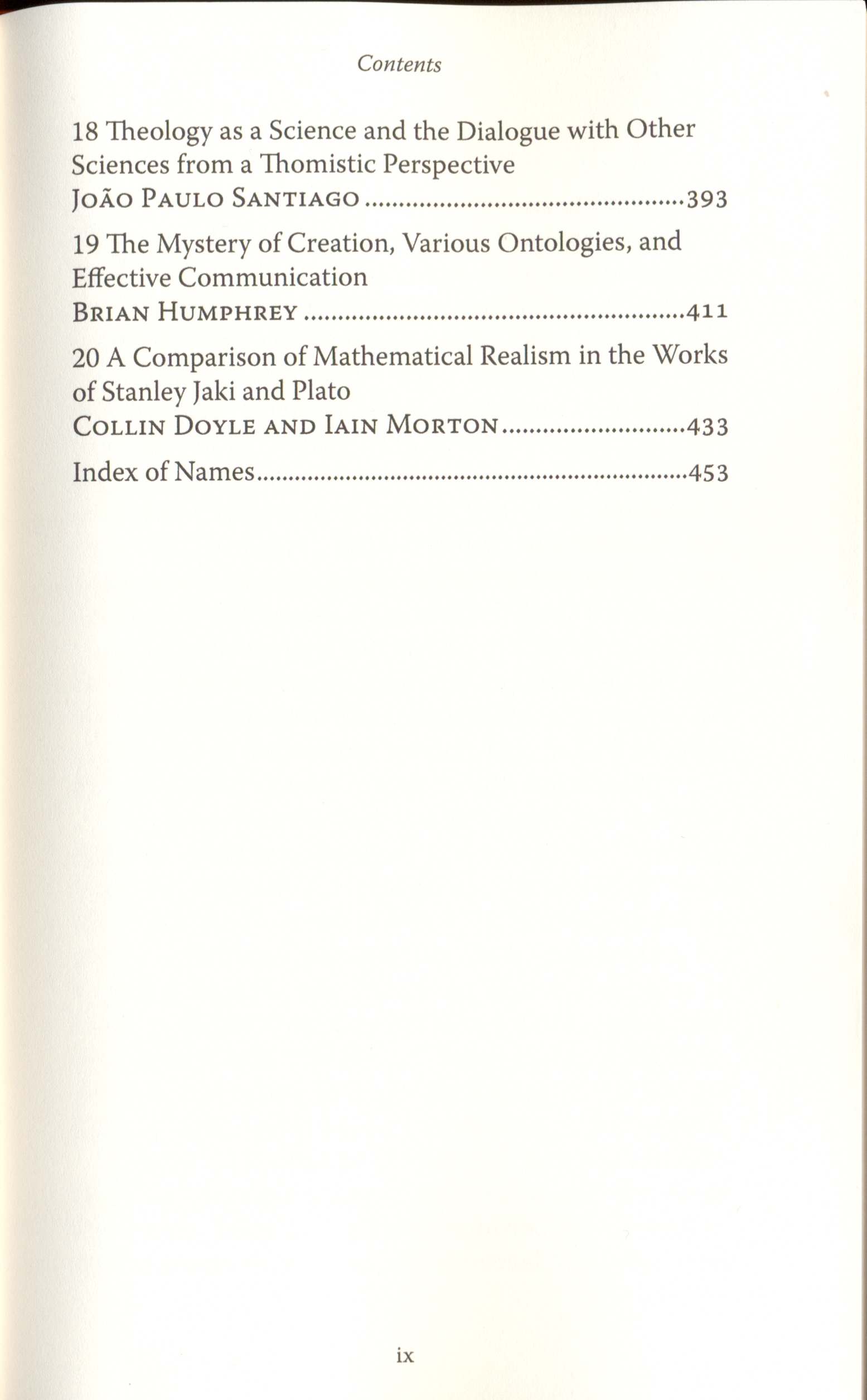
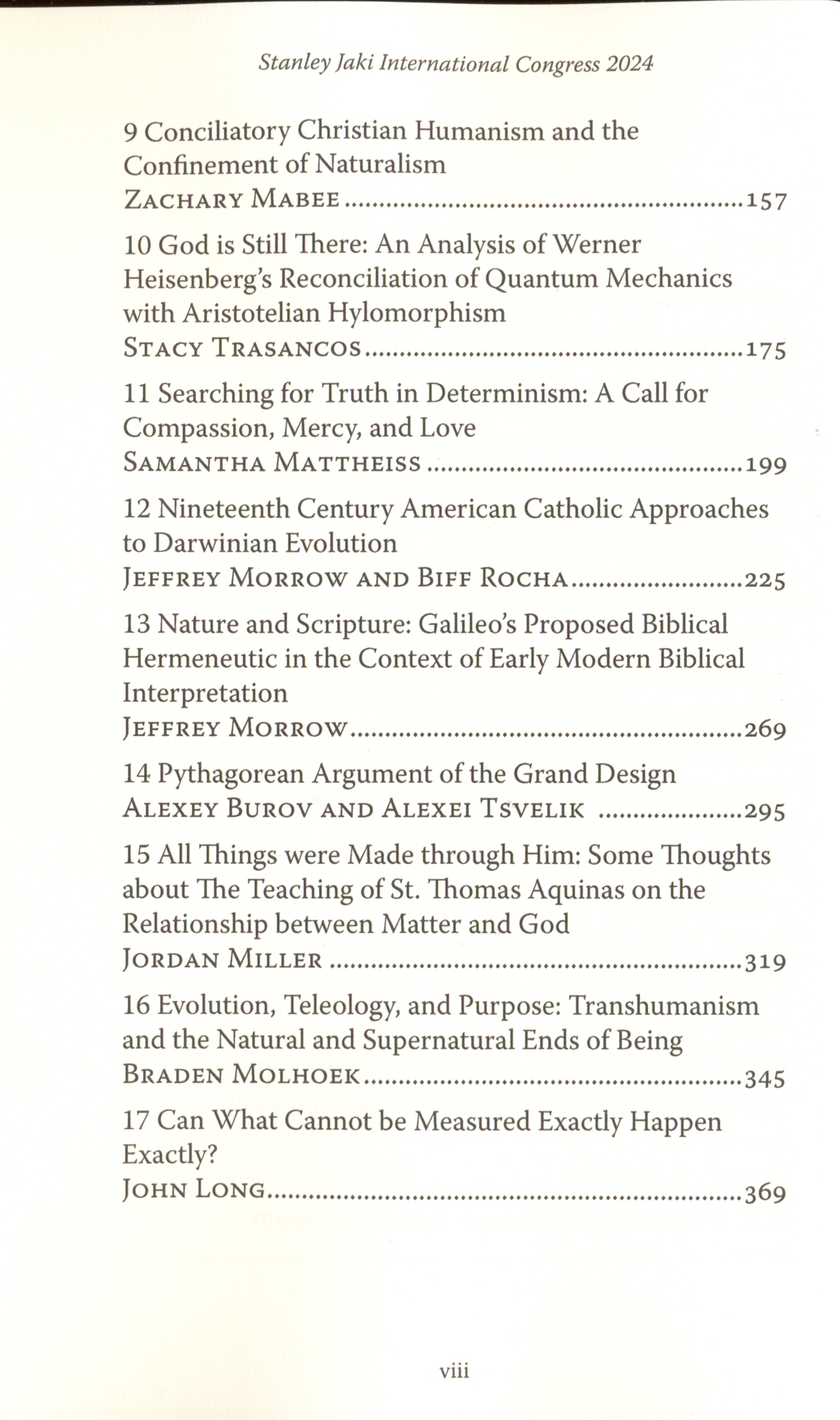
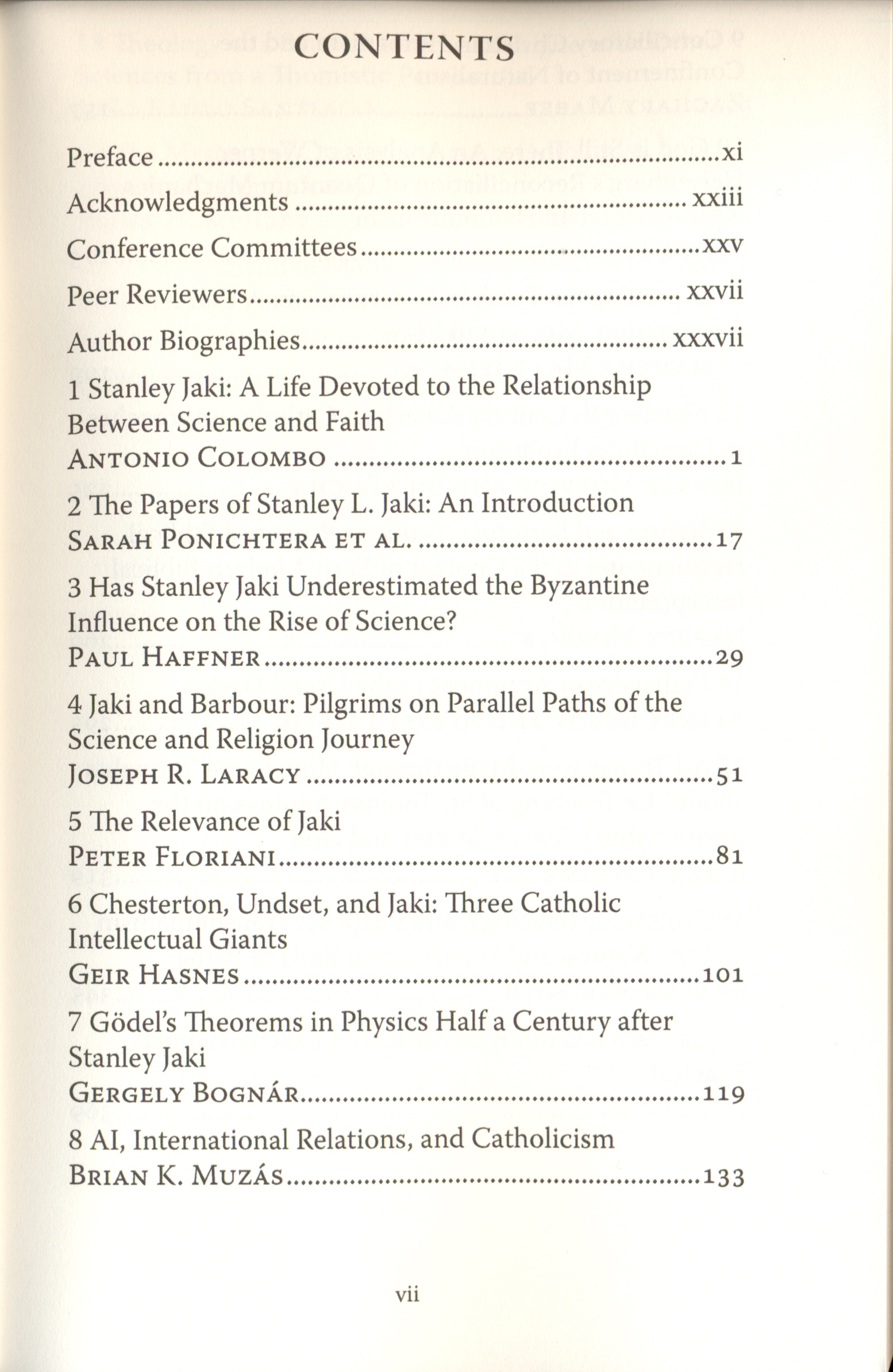
The Table of Contents can be seen here:
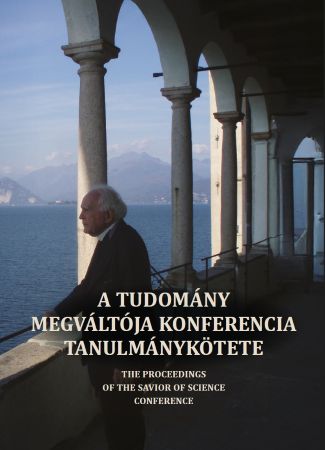
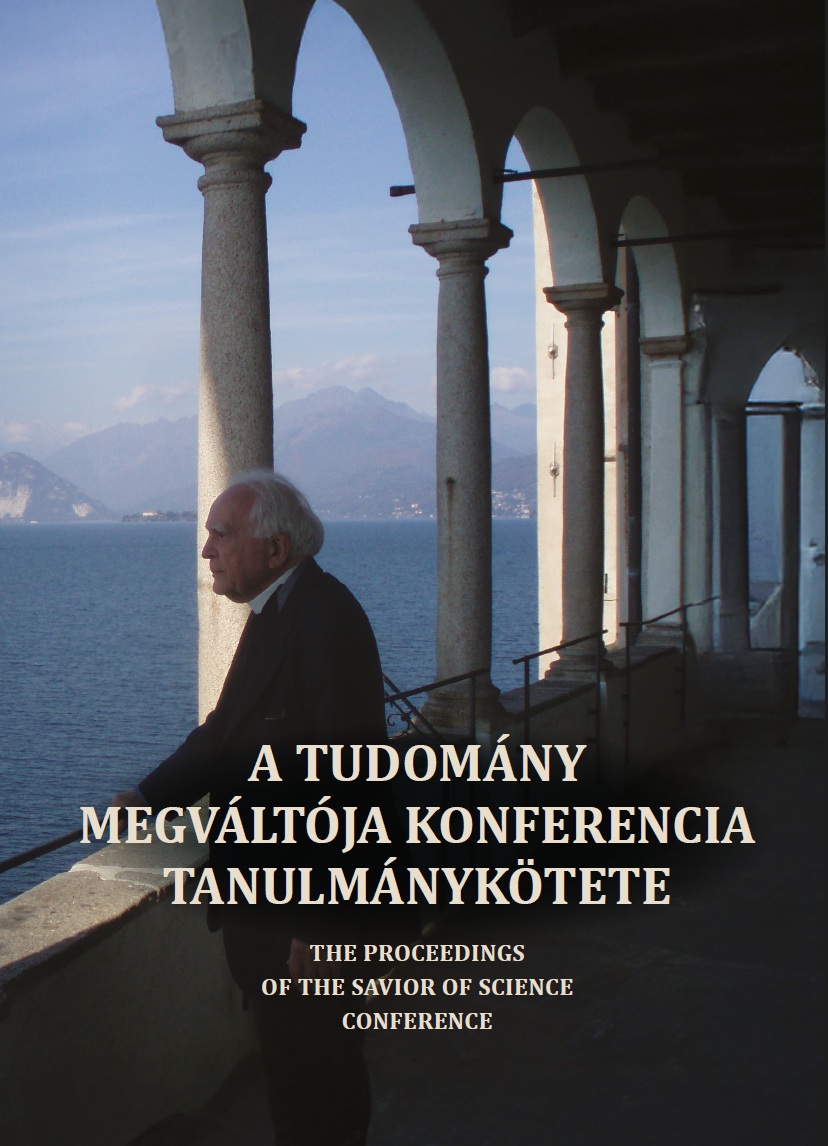
Bognár Gergely, Sárai-Szabó Kelemen (eds.)
A tudomány megváltója konferencia tanulmánykötete –
The Proceedings of the Savior of Science Conference
(Universitas-Győr Nonprofit, Győr, 2025), 288pp.
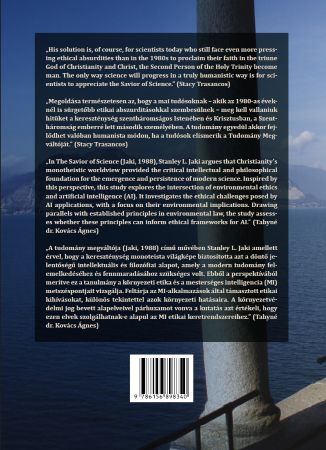
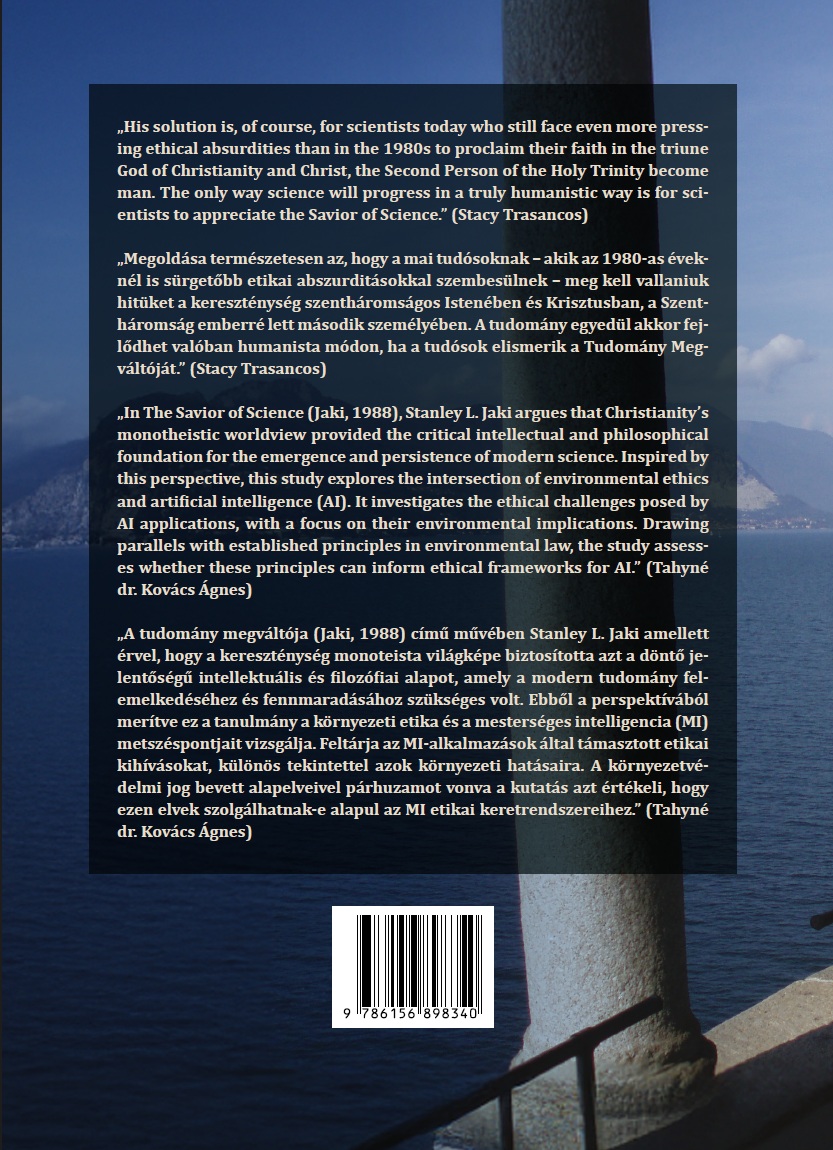
“His [Jaki’] solution is, of course, for scientists today who still face even more pressing
ethical absurdities than in the 1980s to proclaim their faith in the triune
God of Christianity and Christ, the Second Person of the Holy Trinity become
man. The only way science will progress in a truly humanistic way is for scientists
to appreciate the Savior of Science.”
(Stacy Trasancos)
“Megoldása természetesen az, hogy a mai tudósoknak – akik az 1980-as éveknél
is sürgetőbb etikai abszurditásokkal szembesülnek – meg kell vallaniuk
hitüket a kereszténység szentháromságos Istenében és Krisztusban, a Szentháromság
emberré lett második személyében. A tudomány egyedül akkor fejlődhet
valóban humanista módon, ha a tudósok elismerik a Tudomány Megváltóját.”
(Stacy Trasancos)
“In The Savior of Science (Jaki, 1988), Stanley L. Jaki argues that Christianity’s
monotheistic worldview provided the critical intellectual and philosophical
foundation for the emergence and persistence of modern science. Inspired by
this perspective, this study explores the intersection of environmental ethics
and artificial intelligence (AI). It investigates the ethical challenges posed by
AI applications, with a focus on their environmental implications. Drawing
parallels with established principles in environmental law, the study assesses
whether these principles can inform ethical frameworks for AI.”
(Tahyné dr. Kovács Ágnes)
“A tudomány megváltója (Jaki, 1988) című művében Stanley L. Jaki amellett
érvel, hogy a kereszténység monoteista világképe biztosította azt a döntő jelentőségű
intellektuális és filozófiai alapot, amely a modern tudomány felemelkedéséhez
és fennmaradásához szükséges volt. Ebből a perspektívából
merítve ez a tanulmány a környezeti etika és a mesterséges intelligencia (MI)
metszéspontjait vizsgálja. Feltárja az MI-alkalmazások által támasztott etikai
kihívásokat, különös tekintettel azok környezeti hatásaira. A környezetvédelmi
jog bevett alapelveivel párhuzamot vonva a kutatás azt értékeli, hogy
ezen elvek szolgálhatnak-e alapul az MI etikai keretrendszereihez.”
(Tahyné dr. Kovács Ágnes)
The book has been presented at the at the Sapientia Monastic College of Theology, in Budapest, on 13 May 2026.
See
here.
The presentation of András Tóth, President of the Stanley Jaki Society, contained in the book, can also be read
here.
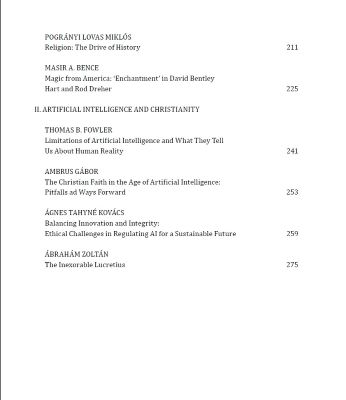
The second half of the book is written in English.
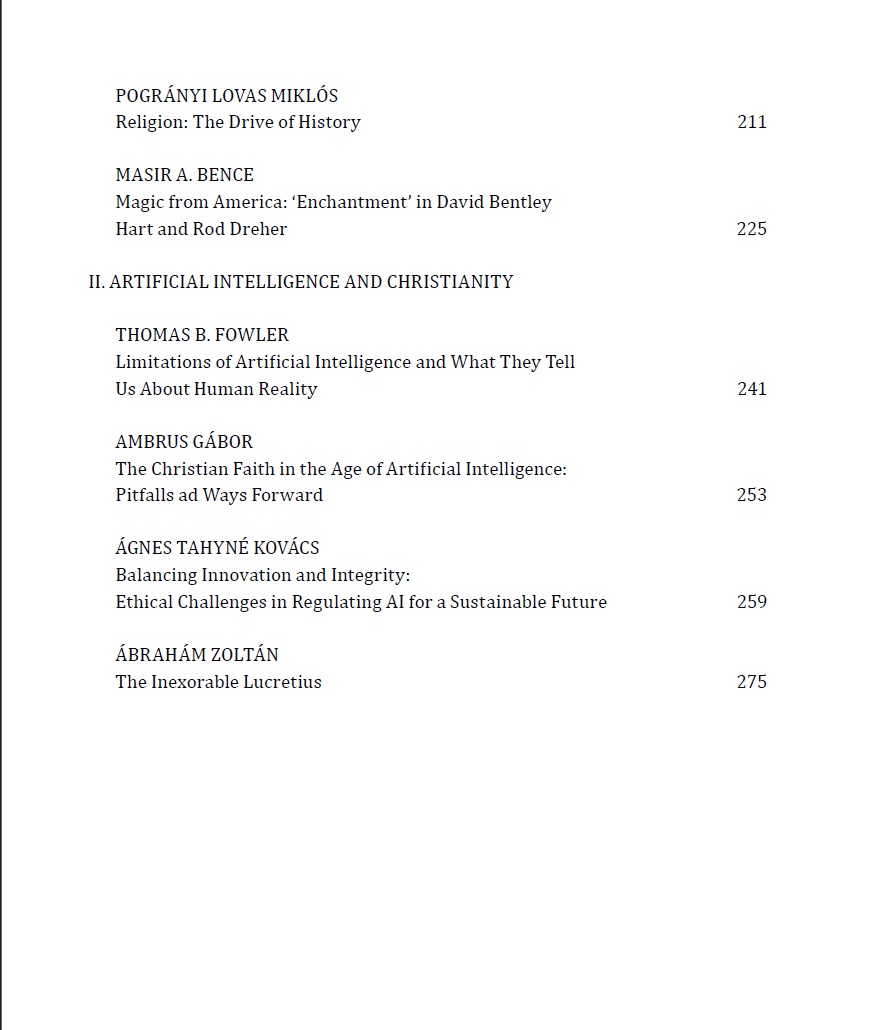
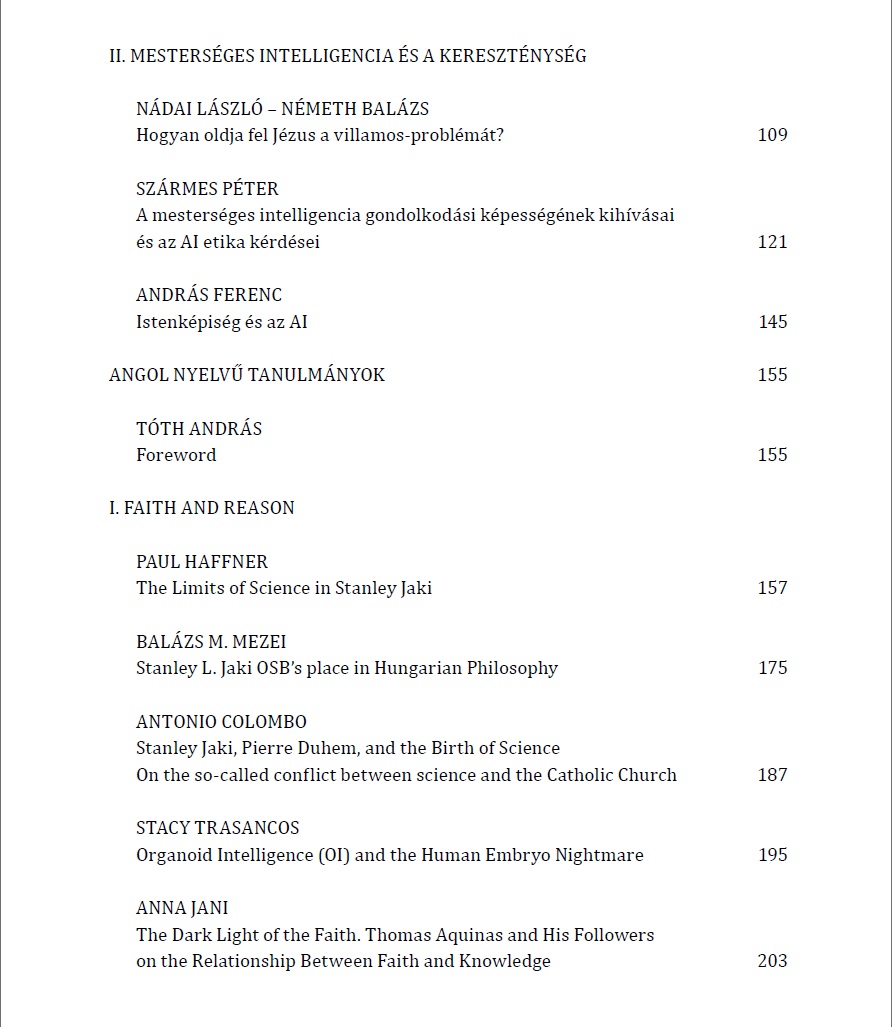
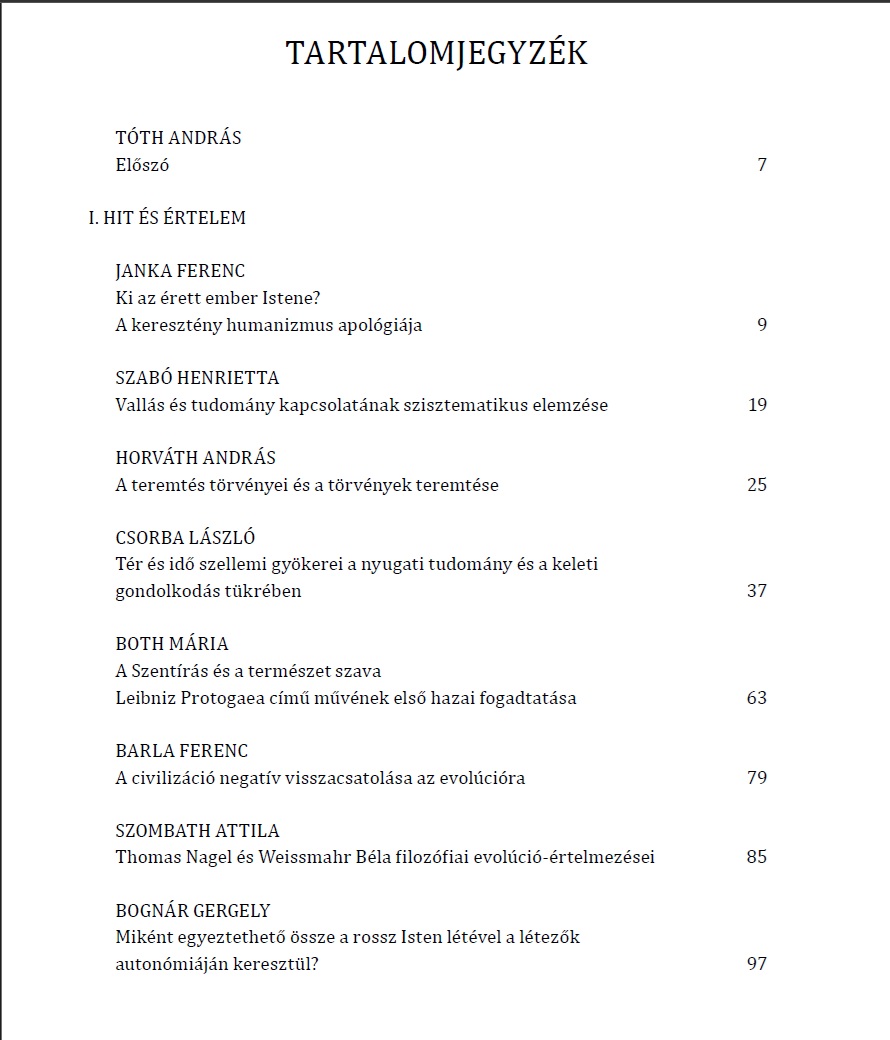
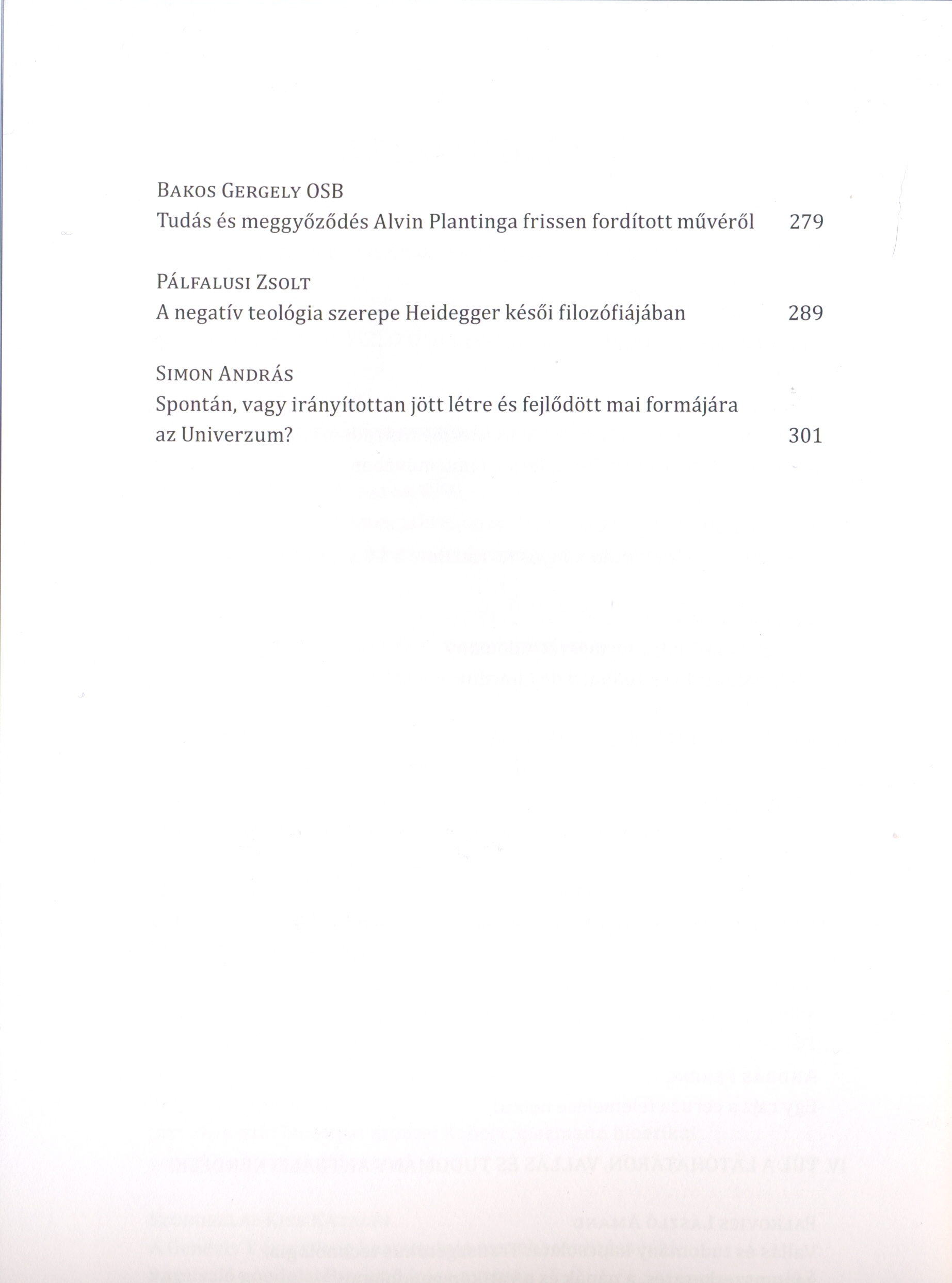
The Table of Contents can be seen here:
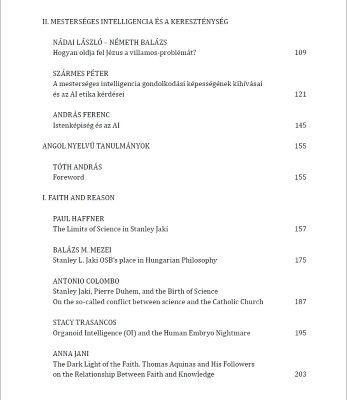
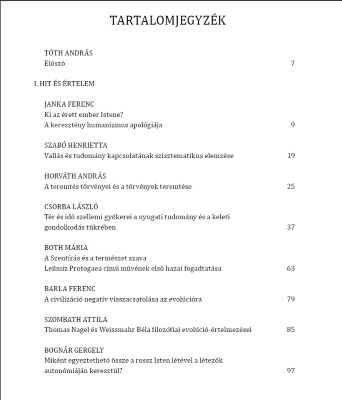
An electronic copy of the Acts of the Conference may be found
here.
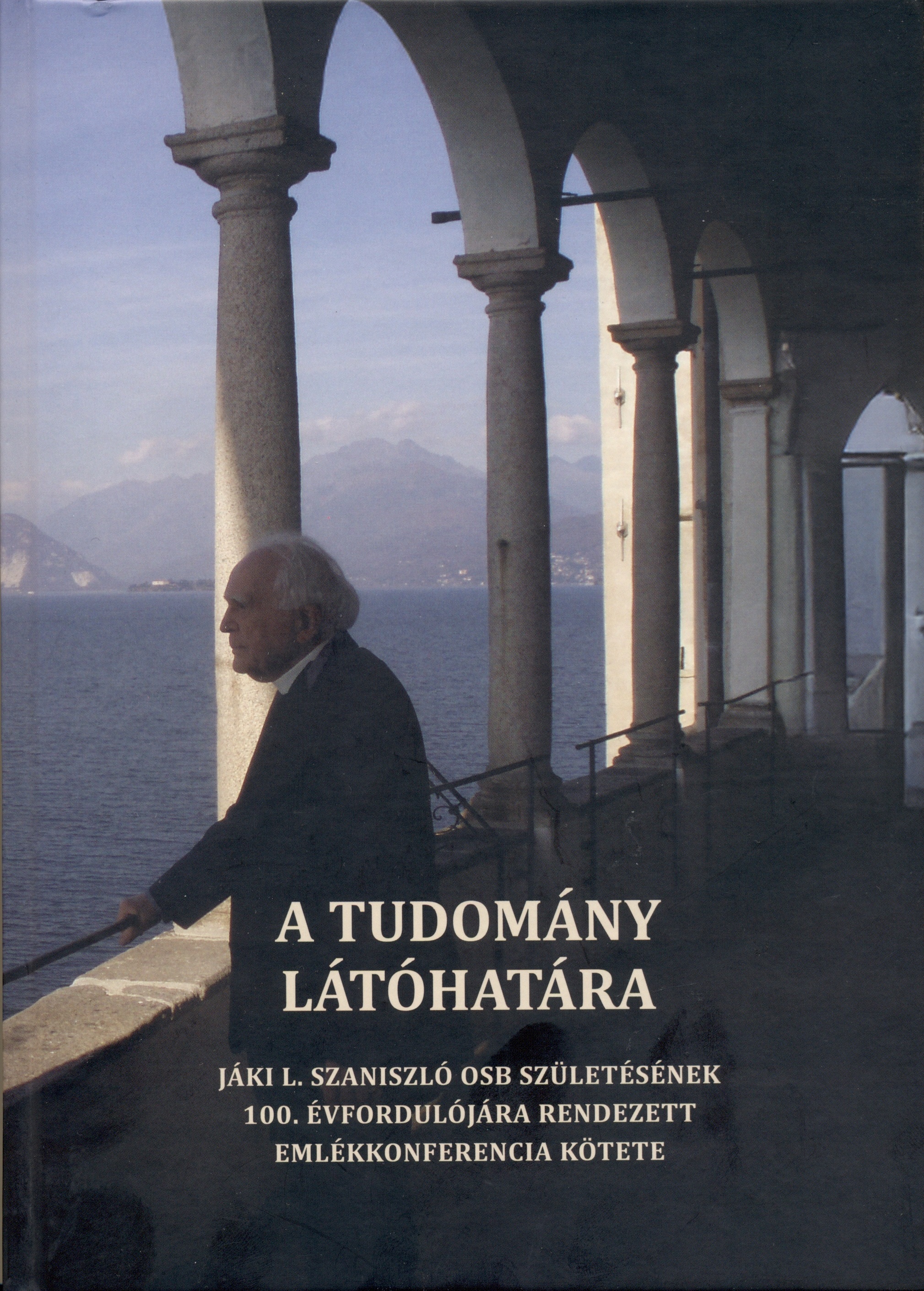
Bognár Gergely, Sárai-Szabó Kelemen (eds.)
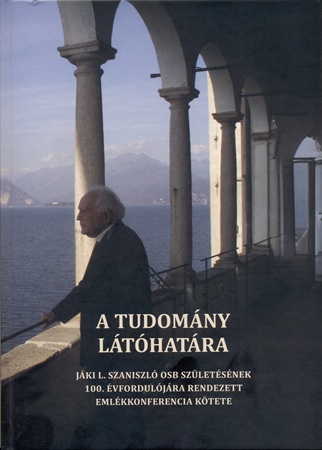
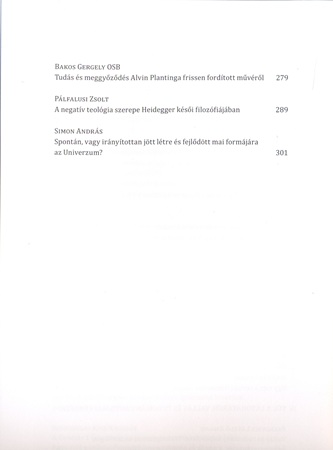
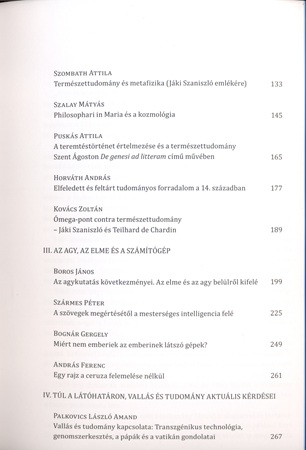
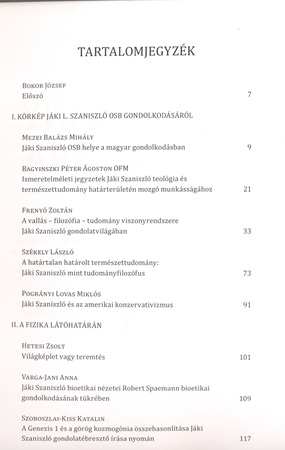
A tudomány látóhatára
Jáki L. Szaniszló OSB születésének 100. évfordulójára rendezett emlékkonferencia kötete
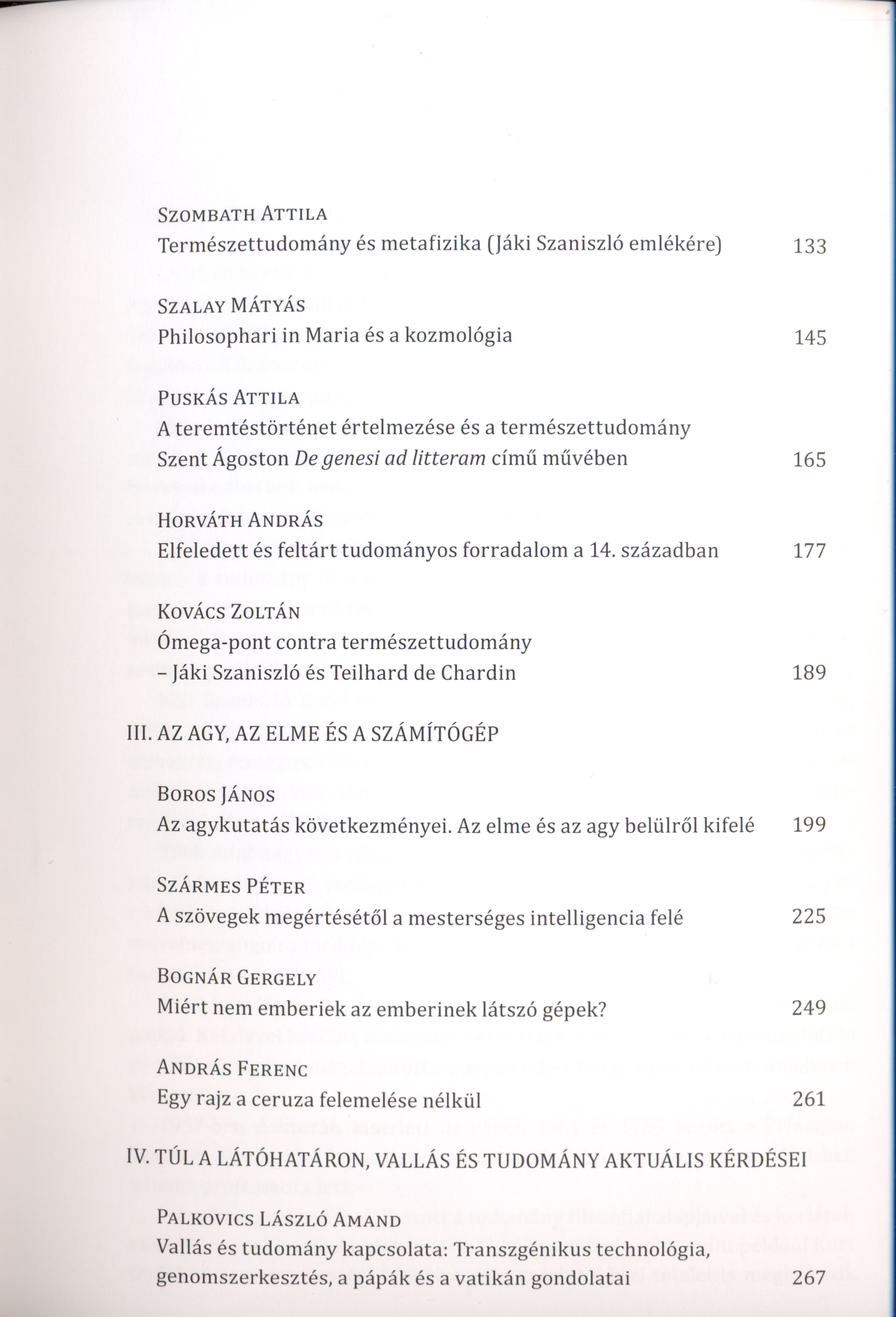
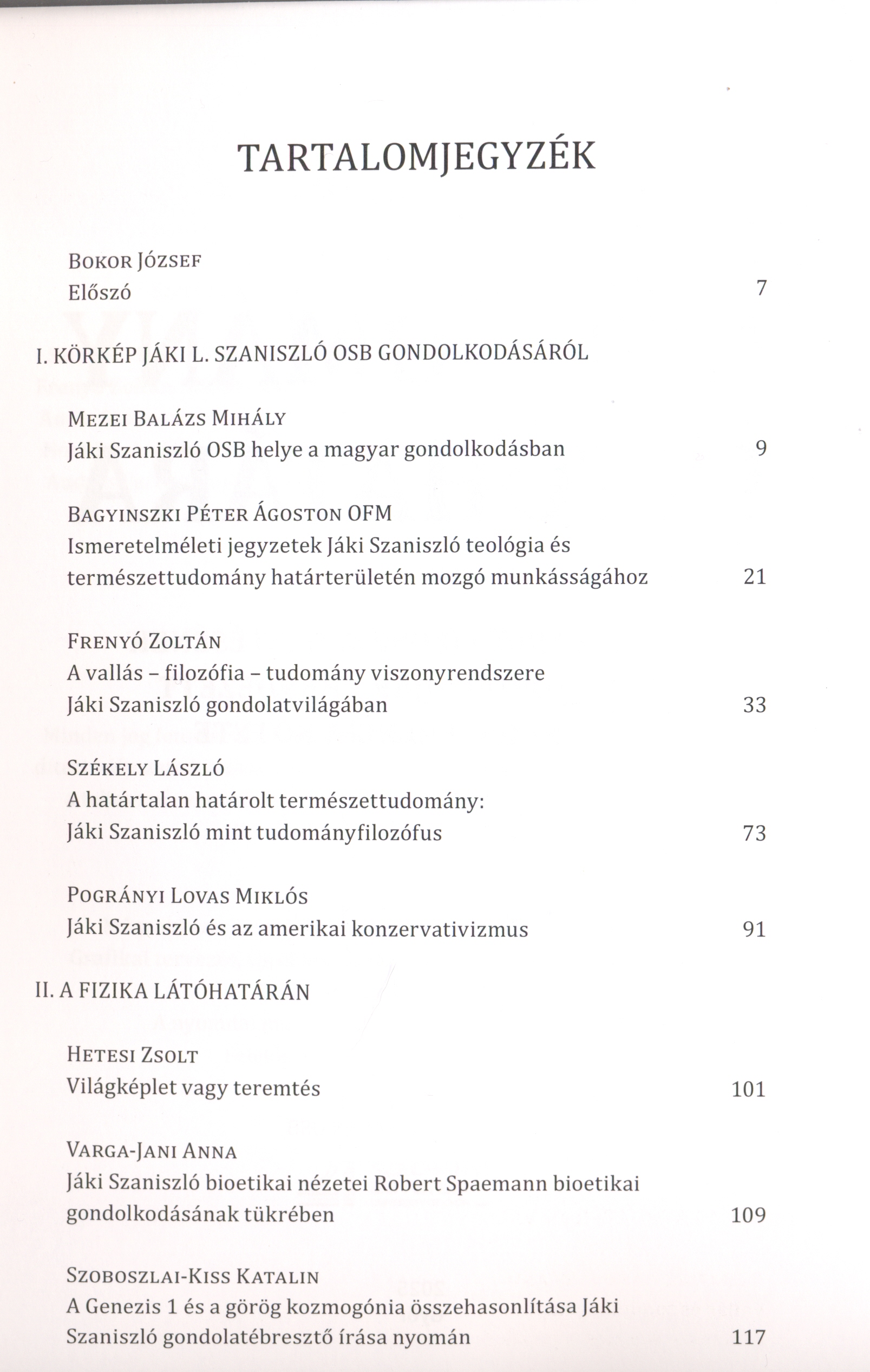
(Universitas-Győr Nonprofit, Győr, 2025), 314pp.
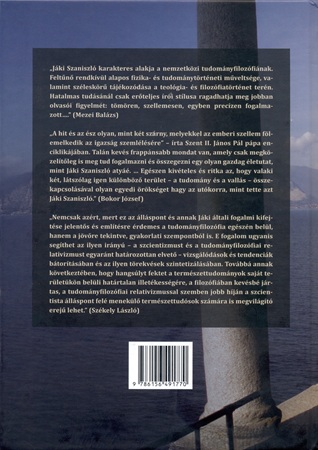
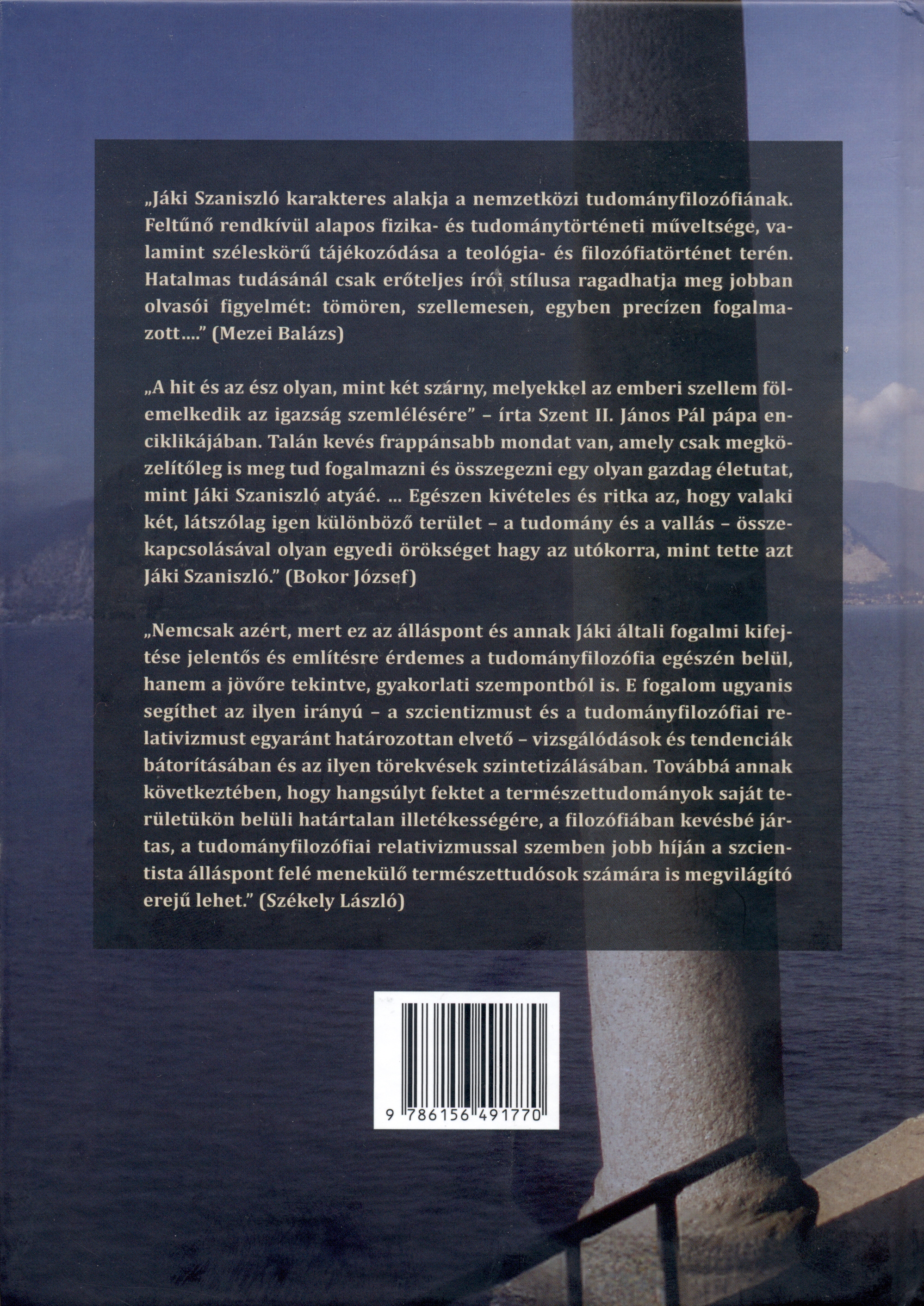
“Jáki Szaniszló karakteres alakja a nemzetközi tudományfilozófiának. Feltűnő rendkívül alapos fizika- és tudománytörténeti műveltsége, valamint széleskörű tájékozódása a teológia- és filozófiatörténet terén. Hatalmas tudásánál csak erőteljes írói stílusa ragadhatja meg jobban olvasói figyelmét: tömören, szellemesen, egyben precízen fogalmazott...” (Mezei Balázs)
“ ‘A hit és az ész olyan, mint két szárny, melyekkel az emberi szellem fölemelkedik az igazság szemlélésére’ – írta Szent II. János Pál pápa enciklikájában. talán kevés frappánsabb mondat van, amely csak megközelítőleg is meg tud fogalmazni és összegezni egy olyan gazdag életutat, mint Jáki Szaniszló atyáé. ... Egészen kivételes és ritka az, hogy valaki két, látszólag igen különböző terület – a tudomány és a vallás – összekapcsolásával olyan egyedi örökséget hagy az utókorra, mint tette azt Jáki Szaniszló." (Bokor József)
“Nemcsak azért, mert ez az álláspont és annak Jáki általi fogalmi kifejtése jelentős és említésre érdemes a tudományfilozófia egészén belül, hanem a jövőre tekintve, gyakorlati szempontból is. e fogalom ugyanis segíthet az ilyen irányú – a szcientizmust és a tudományfilozófiai relativizmust egyaránt határozottan elvető – vizsgálódások és tendenciák bátorításában és az ilyen törekvések szintetizálásában. Tovább annak következtében, hogy hangsúlyt fektet a természettudományok saját területükön belüli határtalan illetékességére, a filozófiában kevésbé jártas, a tudományfilozófiai relativizmussal szemben jobb híján a szcientista álláspont felé menekülő természettudósok számára is megvilágító erejű lehet.” (Székely László)
English version of the above:
“Stanley Jaki is a characteristic figure in international philosophy of science. His extremely thorough knowledge of physics and the history of science, as well as his extensive knowledge of the history of theology and philosophy, are striking. Only his powerful writing style can capture the attention of his readers more than his vast knowledge: he wrote concisely, wittily, and precisely...” (Balázs Mezei)
“ ‘Faith and reason are like two wings with which the human spirit rises to contemplate the truth,’ wrote Saint John Paul II in his encyclical Fides et ratio. There are perhaps few more striking sentences that can even approximately formulate and summarize such a rich life path as that of Father Stanley Jaki... It is quite exceptional and rare that someone, by combining two seemingly very different fields – science and religion – leaves such a unique legacy to posterity as Stanley Jaki did.” (József Bokor)
“The position and the conceptual elaboration by Jaki are significant and worth mentioning not only within the philosophy of science as a whole, but also from a practical point of view, looking to the future. His thought can help to encourage such investigations and tendencies –which firmly reject both scientism and philosophical relativism– and to synthesize such endeavors. Furthermore, because it emphasizes the unlimited competence of the natural sciences within their own field, it can also be illuminating for natural scientists who are less versed in philosophy and who, for lack of a better term, flee towards the scientist position in opposition to philosophical relativism.” (László Székely)
The Table of Contents can be seen here:
An electronic copy of the Acts of the Conference may be found
here.
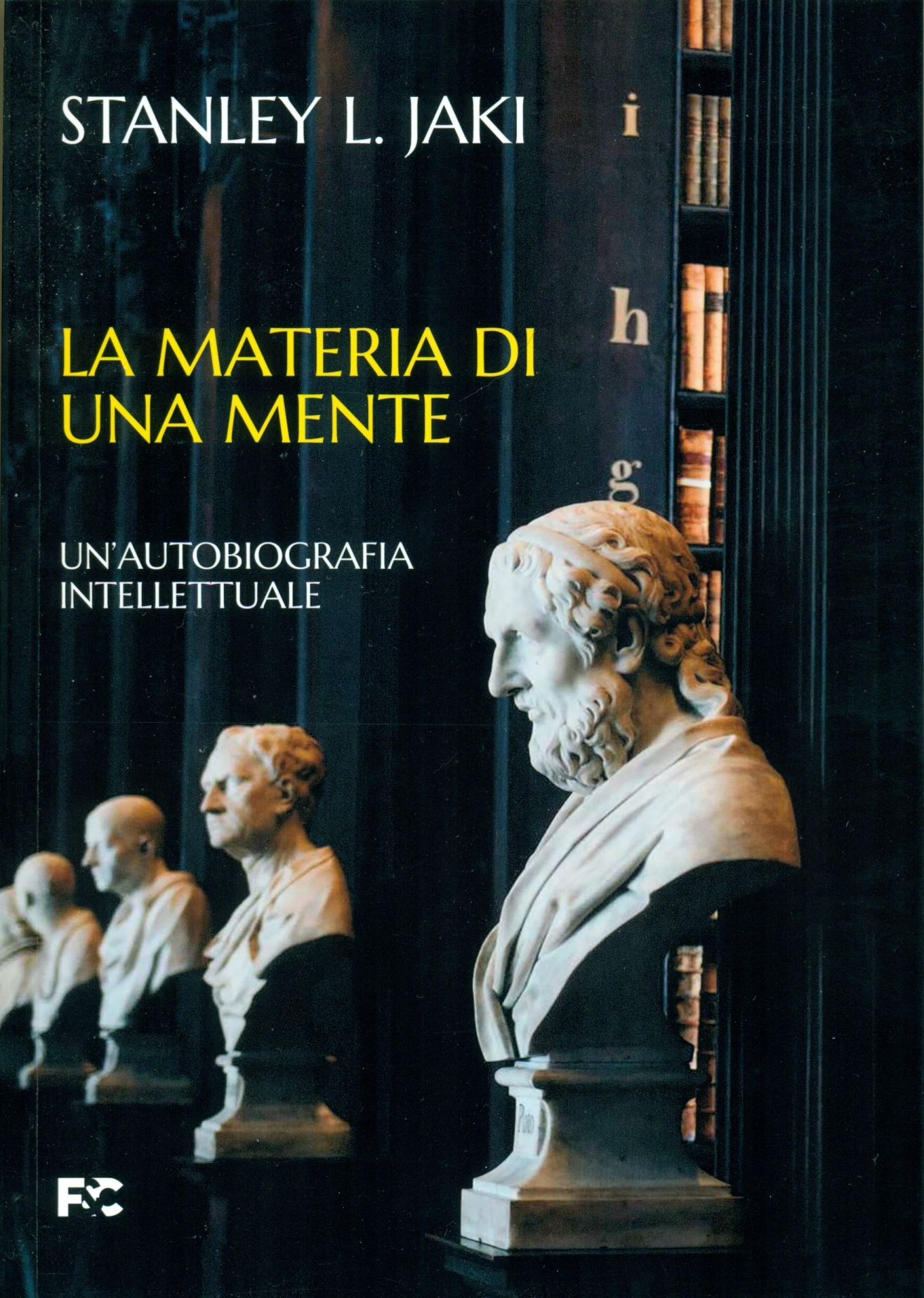
Stanley L. Jaki
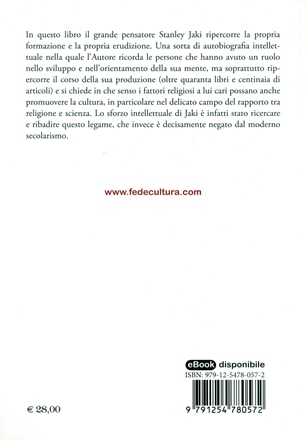
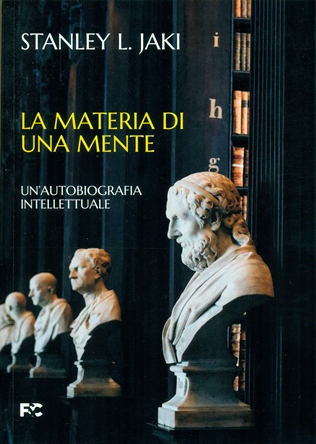 La materia di una mente: Un’autobiografia intellettuale
(Verona: Fede & Cultura, 2024), 490pp.
Traduzione dall’inglese di Antonio Colombo.
Questa è la versione italiana di
A Mind’s Matter: An Intellectual Autobiography
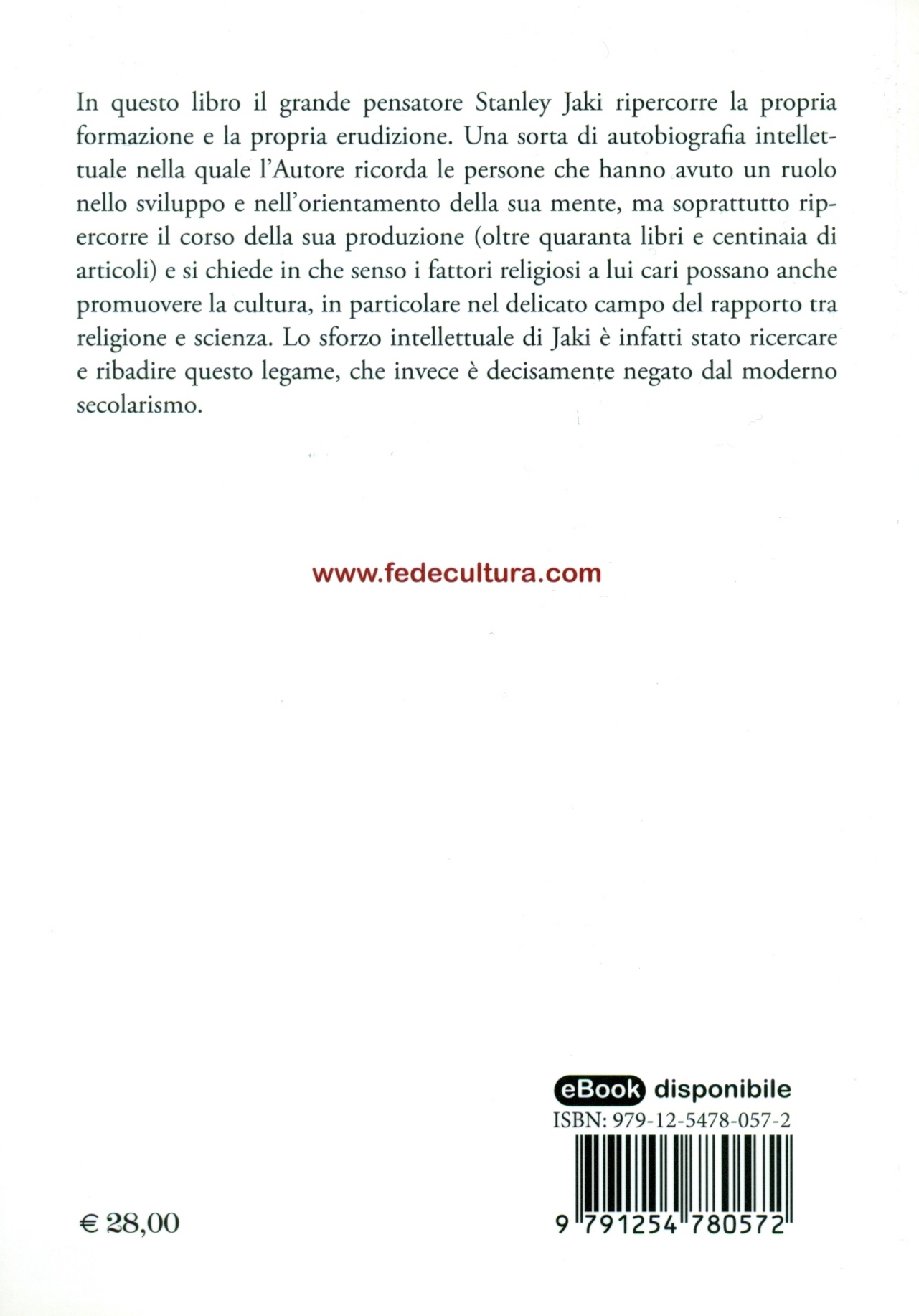
Il libro ripercorre la vicenda intellettuale di Padre Jaki vista con gli occhi del "protagonista", e comprende anche i due capitoli aggiunti da Padre Jaki all’edizione originale del libro, uscita nel 2002, nonché una lista delle pubblicazioni di Padre Jaki, aggiornata al 2022. Nel libro ci sono molte indicazioni preziose per la comprensione del pensiero di Padre Jaki, ma che sono anche di aiuto a ognuno di noi per vivere l’avventura cristiana di ogni giorno.
In questa autobiografia l’autore ricorda le persone che hanno avuto un ruolo nello sviluppo e nell’orientamento della sua mente, ma soprattutto ripercorre il corso della sua produzione (oltre quaranta libri e centinaia di articoli) e si chiede in che senso i fattori religiosi a lui cari possano anche promuovere la cultura, in particolare nel delicato campo del rapporto tra religione e scienza. Lo sforzo intellettuale di Jaki è infatti stato ricercare e ribadire questo legame, che invece è decisamente negato dal moderno secolarismo.
Il libro è disponibile
qui, sia in formato cartaceo che come e-book.
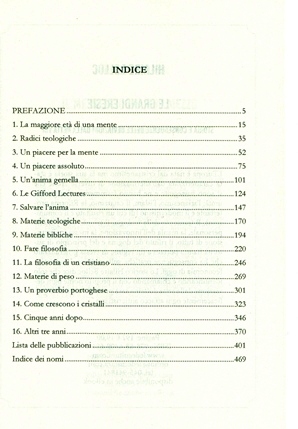
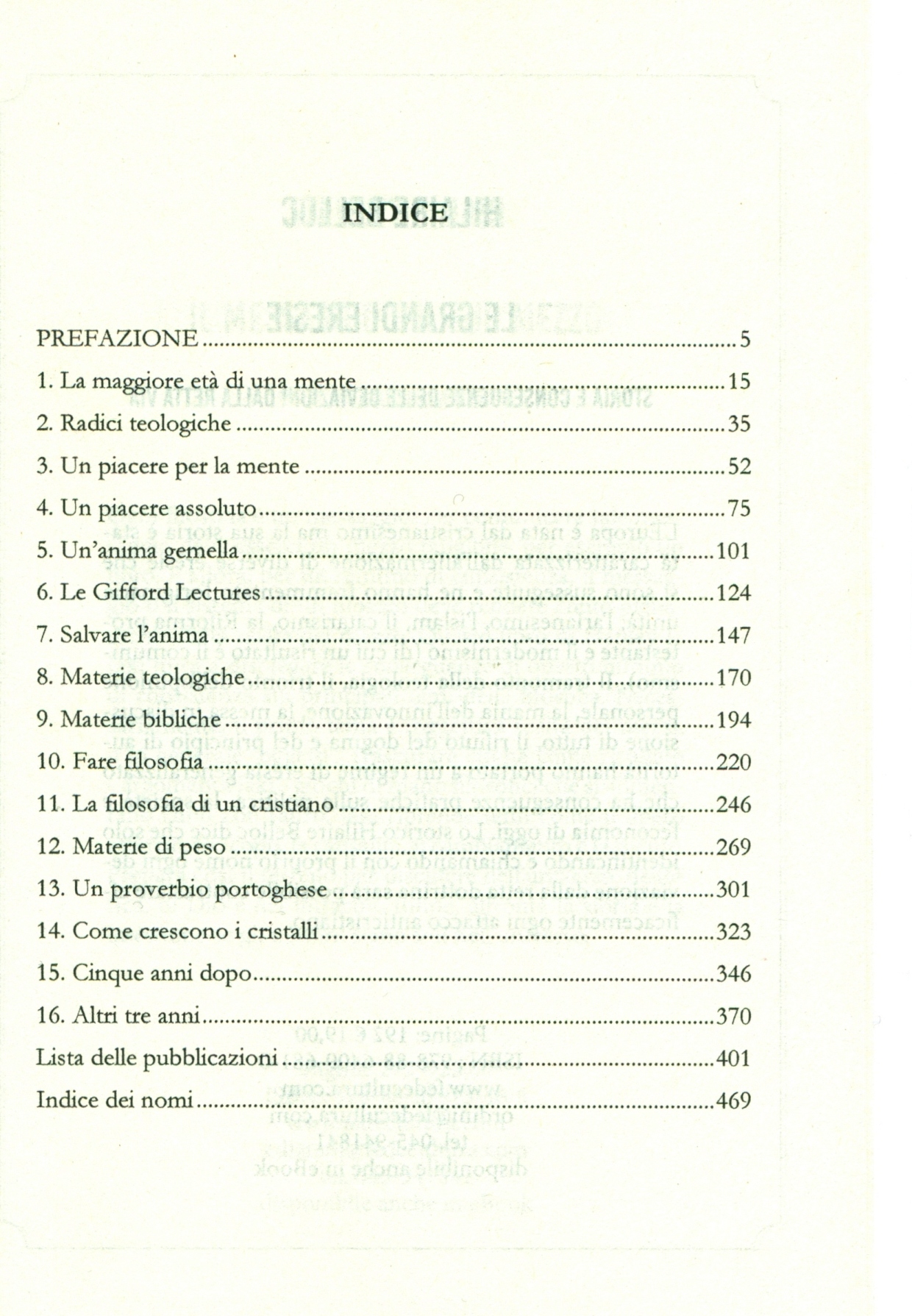
L’indice del libro è visibile qui:
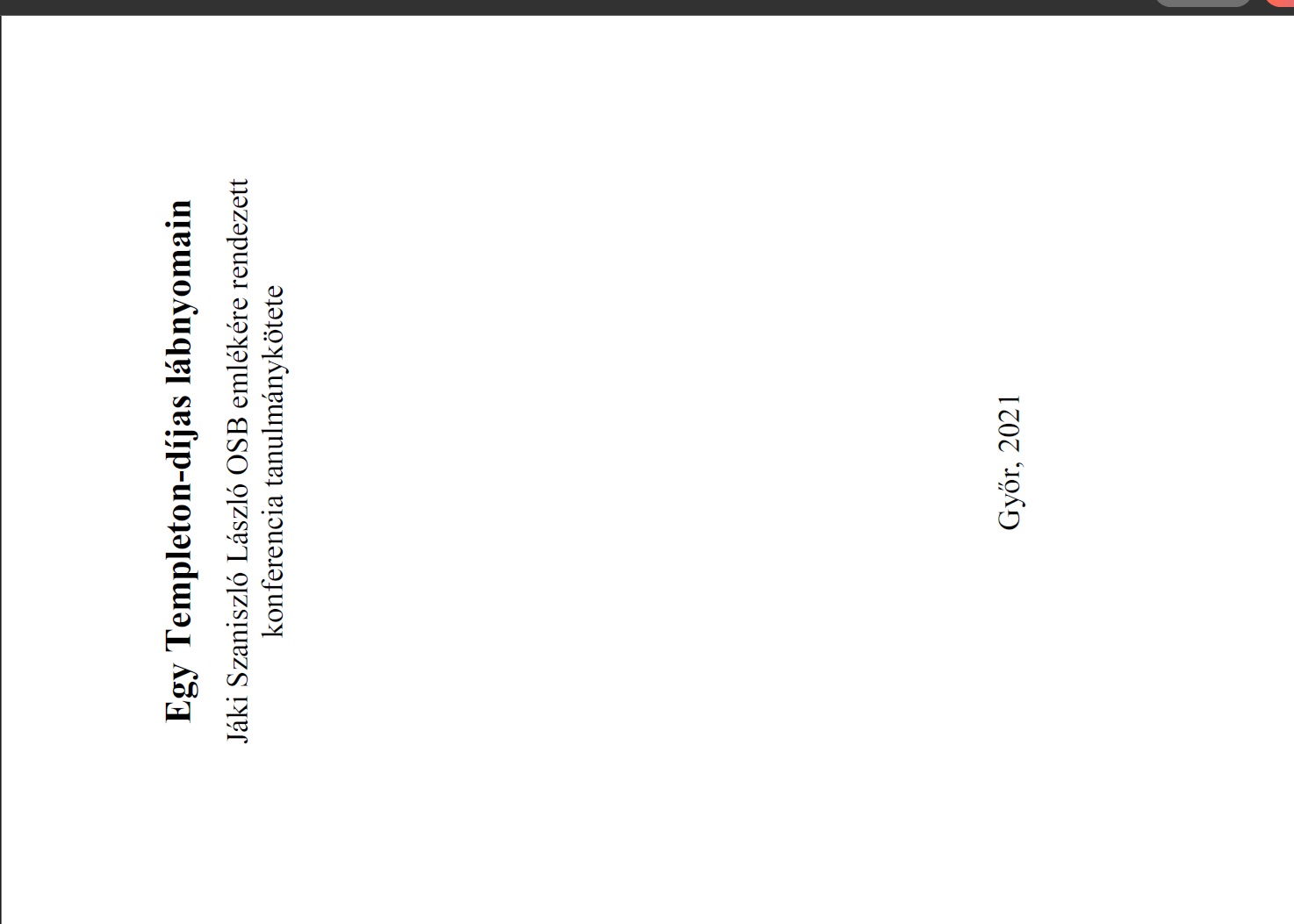
Gergely Bognár, Ágnes Szabady, Márta Sárdi (eds.)
Egy Templeton-díjas lábnyomain –
Jáki Szaniszló László OSB emlékére rendezett
konferencia tanulmánykötete
(Universitas-Győr Nonprofit, Győr, 2021), 118pp.
The Frontispiece can be seen here:
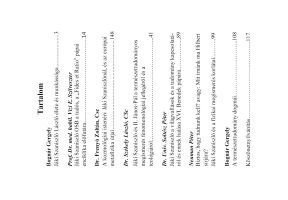
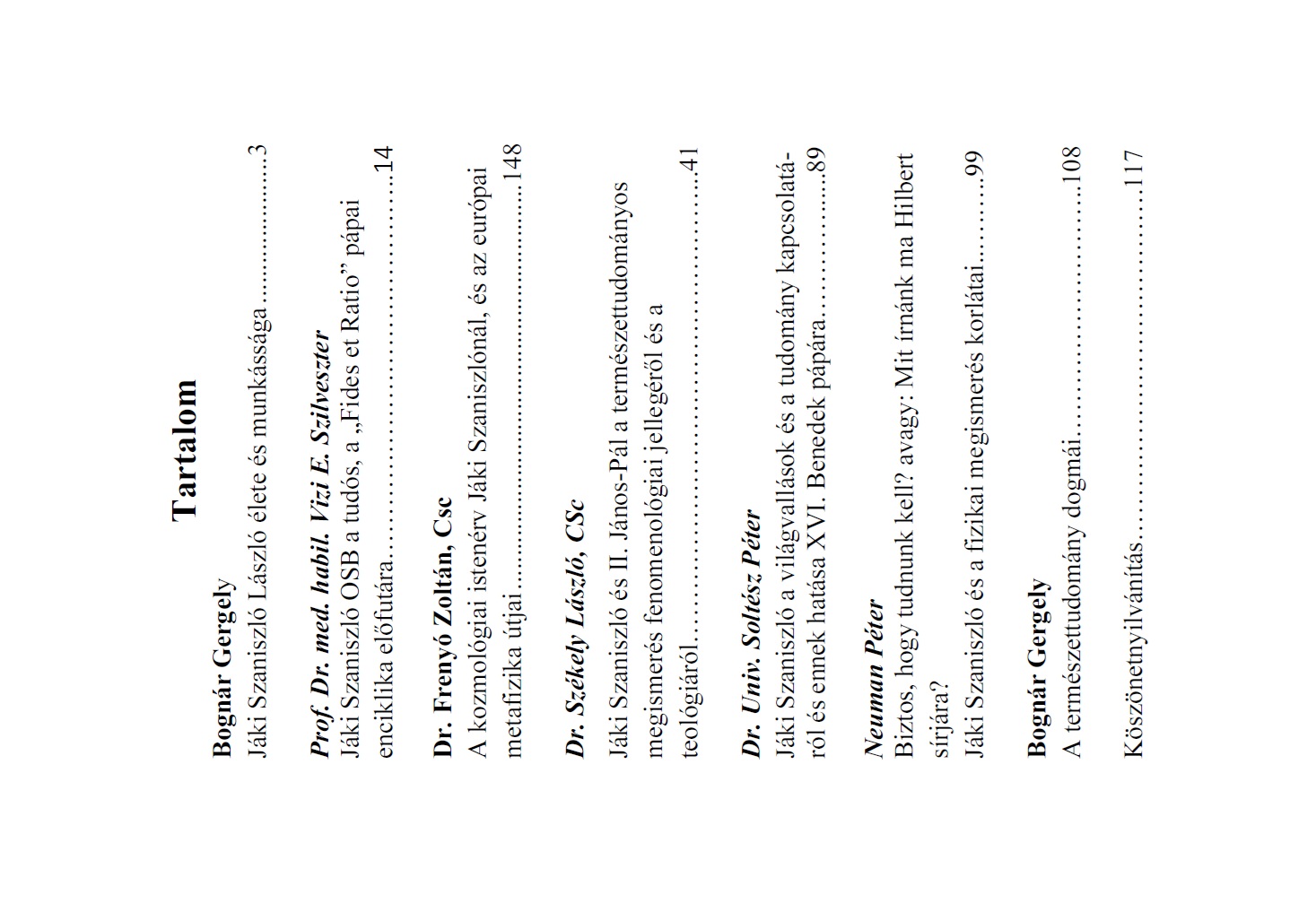
The Table of Contents can be seen here:
An electronic copy of the Acts of the Conference (in Hungarian) may be found
here.
Rafael Pascual, Antonio Colombo (eds.)
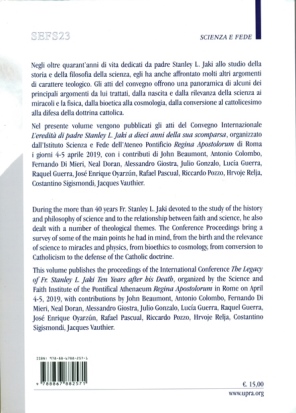
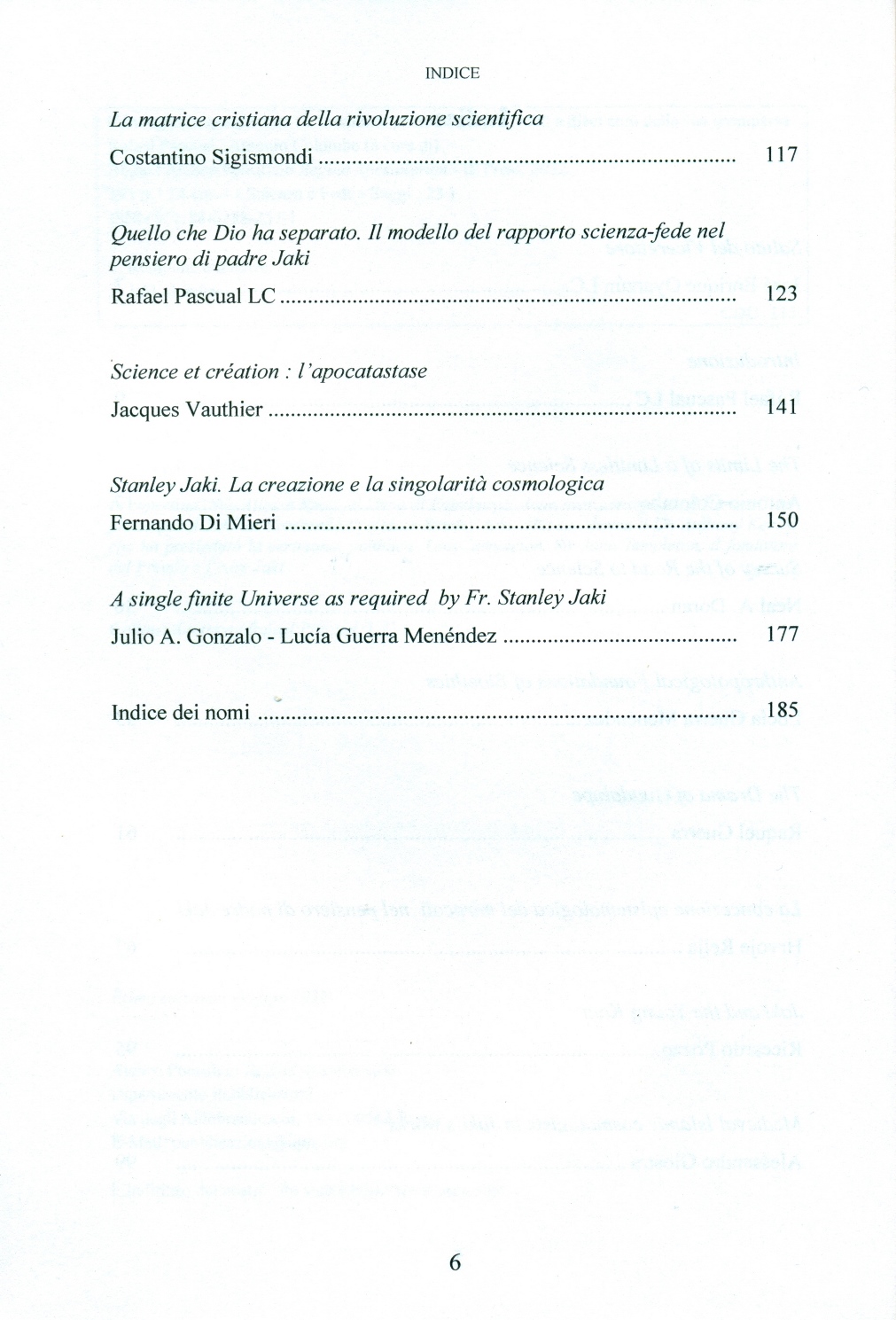
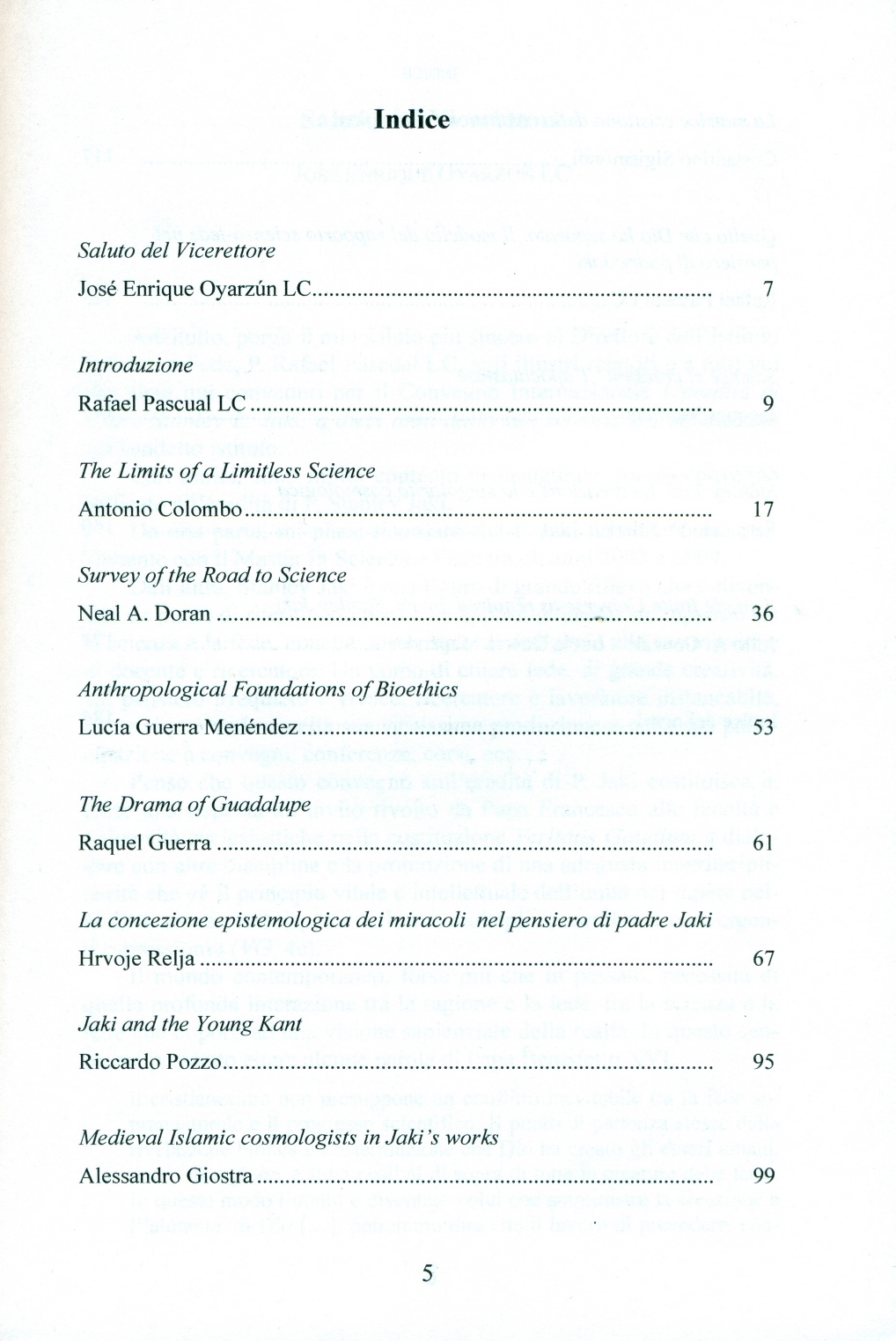
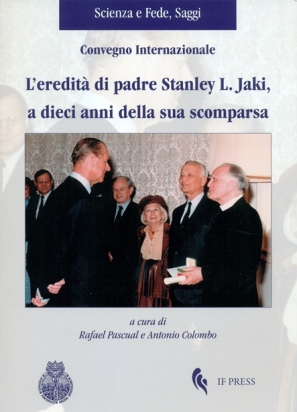 L’eredità di Padre Stanley L. Jaki, a dieci anni dalla sua scomparsa
The Legacy of Fr. Stanley L. Jaki, ten years after his death
L’eredità di Padre Stanley L. Jaki, a dieci anni dalla sua scomparsa
The Legacy of Fr. Stanley L. Jaki, ten years after his death
(Roma: Ateneo Pontificio Regina Apostolorum;
Roma: IF Press, 2022), 188pp.
Atti del Convegno Internazione tenuto a Roma il 4-5 aprile 2019.
Acts of the International Conference held in Rome on 4-5 April 2019.
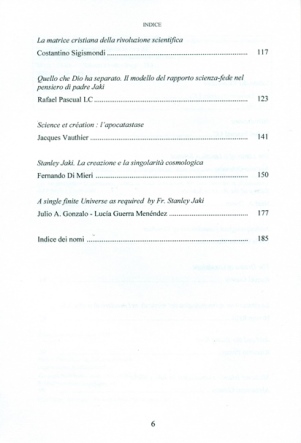
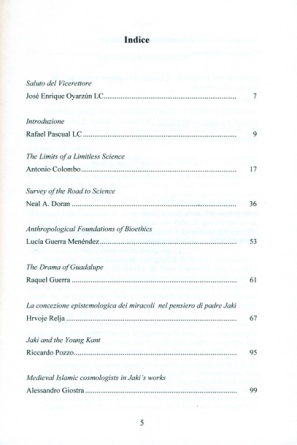
Contributi di:
José Enrique Oyarzún,
Rafael Pascual,
Antonio Colombo,
Neal A. Doran,
Lucía Guerra Menéndez,
Raquel Guerra,
Hrvoje Relja,
Riccardo Pozzo,
Alessandro Giostra,
Costantino Sigismondi,
Jacques Vauthier,
Fernando Di Mieri,
Julio A. Gonzalo.
The essays are written in English, Italian, French.
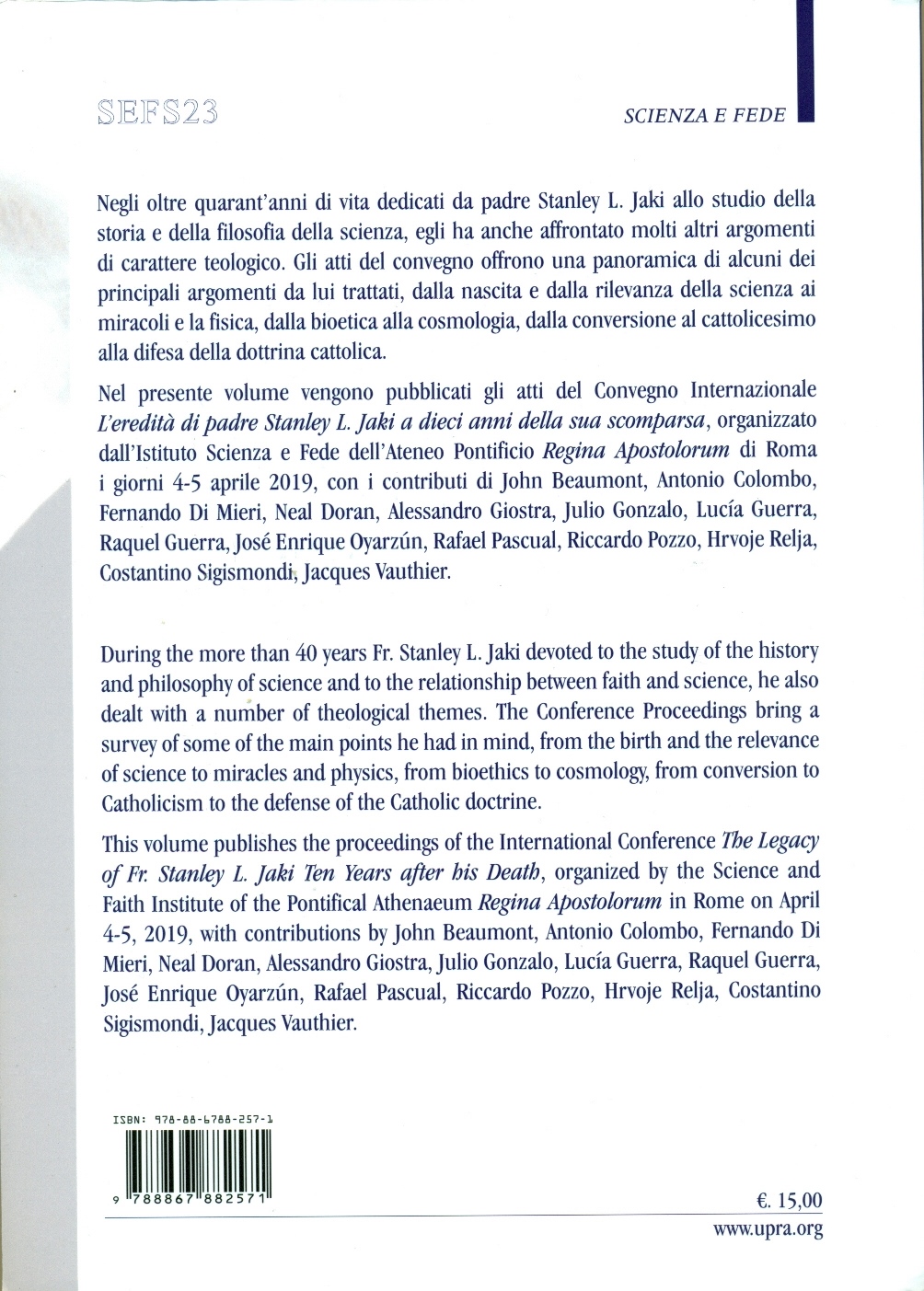
L’indice del libro è visibile qui:
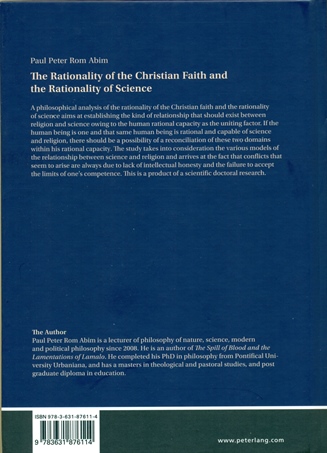
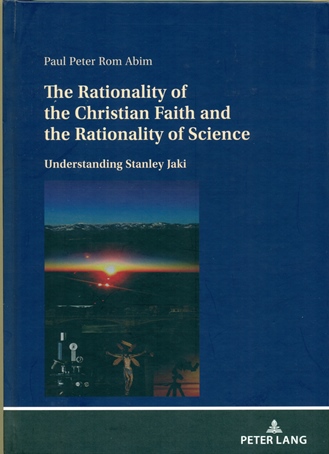
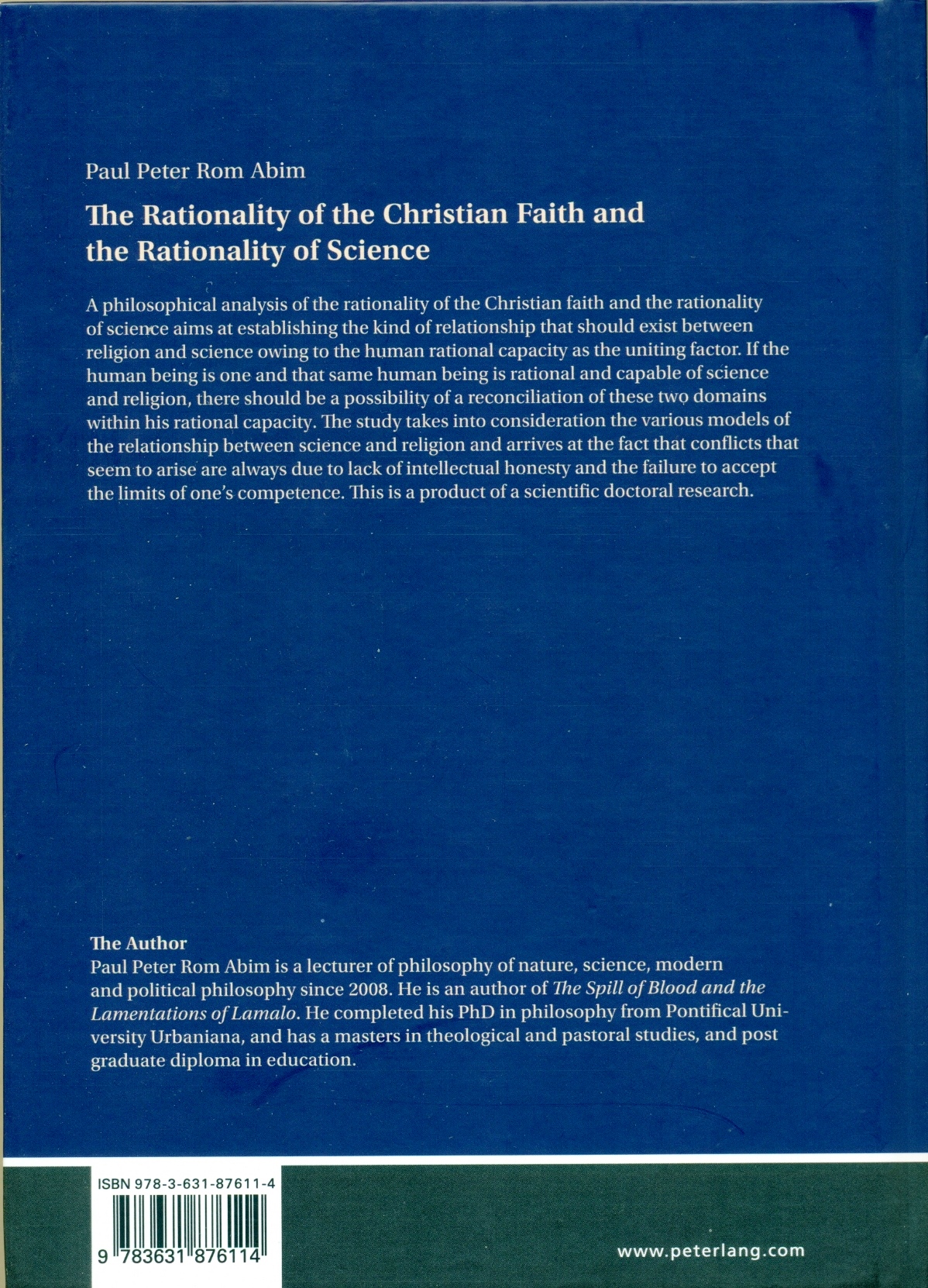
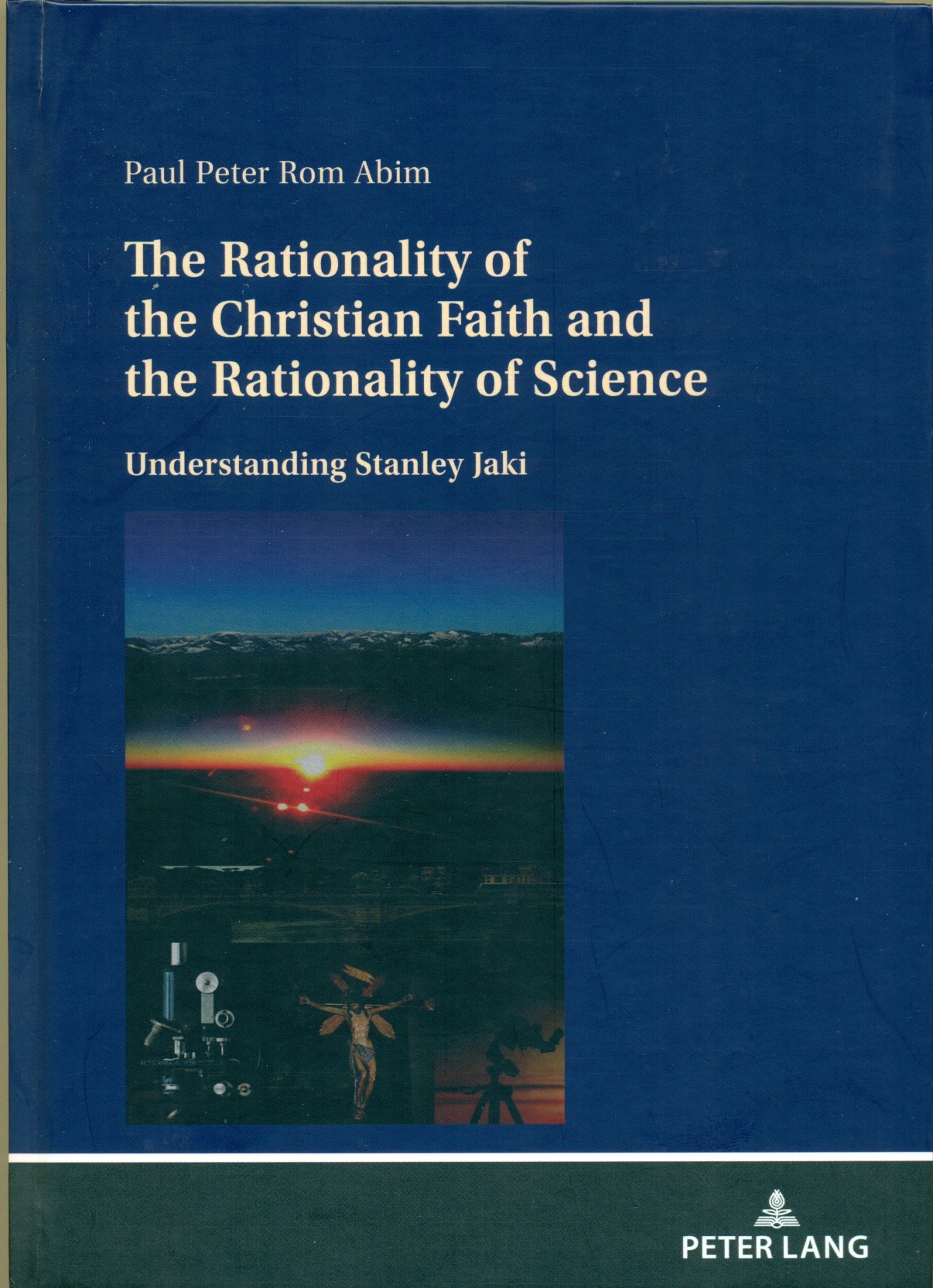
Paul Peter Abim Rom
The Rationality of the Christian Faith and the Rationality of Science
Understanding Stanley Jaki
(Berlin: Peter Lang, 2022), 214pp.
Abstract
To deal with rationality is to immediately deal with reason as the fundamental distinguishing mark of the human person. Reason and its rationality make us deal no longer with a thing but a person, whose existence precedes his thinking and whose thinking be it religious or scientific is according to that very faculty of reason.
It is therefore, justifiable to deal with science and religion as two realities distinct but integrated by human reason. Science and Christian faith practiced in religion are two human occupations that have gained central attention of the core of the existence of the human being himself. In science, man tries to decipher the content of nature, what it is made of, how it functions and how he can use them for his benefits and the benefit of others. Scientific investigations, therefore, become a natural mission to conquer and subdue the world and render to God the service of the totality of creation.
The investigation into natural things by science is only possible because man is reasonable and, because he is reasonable, he finds some patterns in nature that demonstrate it being a product of reason. It is this reasonableness that constitutes the rationality of his operation. Man’s other natural ability is the transcendence of the natural things that object to his intellect and senses. This transcendence leads him into metaphysical questions, the most fundamental of which is why there should be something at all and not nothing. He relates concretely to this reality beyond him in the practice of his religion.
Man’s religious attitudes seems to be a natural inclination to look at realities beyond the physical. It is this metaphysical desire that drives him to seek the cause of his own being and that of all beings. These metaphysical questions cannot be arrived at without the use of reason. Nature is so rational that man cannot but see beyond it in his rationality. Religion and science therefore, have two common denominators: reason and natural things. If this is so, and if reason is only one, then there must be an integration in the one without fusing the two. If this is possible, then philosophy, that is the love of wisdom cannot will not be ignored. These words of Etienne but be the unifying master that will not be ignored.
Gilson summarised it all:
Were it in my power to do so, I would rather leave you with a gift. Not wisdom, which I have not and no man can give, but the next best thing: the love of wisdom, for which philosophy is another word. For to love wisdom is also to love science, and prudence; it is to seek peace in the inner accord of each mind with itself and in the mutual accord of all minds.
— É GILSON, The Unity of Philosophical Experience, Ignatius Press, San Francisco (CA) 1937, 257.
Stanley Jaki delved deeply into philosophy from his study of the history of science after reading the beautiful book of Gilson, The Unity of Philosophical Experience (1937), a book that demonstrate one of the best of arts of doing philosophy. It is wisdom and prudence that guarantees the equilibrium both in doing science and in the search of the ultimate explanation of all things in religion and the love of that wisdom plays a bridging role between science and religion.
The book is available
here.
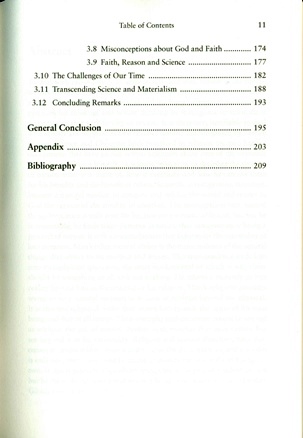
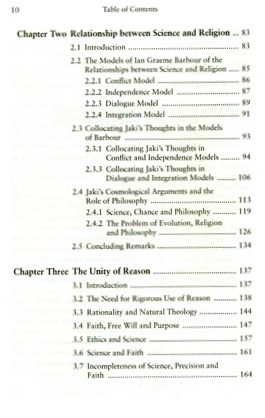
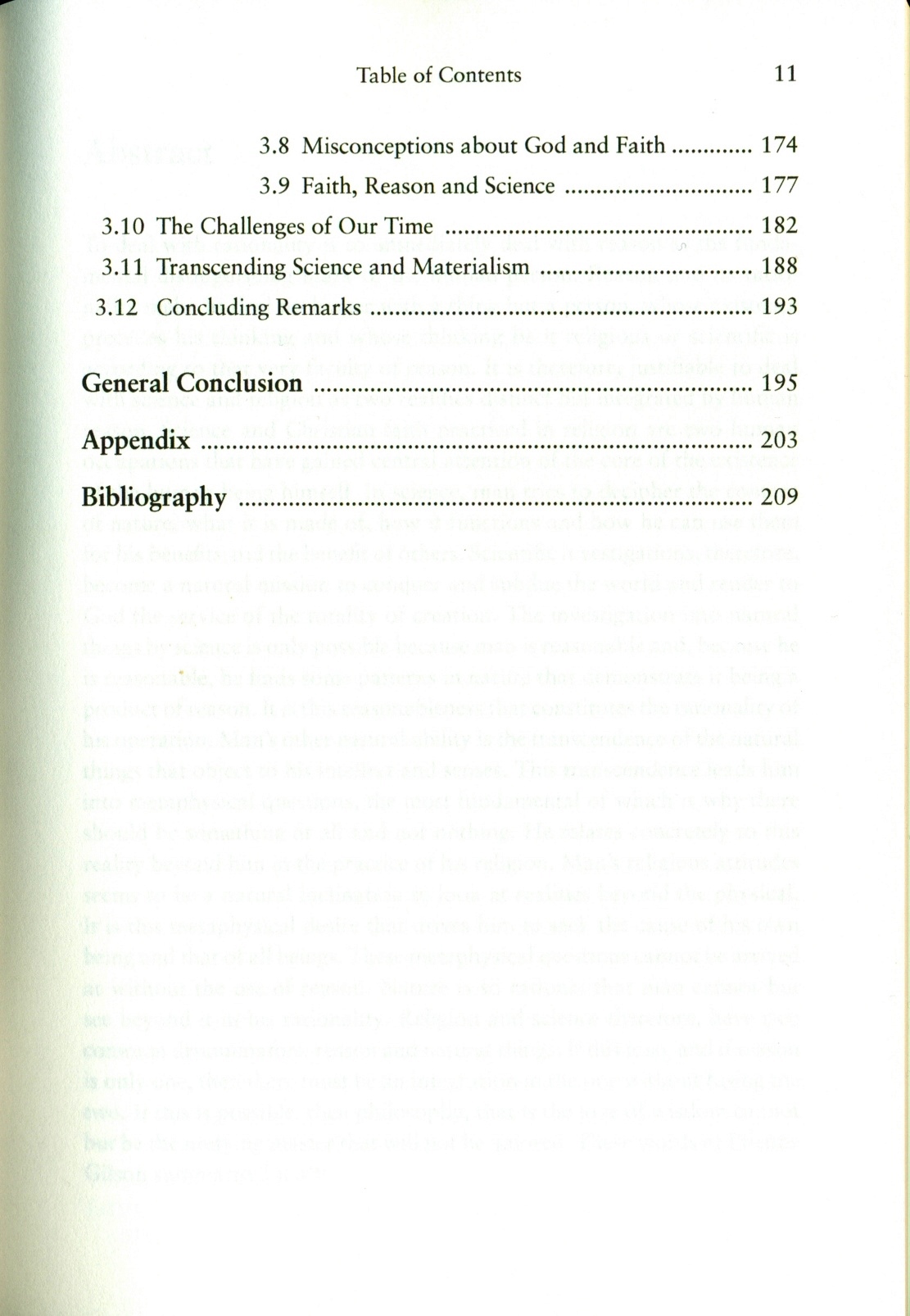
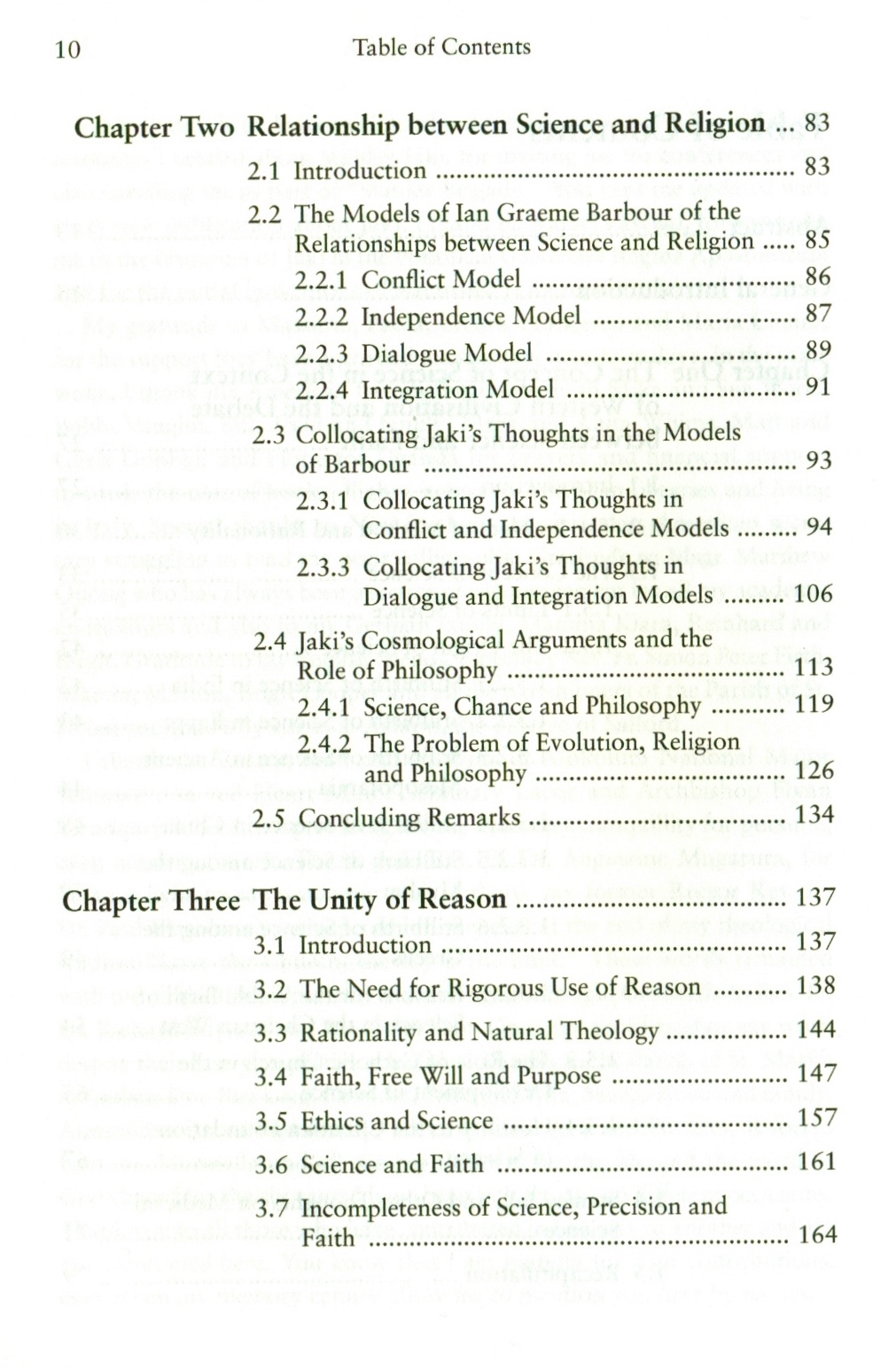
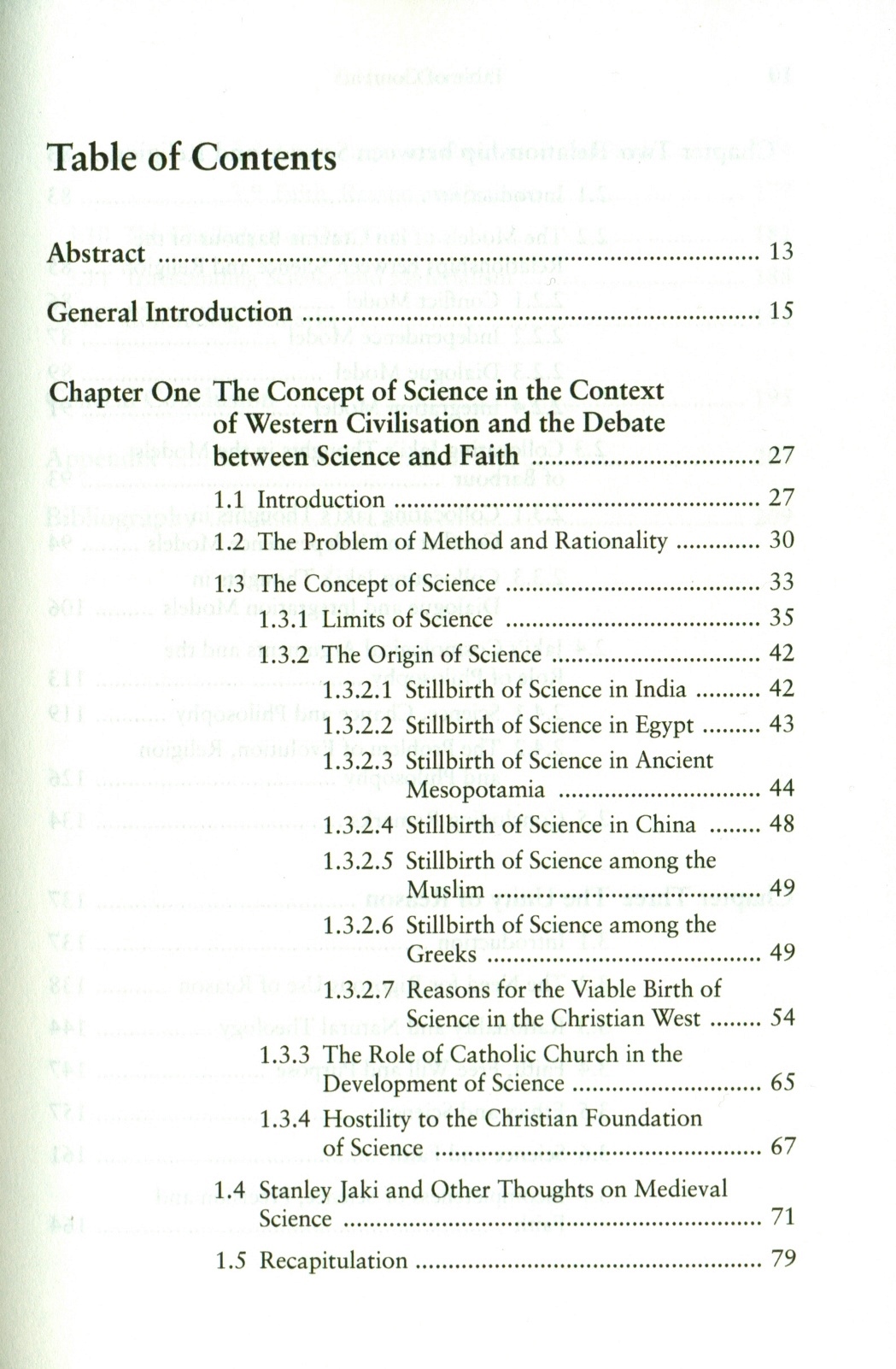
The Table of Contents can be seen here:
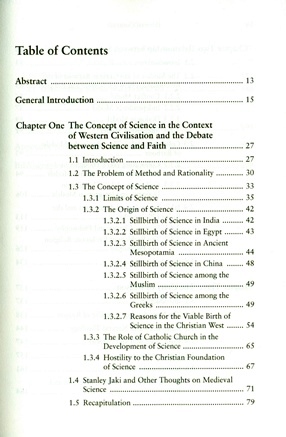
E. Szilveszter Vizi,
Sára Réka Kabat,
Gabriella Kenéz,
Flora Moravcsik-Nagy,
Alexandra Hortenzia Nagy (eds.)
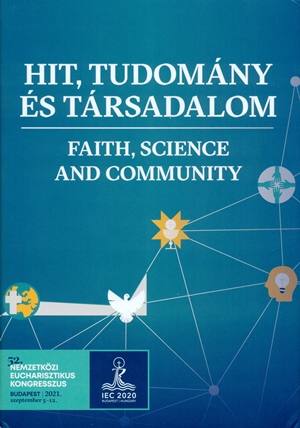
Hit, tudomány és társadalom
Tanulmányok Az 52. Nemzetközi Eucharisztikus Kongresszus Tiszetletére
Faith, science and community
Studies in honor of the 52th International Eucharistic Congress
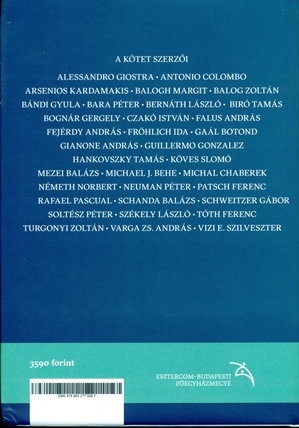
(Budapest: Szent István Társulat, 2021), 508pp.
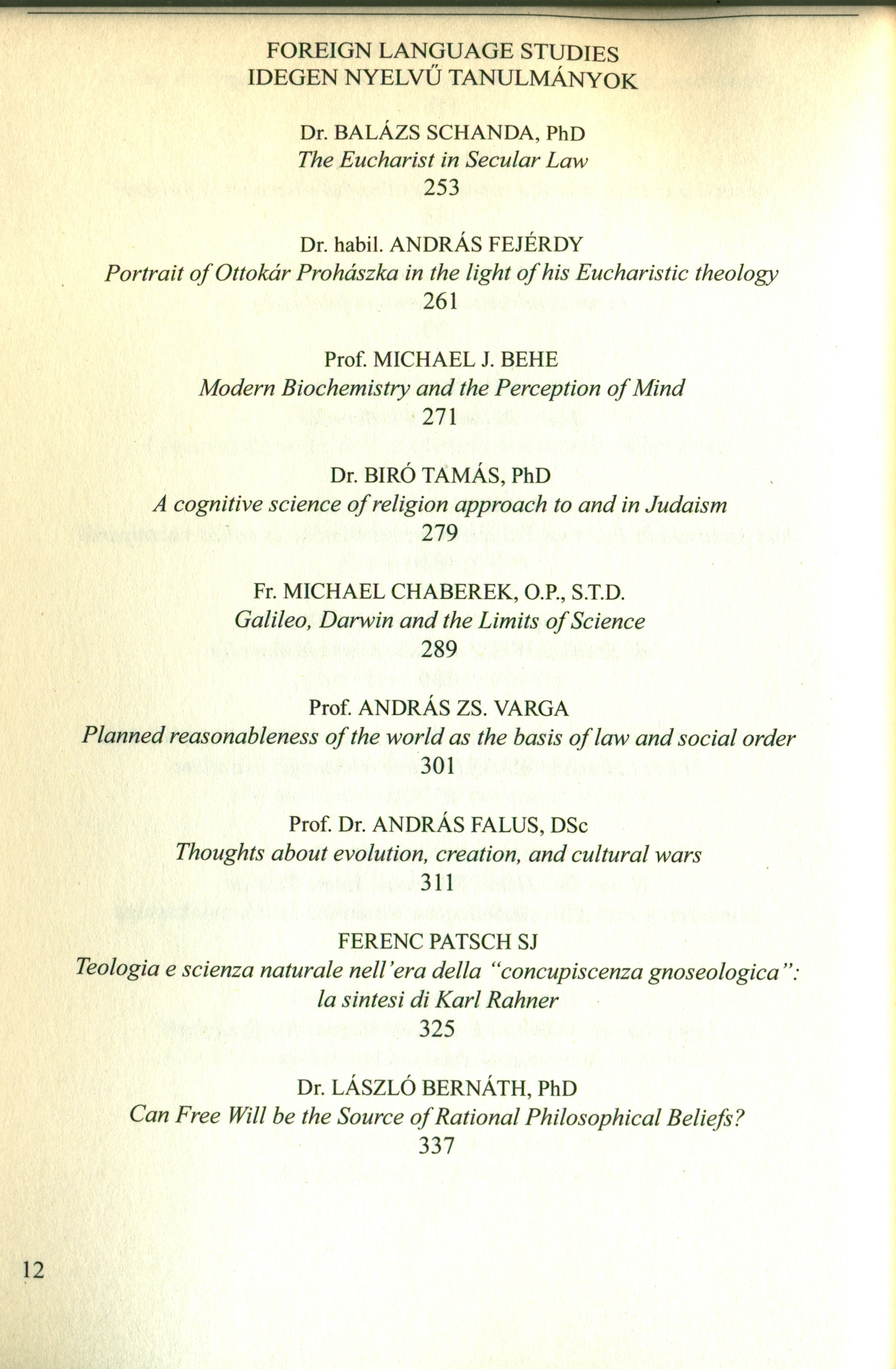
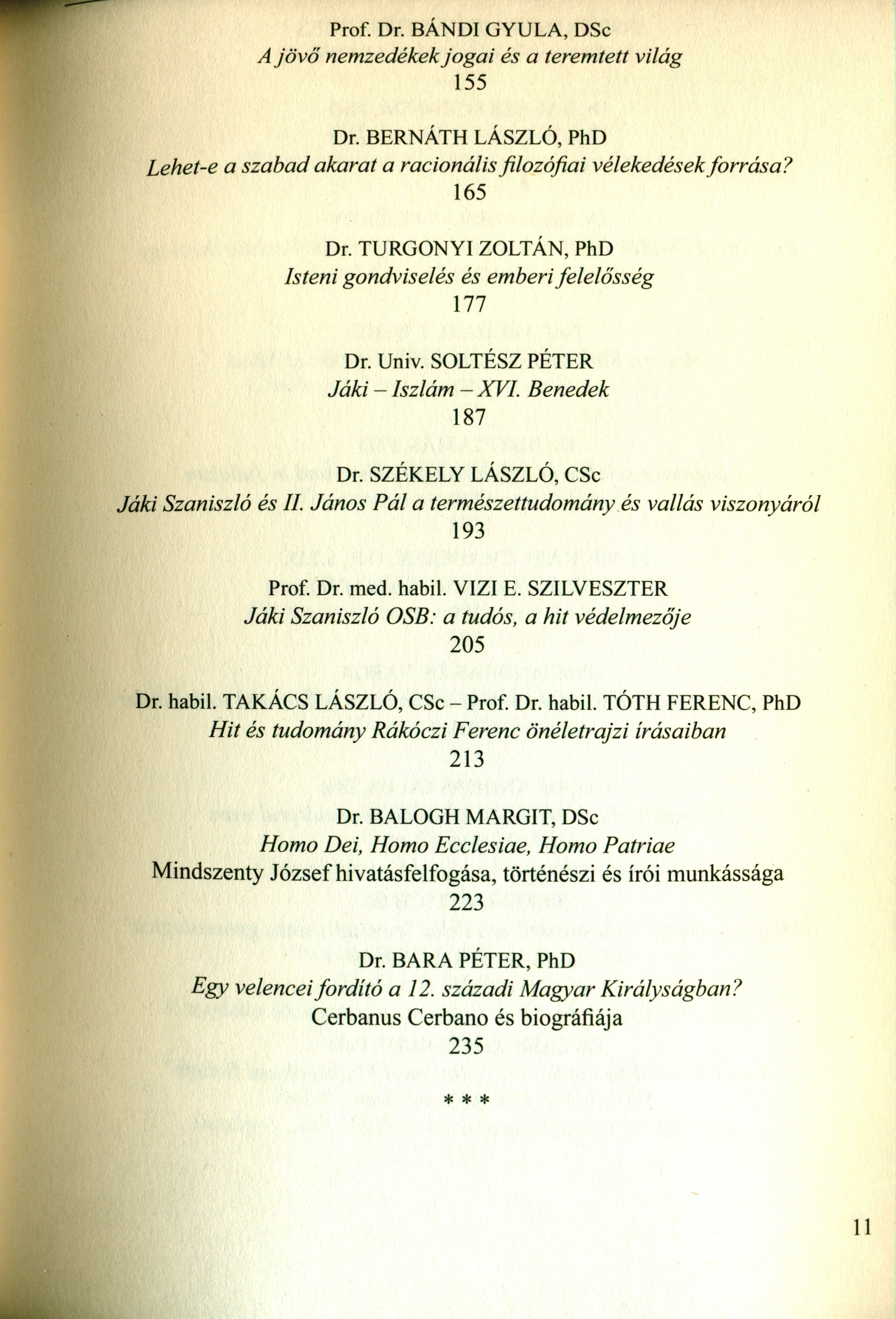
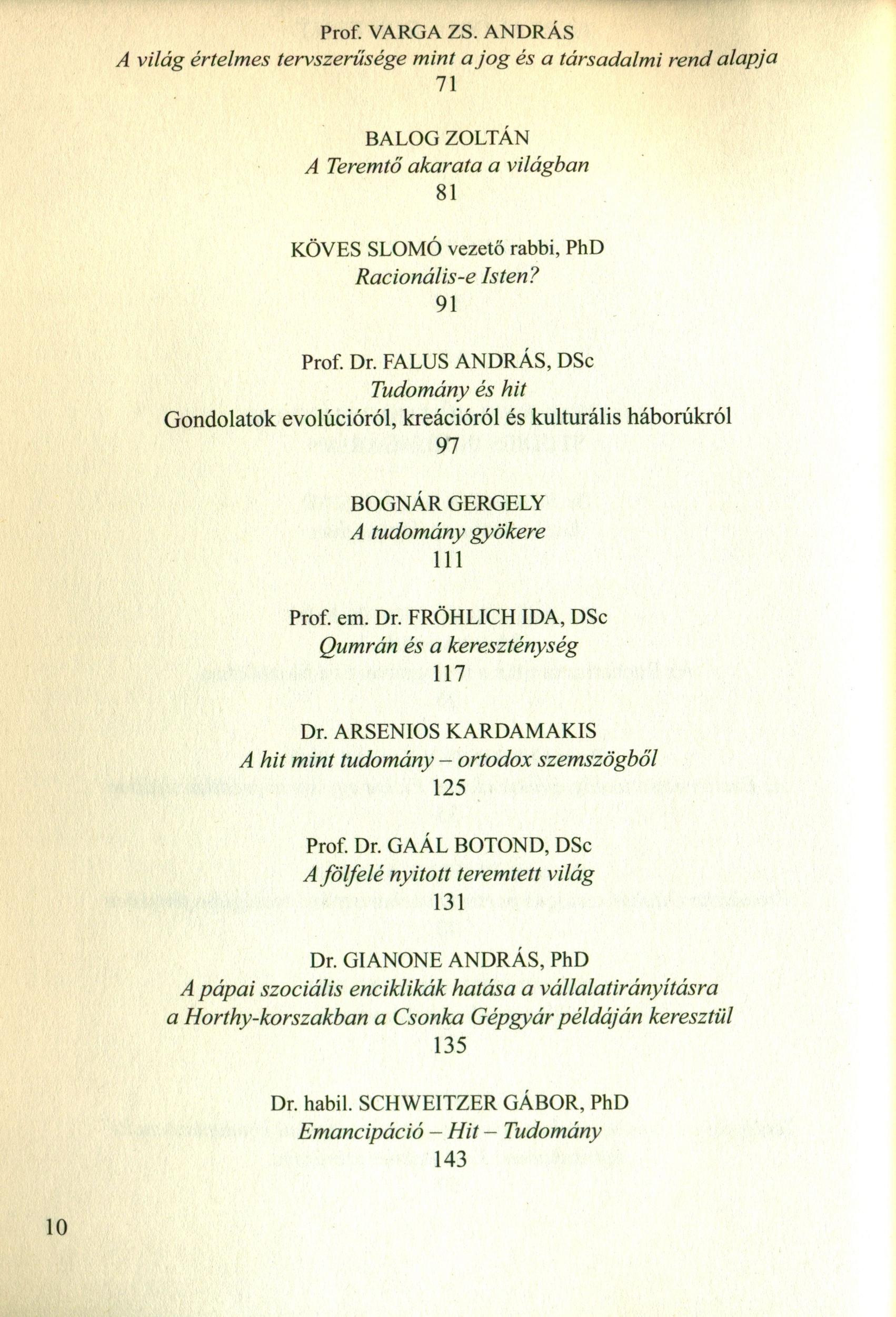
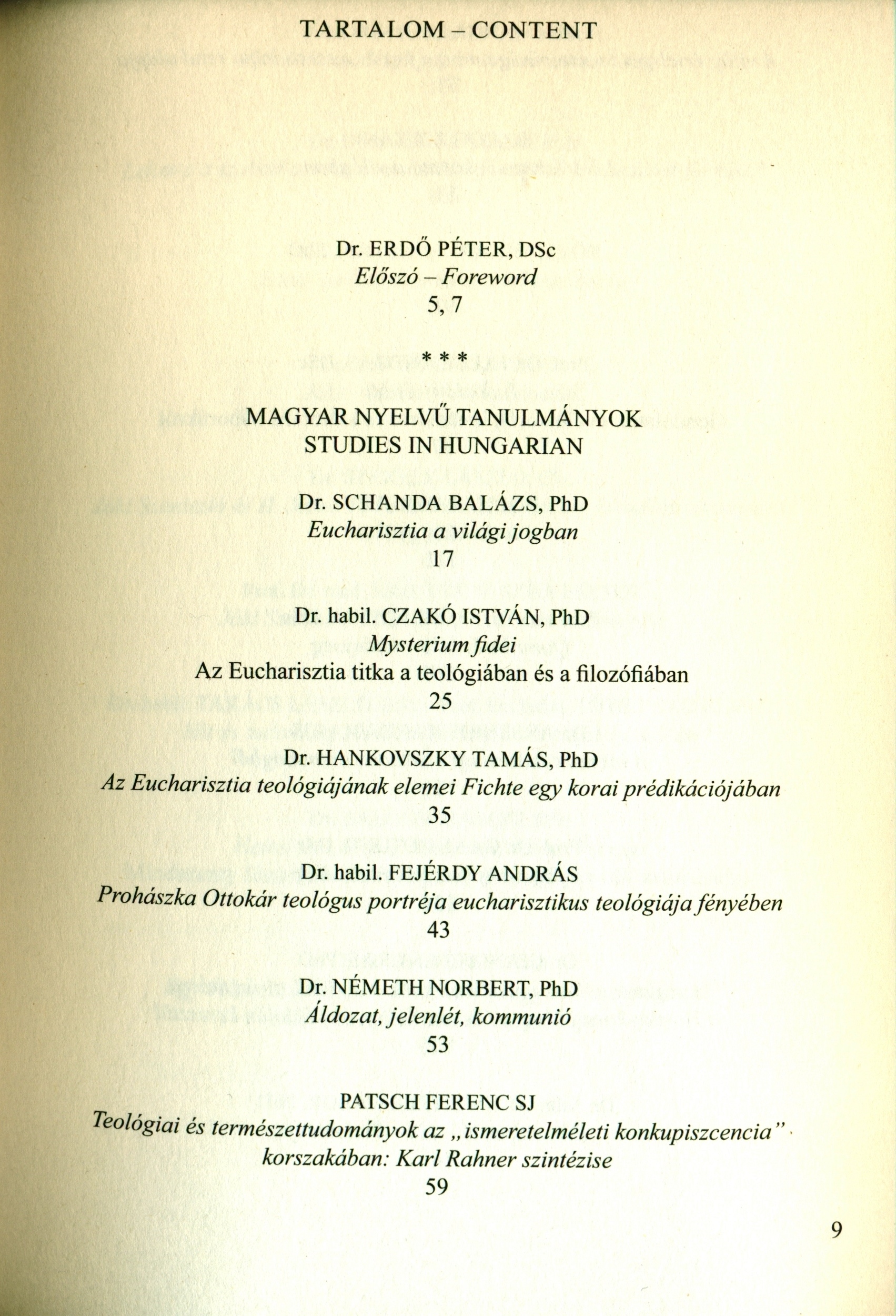
 Our Capital, Budapest has received the great honor after 1938 for the second time that the Holy Father - this time pope Francis - has appointed Budapest for the 52nd International Eucharistic Congress’ venue. The organizing committee, with the support of Péter Cardinal Erdő and János Áder President of the Republic decided to organize an international conference with the title: Faith, Science and Community. However, in December of 2019 a new virus (SARS-CoV-2) started to spread all around the world and has prevented the Eucharistic Congress and the scientific conference in Budapest to be held in 2020.
The ecumenical prayer week has just ended and the scientifical works made by the participants of the conference will be published in February to make available the ideas and thoughts of scientists of different belief, philosophers and theologians about the essence of the eucharist to all interested and participants of the Eucharistic Congress which shall be organized and held in September of 2021.
Our Capital, Budapest has received the great honor after 1938 for the second time that the Holy Father - this time pope Francis - has appointed Budapest for the 52nd International Eucharistic Congress’ venue. The organizing committee, with the support of Péter Cardinal Erdő and János Áder President of the Republic decided to organize an international conference with the title: Faith, Science and Community. However, in December of 2019 a new virus (SARS-CoV-2) started to spread all around the world and has prevented the Eucharistic Congress and the scientific conference in Budapest to be held in 2020.
The ecumenical prayer week has just ended and the scientifical works made by the participants of the conference will be published in February to make available the ideas and thoughts of scientists of different belief, philosophers and theologians about the essence of the eucharist to all interested and participants of the Eucharistic Congress which shall be organized and held in September of 2021.
E. Szilveszter Vizi
Tamás Freund
FOREWORD
In anticipation of the 52nd International Eucharistic Congress a conference had been prepared in Budapest with a wide range of various themes. We invited many experts both from Hungary and abroad, who agreed to give a lecture at the conference, but because of the COVID-19 pandemic the conference was not able to be held, and so we asked the lecturers to send the text of their speeches in written form. Many of them fulfilled this request and so we are proudly able to present this book. Since the International Eucharistic Congress has been postponed by the decision of Pope Francis until 5-12th September 2021, this volume can form a valuable contribution to the intellectual preparation of the Congress. The studies themselves deal with many questions on points of contact between faith and science. Many of them from the history of the Church. Others concern questions of creation, biochemistry, natural sciences and our responsibility for the created world. Some of the texts are explicitly about the relationship between philosophy and theology. Some papers are theological, dealing with the Eucharist, to be precise. For example, they include the eucharistic theology of Ottokár Prohászka, or the thoughts of Fichte on the same topic. The memory of Stanley Jaki is dealt with by several authors. The Hungarian-American theologian, who died in 2009, discussed the basic questions of the relationship between natural sciences and faith, and so the articles about him shed light upon certain aspects of this rich subject. Natural scientists and philosophers, theologians from different Christian denominations and also Jewish can be found among the authors of this book. Many of them are internationally renowned researchers. The writings collected here convincingly show that the subject of the Eucharist is a fresh spring even today, and suitable for raising a discussion between believers and non-believers and the representatives of other different religions. May God give this intellectual gathering an attractive example of the meeting of truth-seeking people in mutual respect and love.
Dr. Péter Erdő
Cardinal, Primate,
Archbishop of Esztergom-Budapest
In Hungarian:
Fovárosunkat, Budapestet 1938 után második alkalommal éri az a megtiszteltetés, hogy a Szentatya - ezúttal Ferenc pápa - Budapestet jelölte meg az 52. Nemzetközi Eucharisztikus Kongresszus színhelyéül. A szervezobizottság, Erdő Péter bíboros és Áder János köztársasági elnök támogatásával elhatározta, hogy „Hit, Tudomány és Társadalom" címmel nemzetközi konferenciát szervez. Azonban 2019. decemberében egy új vírus (SARS-CoV-2) terjedt szét a világban és megakadályozta, hogy Budapesten 2020-ban megtartsuk az Eucharisztikus Kongresszust és a tudományos konferenciát.
Az ökumenikus imahét éppen befejezodött, a konferencia résztvevoinek tudományos dolgozatai februárban nyomdába kerülnek, hogy minden érdeklodo, és a 2021. szeptemberében megrendezésre kerülo kongresszus résztvevoi számára hozzáférhetok legyenek a különbözo meggyozodésu tudósok, filozófusok és teológusok elképzelései a hitrol, a tudományról és az eucharisztia lényegérol.
Vizi E. Szilveszter,
Freund Tamás
ELOSZÓ
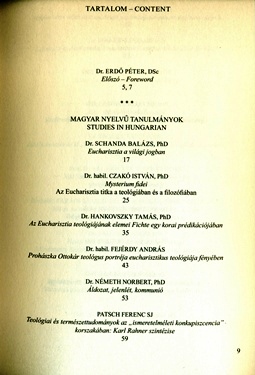
Az 52. Nemzetközi Eucharisztikus Kongresszusra készülve konferenciát terveztünk Budapestre mégpedig elég gazdag tematikával. Számos hazai és külföldi szakembert hívtunk meg, akik vállalták is, hogy eloadást tartanak ezen a találkozón. Mivel a világjárvány miatt maga ez a tudományos konferencia nem jöhetett létre, arra kértük a résztvevoket, hogy szíveskedjenek tervezett eloadásuk szövegét irásban megküldeni. Sokan eleget tettek felhívásunknak. Igy örömmel nyújtjuk át ezt a kötetet az olvasónak. Minthogy magát az Eucharisztikus Kongresszust Ferenc pápa döntése nyomán 2021. szeptember 5-12. között tartjuk Budapesten, ennek a kötetnek a megjelenése a tudomány értékes hozzájárulása lehet az Eucharisztikus Kongresszus szellemi elokészítéséhez. Maguk a tanulmányok hit és tudomány érintkezési pontjainak számos kérdését érintik. Több irás egyháztörténeti vonatkozású. Mások a teremtés, a biokémia, a természettudomány, illetve a teremtett világ iránti felelosség kérdéseit boncolgatják. Több tanulmány kifejezetten a filozófia és a teológia kapcsolatát érinti. Vannak olyan értekezések is, amelyek kifejezetten teológiai jelleguek és azon belül is az Eucharisztiával kapcsolatosak, például Prohászka Ottokár eucharisztikus teológiájáról vagy Fichte ugyanerre a témára vonatkozó gondolatairól szólnak. Jaki Szaniszló emlékét több szerzo is feldolgozza. A 2009-ben elhunyt, ismert magyar-amerikai teológus a természettudományok és a hit kapcsolatának alapveto kérdéseit tárgyalta. Így a róla szóló cikkek ennek a gazdag témakörnek az egyes szempontjait villantják fel. Természettudósok és filozofusok, különbözo felekezetu keresztény és zsidó teológusok, történészek és jogászok egyaránt találhatók a kötet szerzoi között. Nem kevés közülük nemzetközi viszonylatban is jól ismert kutató. Az itt egybegyujtött írások meggyozoen mutatják, hogy az Eucharisztia témája ma is forrás, alkalmas arra, hogy körülötte gazdag párbeszéd alakuljon ki hivök és nem hívok, különbözo irányzatok és vallások képviseloi között. Adja Isten, hogy ez a szellemi találkozás vonzó példakép legyen az igazságot öszintén kereso emberek találkozására kölcsönös tiszteletben és szeretetben.
Dr. Erdő Péter
Bíboros, Primás, Esztergom-Budapesti Érsek
The book is available
here.
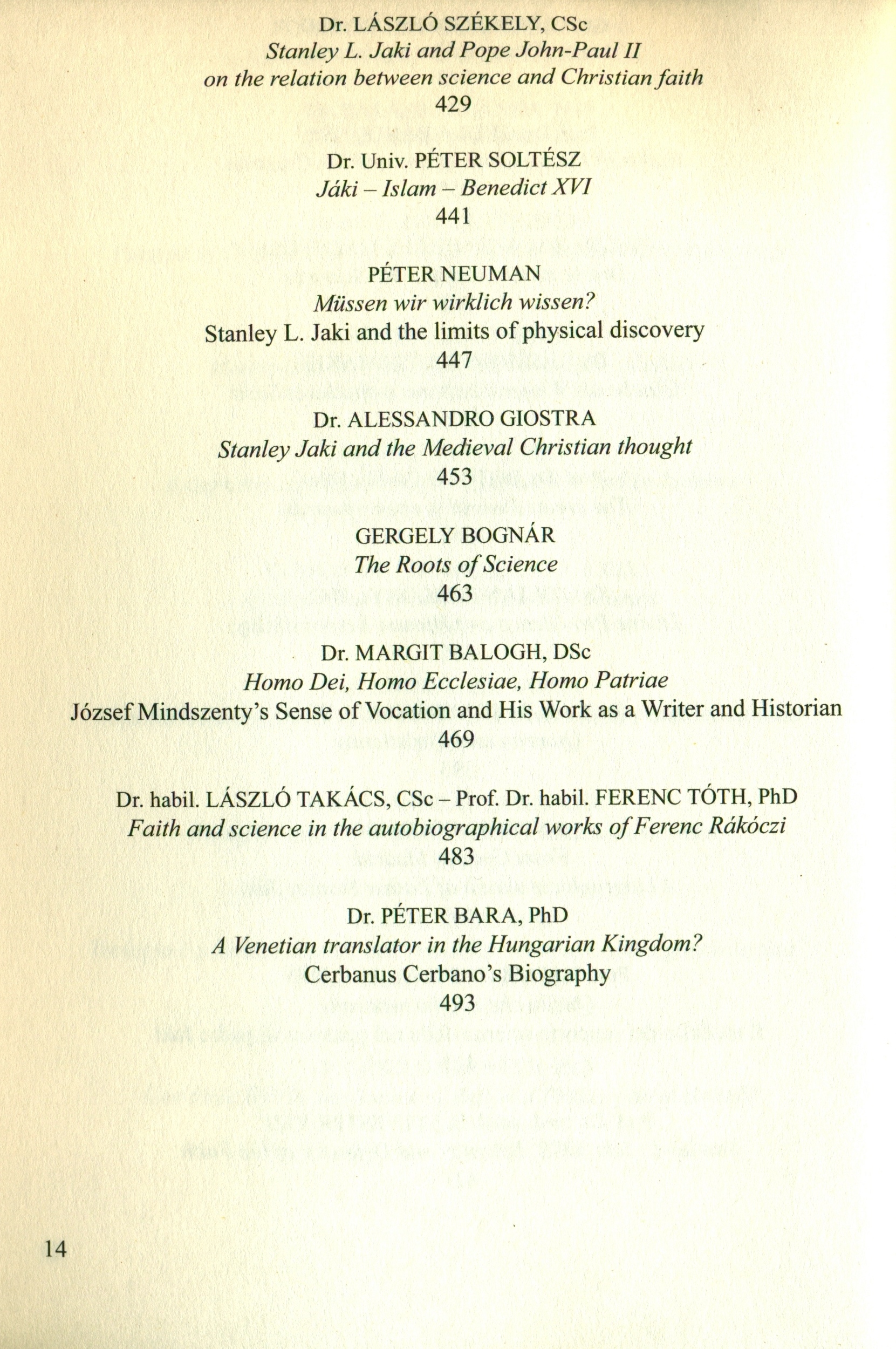
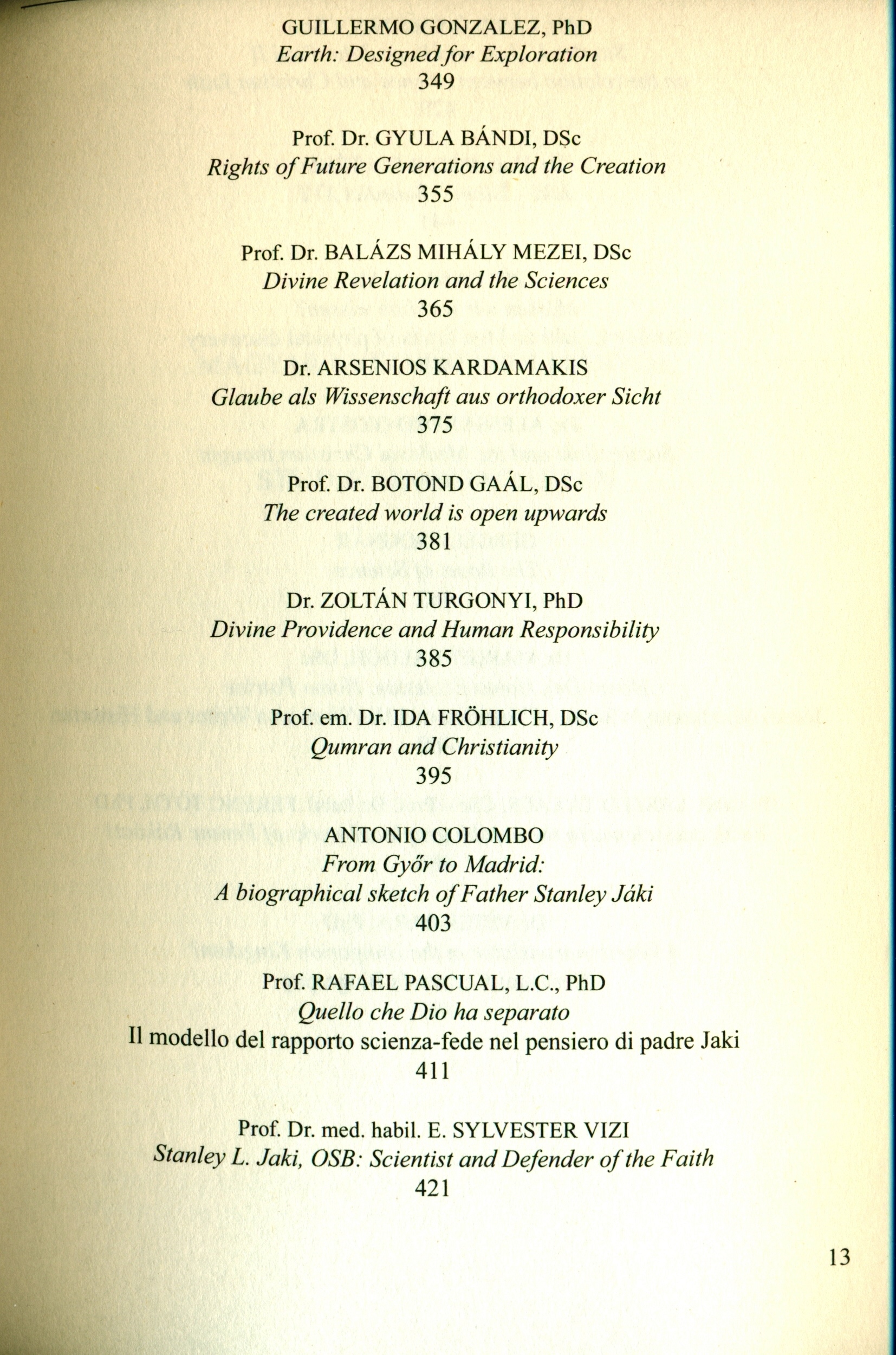
The International part of the Table of Contents can be seen here:
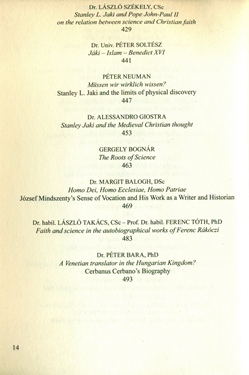
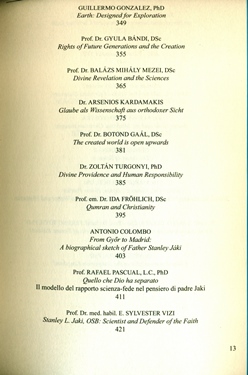
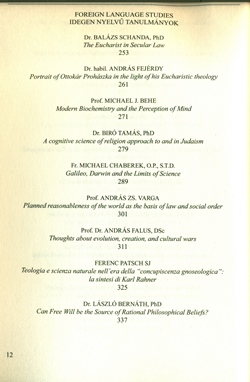
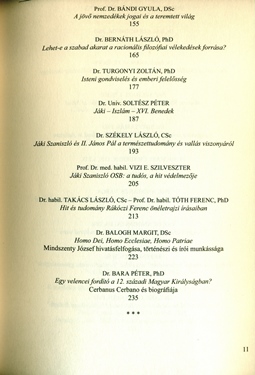
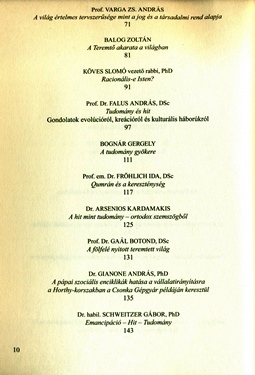
The Hungarian part of the Table of Contents can be seen here:
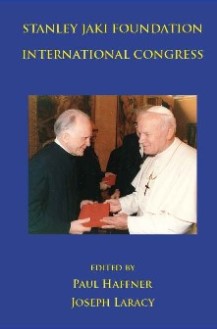
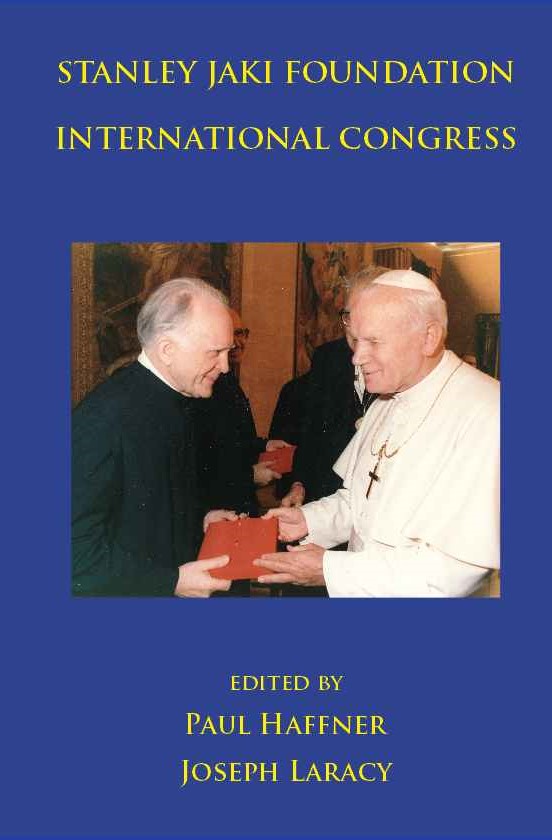
Paul Haffner / Joseph Laracy (eds.)
Acts of the
Stanley Jaki Foundation
International Congress 2015
(Leominster: Gracewing, 2020), 224pp.
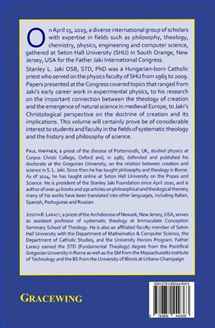
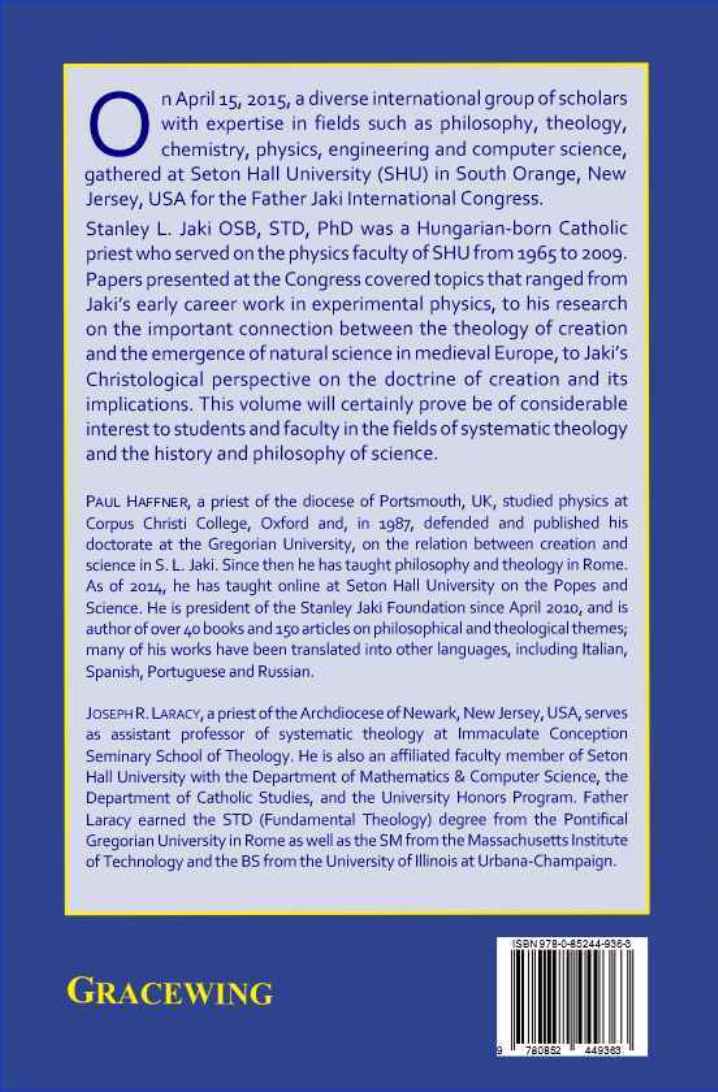
 On April 15, 2015, a diverse international group of scholars with
expertise in fields such as philosophy, theology, chemistry,
physics, engineering and computer science, gathered at Seton Hall
University (SHU) in South Orange, New Jersey, USA for the Father
Jaki International Congress.
On April 15, 2015, a diverse international group of scholars with
expertise in fields such as philosophy, theology, chemistry,
physics, engineering and computer science, gathered at Seton Hall
University (SHU) in South Orange, New Jersey, USA for the Father
Jaki International Congress.
Stanley L. Jaki OSB, STD, PhD was a Hungarian-born Catholic
priest who served on the physics faculty of SHU from 1965 to 2009.
Papers presented at the Congress covered topics that
ranged from Jaki’s early career work in experimental physics, to
his research on the important connection between the theology of
creation and the emergence of natural science in medieval Europe,
to Jaki’s Christological perspective on the doctrine of creation
and its implications.
This volume will certainly prove be of
considerable interest to students and faculty in the fields of
systematic theology and the history and philosophy of science.
The book is available
here.
A review of the book by Peter Heasley in Zygon: Journal of Religion and Science 55, no. 4 (December 2020), pp. 1130-1131, can be found
here.
A review of the book by Thomas P. Quinn in The Chesterton Review 55, no. 3/4 (2021), pp. 413-416, can be found
here.
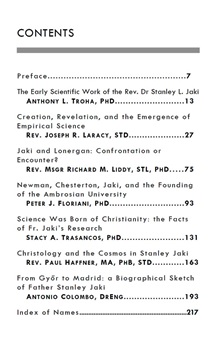
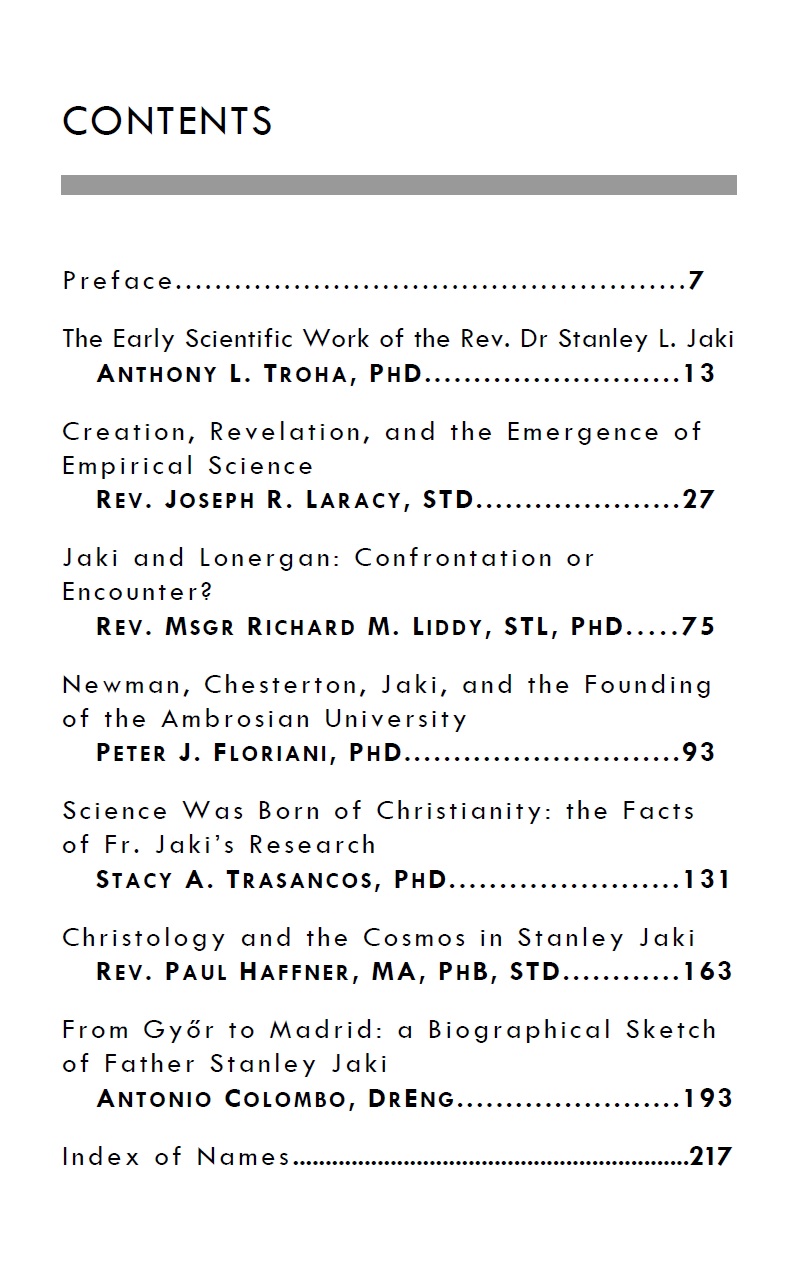
The Table of Contents can be seen here:
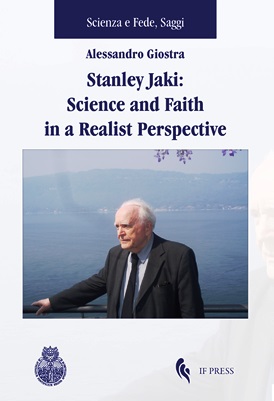
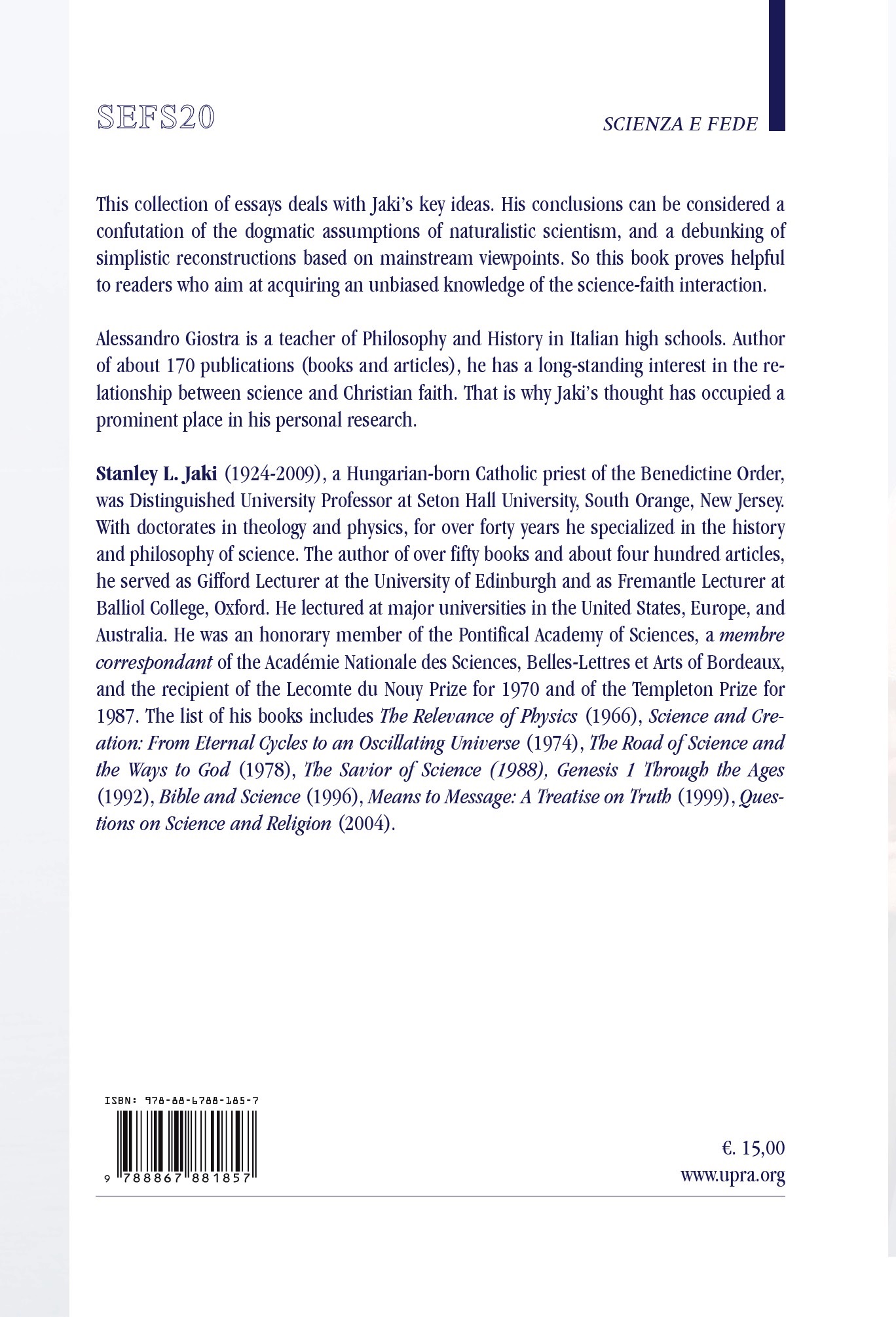
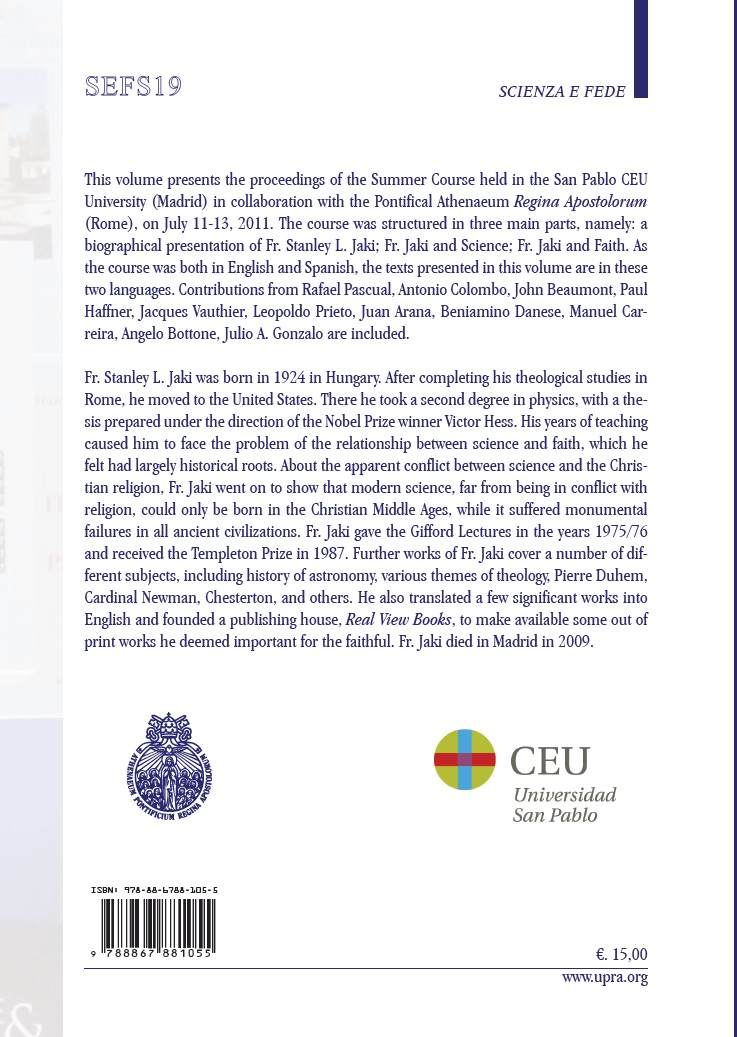
Alessandro Giostra
Stanley Jaki:
Science and Faith in a Realist Perspective
(Rome: Ateneo Pontificio Regina Apostolorum;
Rome: IF Press, 2019), 143pp.
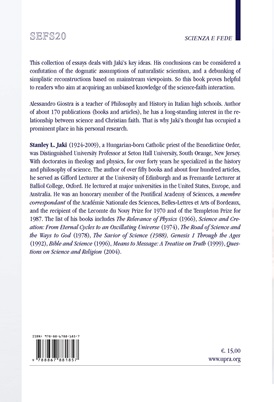
This collection of essays deals with Jaki’s key ideas. His conclusions can be considered a confutation of the dogmatic assumptions of naturalistic scientism, and a debunking of simplistic reconstructions based on mainstream viewpoints. So this book proves helpful to readers who aim at acquiring an unbiased knowledge of the science-faith interaction.
Alessandro Giostra is a teacher of Philosophy and History in Italian high schools. Author of about 170 publications (books and articles), he has a long-standing interest in the relationship between science and Christian faith. That is why Jaki’s thought has occupied a prominent place in his personal research.
A review by Paul Fayter of this work for the magazine Perspectives on Science and Christian Faith (March 2022) may be found
here.
A review by Mario Gargantini of this work (in Italian) may be found
here.
The English translation of Gargantini’s review may be found
here.
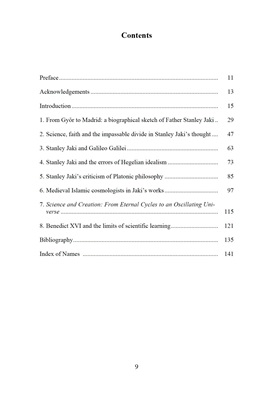
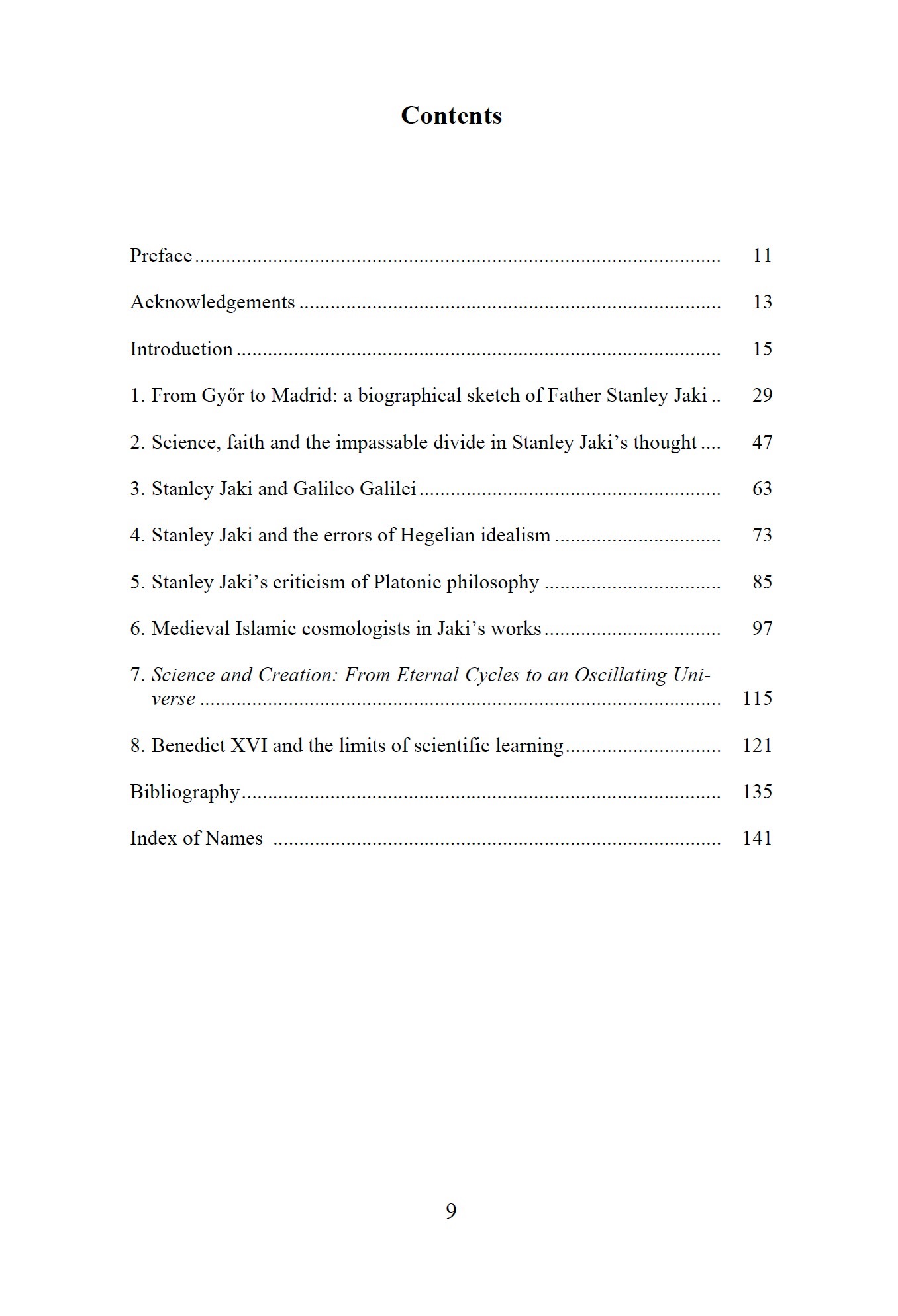
The Table of Contents can be seen here:
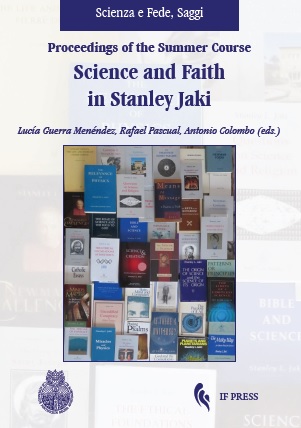 Lucía Guerra Menéndez, Rafael Pascual, Antonio Colombo (eds.)
Proceedings of the Summer Course
Lucía Guerra Menéndez, Rafael Pascual, Antonio Colombo (eds.)
Proceedings of the Summer Course
“Science and Faith in Stanley Jaki”
Madrid, July 11-13, 2011
(Rome: Ateneo Pontificio Regina Apostolorum;
Rome: IF Press;
Madrid: Universidad San Pablo CEU, 2017), 190pp.
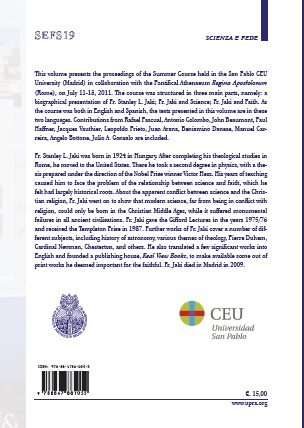
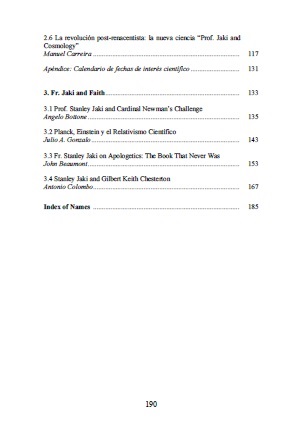
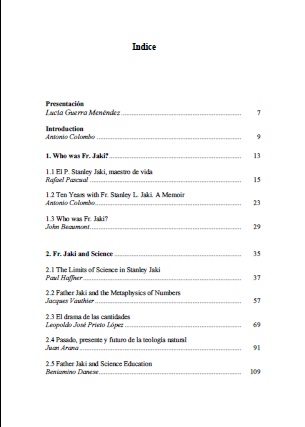
Acts of the Summer Course held in Madrid on 11-13 April 2011.
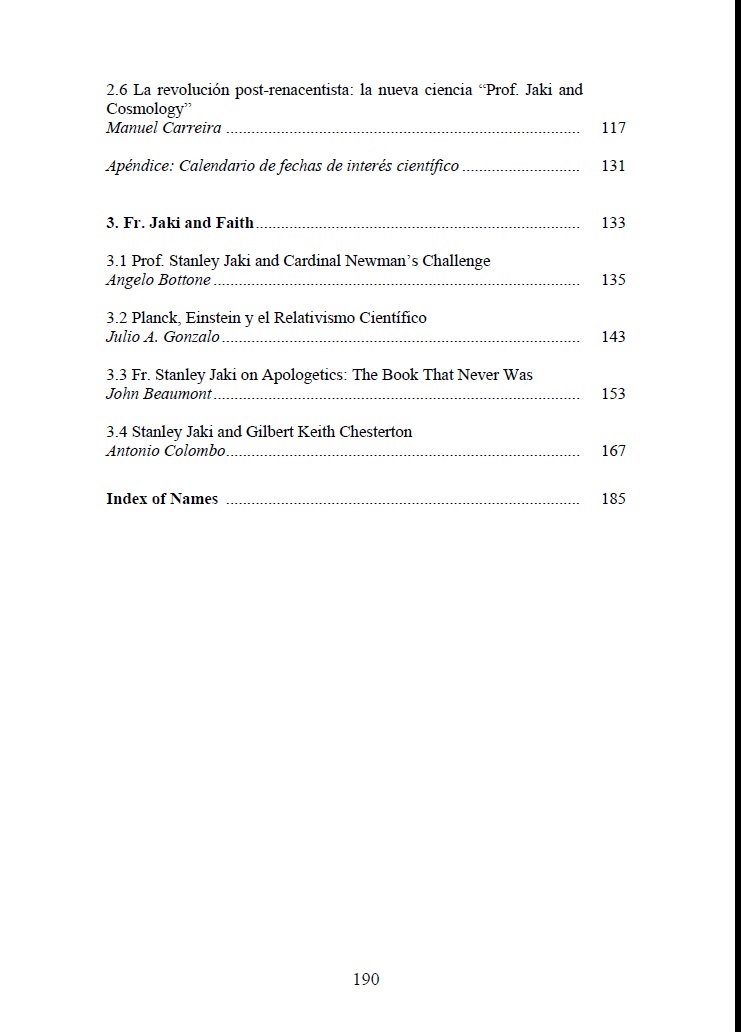
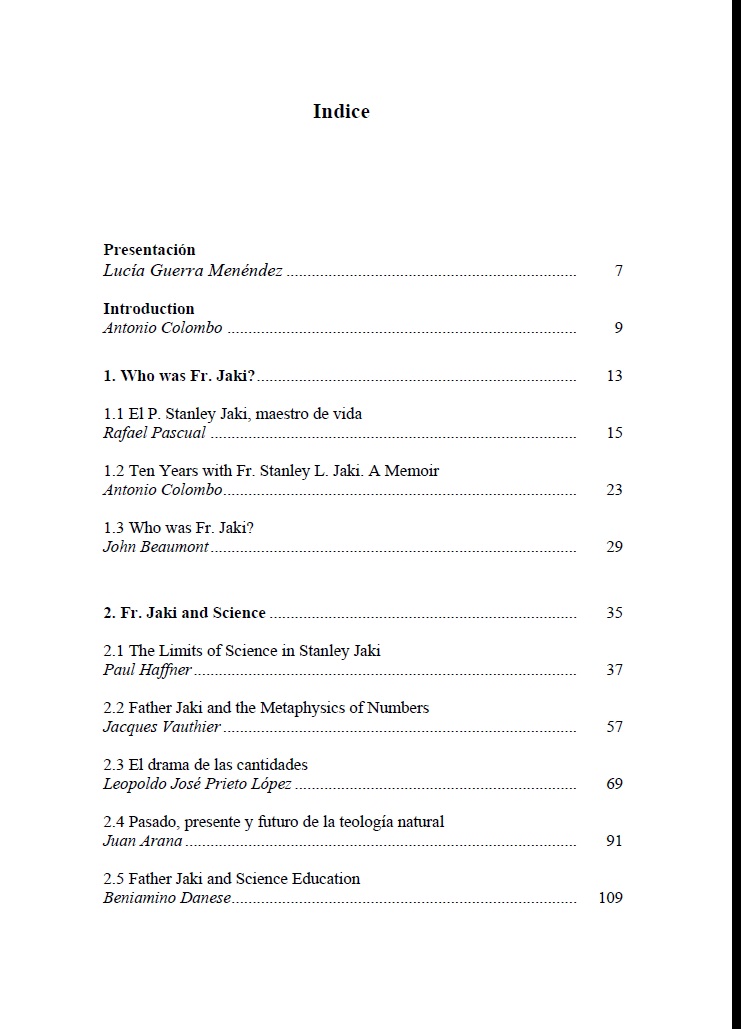
Contributions of:
Lucía Guerra Menéndez,
Antonio Colombo,
Rafael Pascual,
John Beaumont,
Paul Haffner,
Jacques Vauthier,
Leopoldo José Prieto López,
Juan Arana,
Beniamino Danese,
Manuel Carreira,
Angelo Bottone,
Julio A. Gonzalo.
The essays are written in English or in Spanish.
The Table of Contents can be seen here:
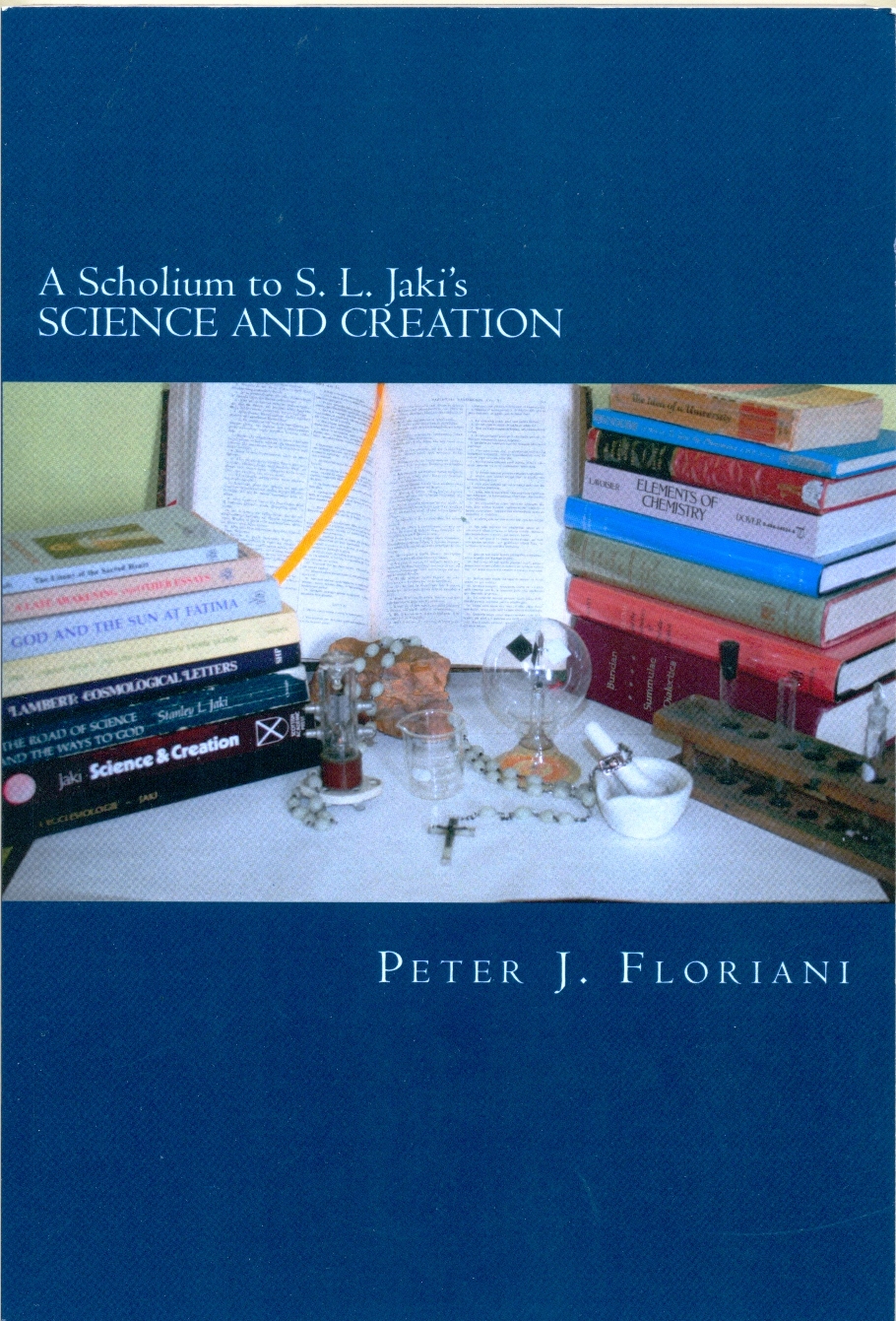
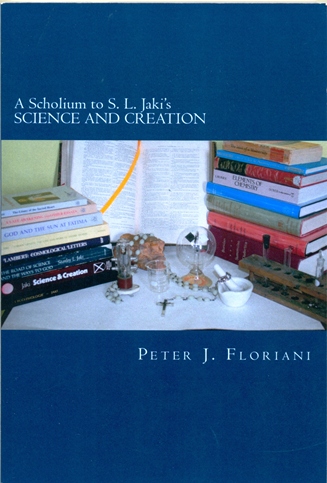 Peter Floriani
A Scholium to S. L: Jaki’s SCIENCE AND CREATION
(CreateSpace Independent Publishing Platform, 2017), vi + 150pp.
With a Preface by Stacy Ann Trasancos, and a Foreword by Antonio Colombo.
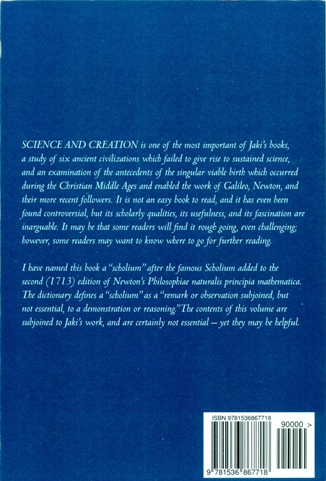
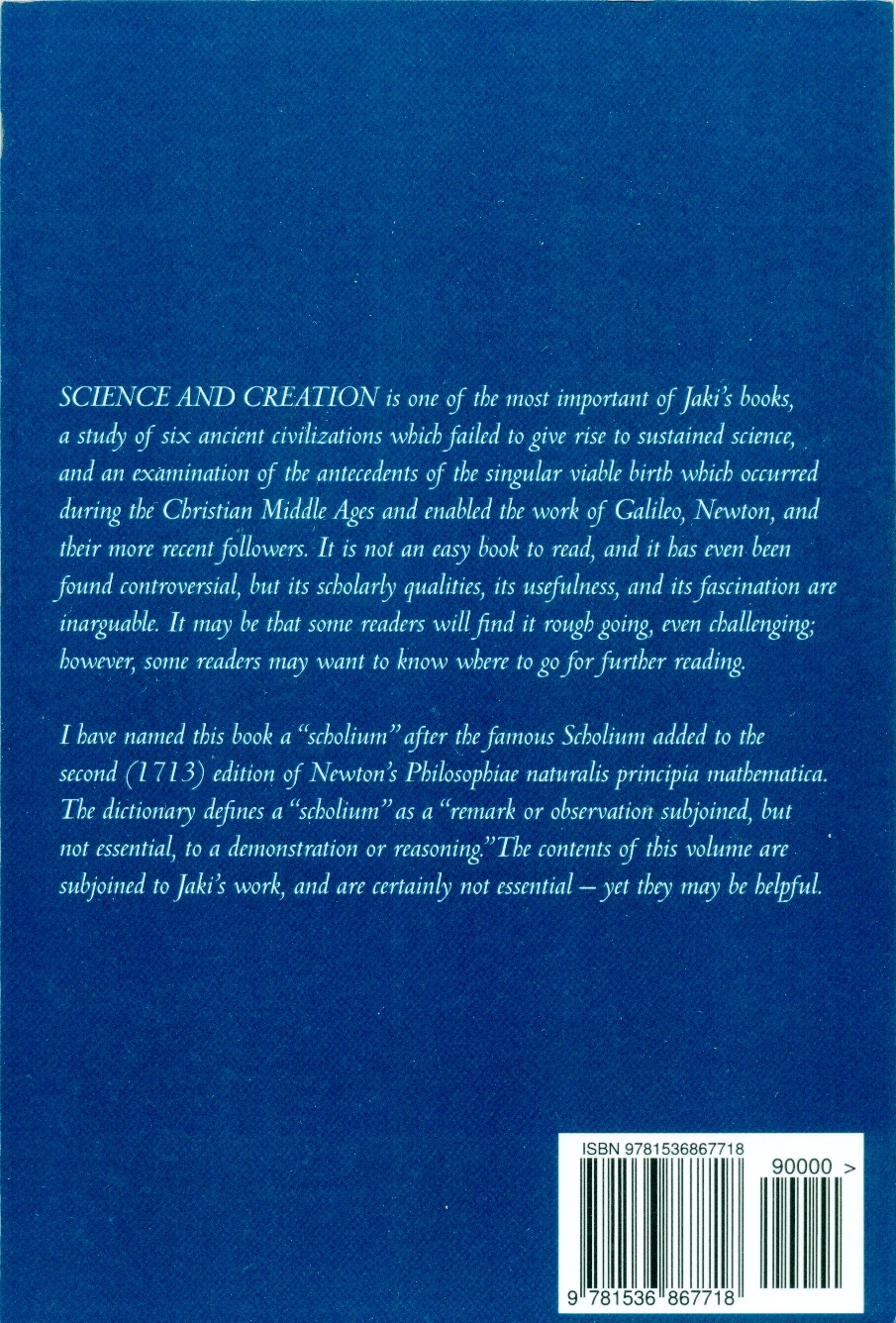
Science and Creation is one of the most important of Jaki’s books, a study of six ancient civilizations which failed to give rise to sustained science, and an examination of the antecedents of the singular viable birth which occurred during the Christian Middle Ages and enabled the work of Galileo, Newton, and their more recent followers. It is not an easy book to read, and it has even been found controversial, but its scholarly qualities, its usefulness, and its fascination are inarguable. It may be that some readers will find it rough going, even challenging; however, some readers may want to know where to go for further reading.
I have named this book a scholium after the famous Scholium added to the second (1713) edition of Newton’s Philosophiae naturalis principia mathematica. The dictionary defines a “scholium” as a “remark or observation subjoined, but not essential, to a demonstration or reasoning.” The contents of this volume are subjoined to Jaki’s work, and are certainly not essential—yet they may be helpful.
The book is available
here.
The Table of Contents can be seen here:
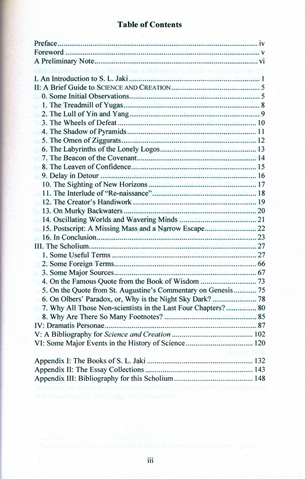
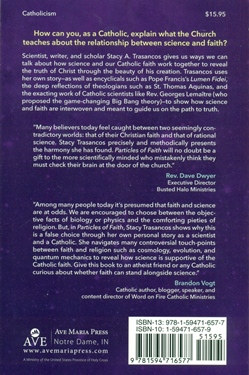
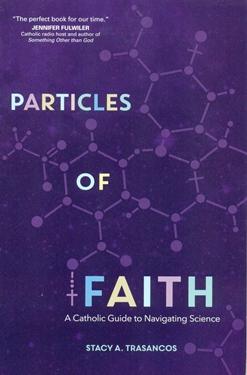 Stacy Ann Trasancos
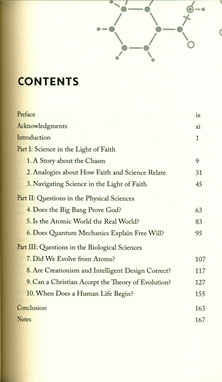
Particles of Faith: A Catholic Guide to Navigating Science
(Notre Dame, IN: Ave Maria Press, 2016), 179pp.
The book is available
here.
Reviews of the book can be found
here,
here, and
here.
The Table of Contents can be seen here:
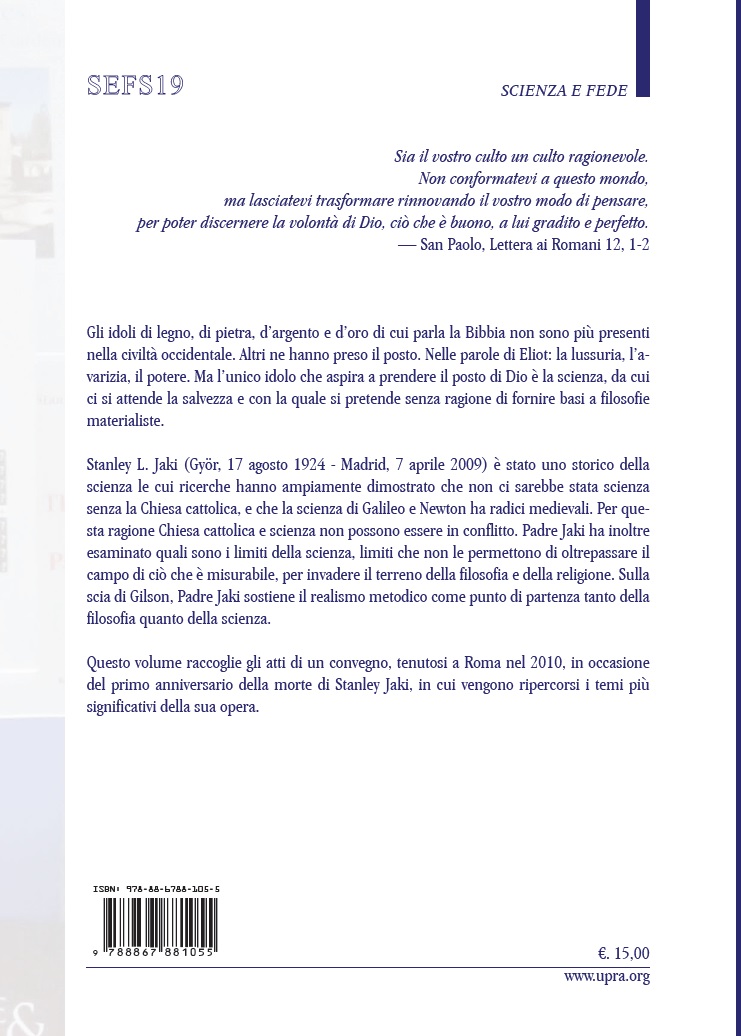
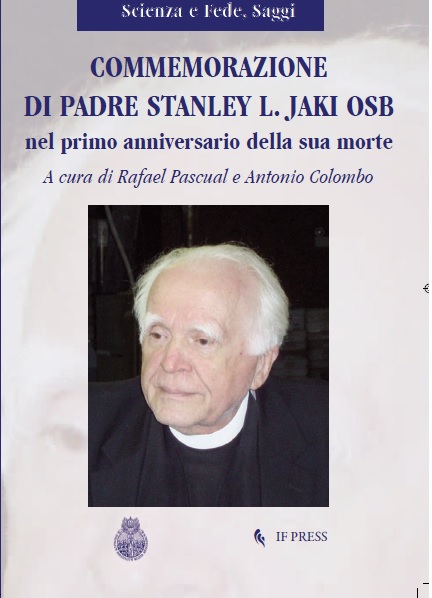
Rafael Pascual, Antonio Colombo (eds.)
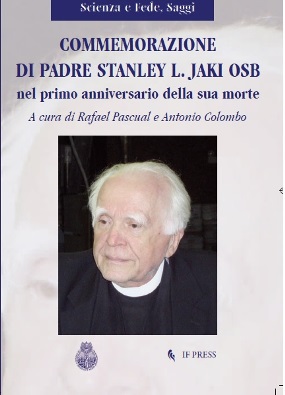 Commemorazione di Padre Stanley Jaki OSB
nel primo anniversario della sua morte
(Roma: Ateneo Pontificio Regina Apostolorum, 2014), 165pp.
Atti del Convegno tenutosi a Roma il 13 Aprile 2010 all’Ateneo Pontificio Regina Apostolorum.
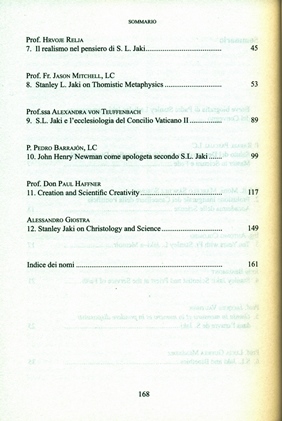
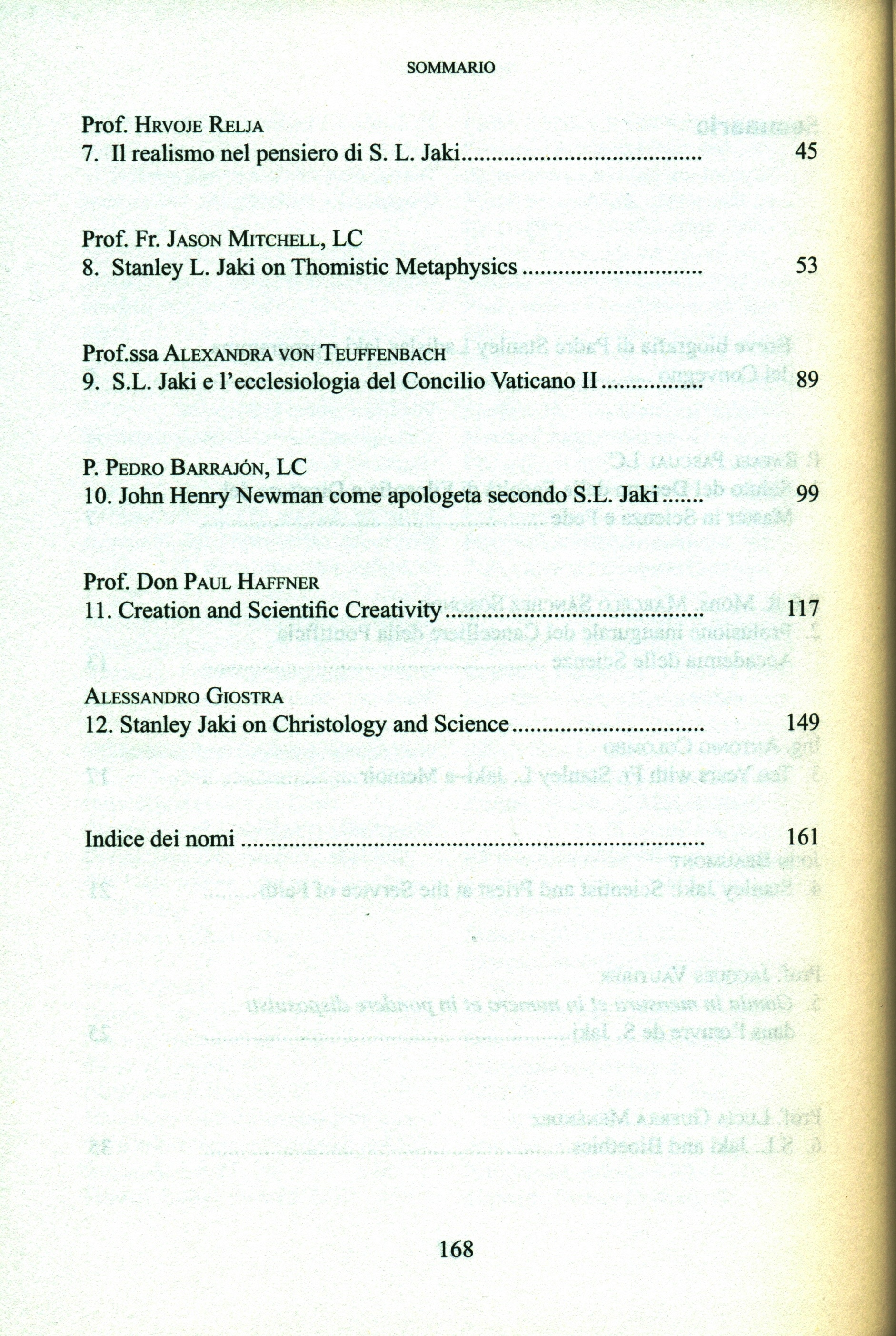
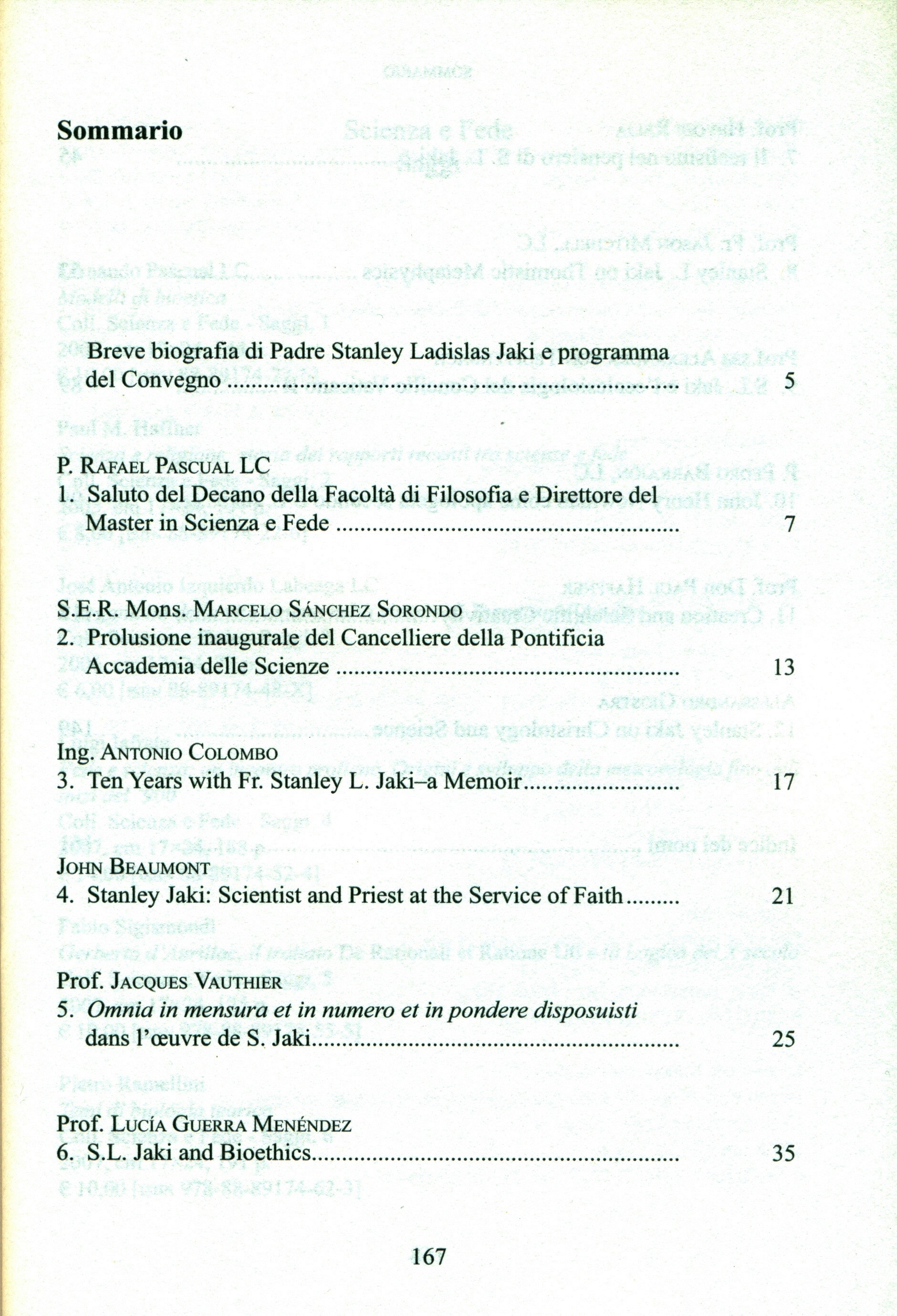
Contributi di Rafael Pascual, Marcelo Sánchez Sorondo, Antonio Colombo, John Beaumont, Jacques Vauthier, Lucía Guerra Menéndez, Hrvoje Relja, Jason Mitchell, Alexandra von Teuffenbach, Pedro Barrajon, Paul Haffner, Alessandro Giostra.
Il libro è disponibile
qui.
Una recensione può essere trovata
qui.
Some of the essays are written in English or French.
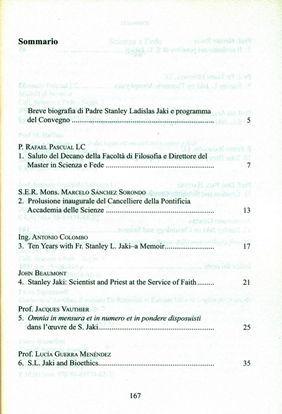
L’Indice del libro si può vedere qui:
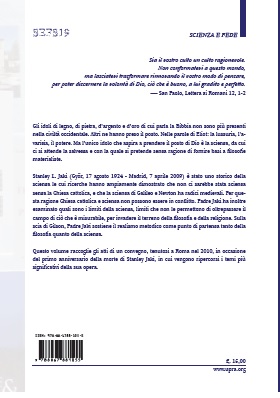
Translation of the text in the back cover of the book:
...which is your reasonable worship.
Do not conform yourselves to this age
but be transformed by the renewal of your mind,
that you may discern what is the will of God,
what is good and pleasing and perfect.
— Saint Paul to the Romans, 12, 1-2
Idols of wood and stone, of gold and silver, mentioned in the Bible are no longer present in Western society. Other idols took their place. In the words of T.S. Eliot: Usury, Lust and Power. But the only idol that aims at taking the place of God is science, from which salvation is expected, and that is improperly used to build the foundations of a materialist philosophy.
Stanley Jaki is a historian of science whose research has largely shown that there would be no science without the Catholic Church, and that Galileo and Newton’s science has medieval roots. For this reason, the Catholic Church and science cannot be in conflict. Father Jaki also examined what are the limits of science, limits that do not allow science to go beyond what is measurable, to cover the ground of philosophy and religion. In the wake of Gilson, Father Jaki supports methodical realism as a starting point for both philosophy and science.
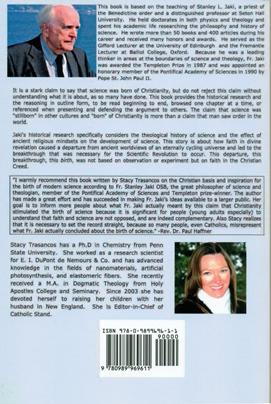
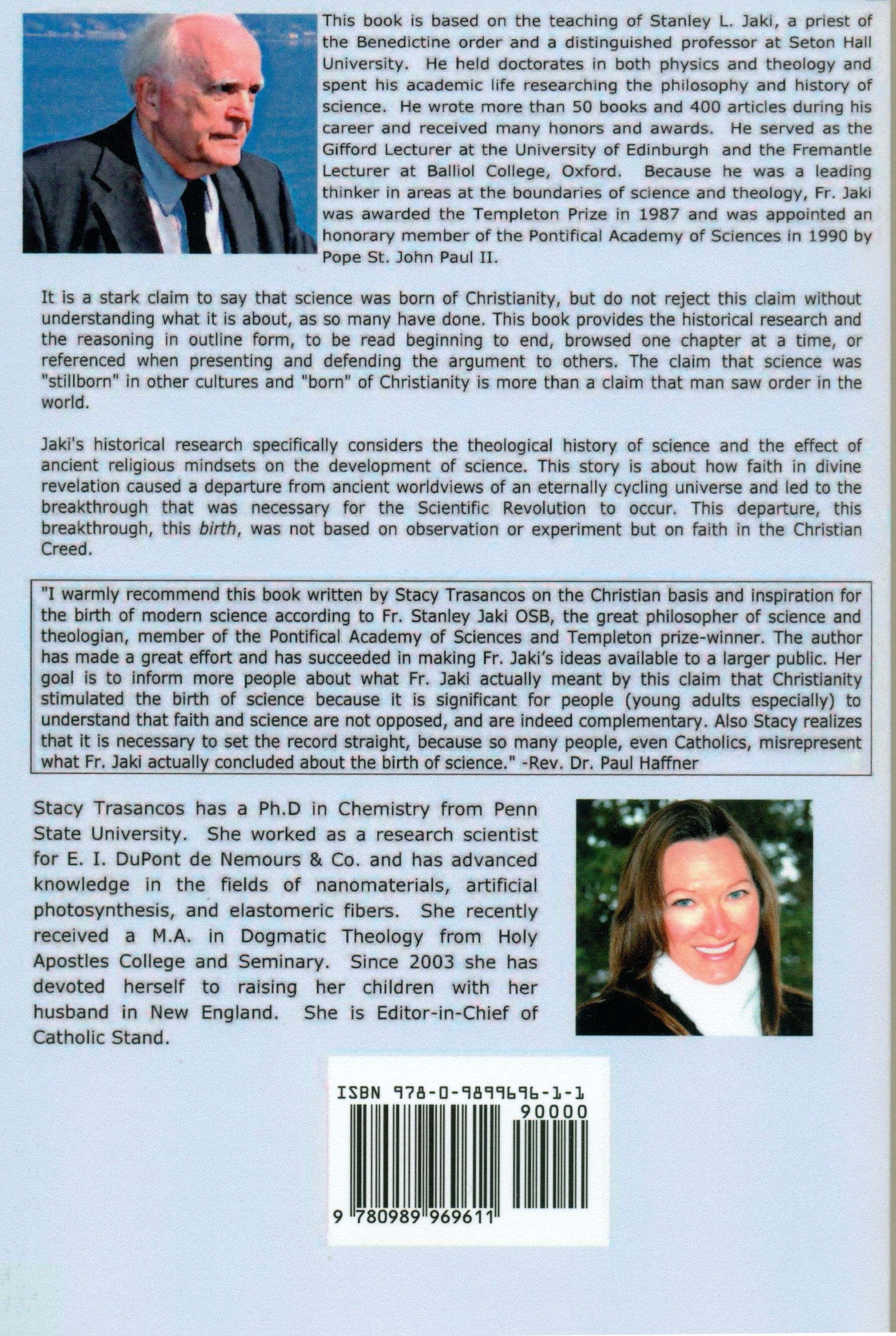
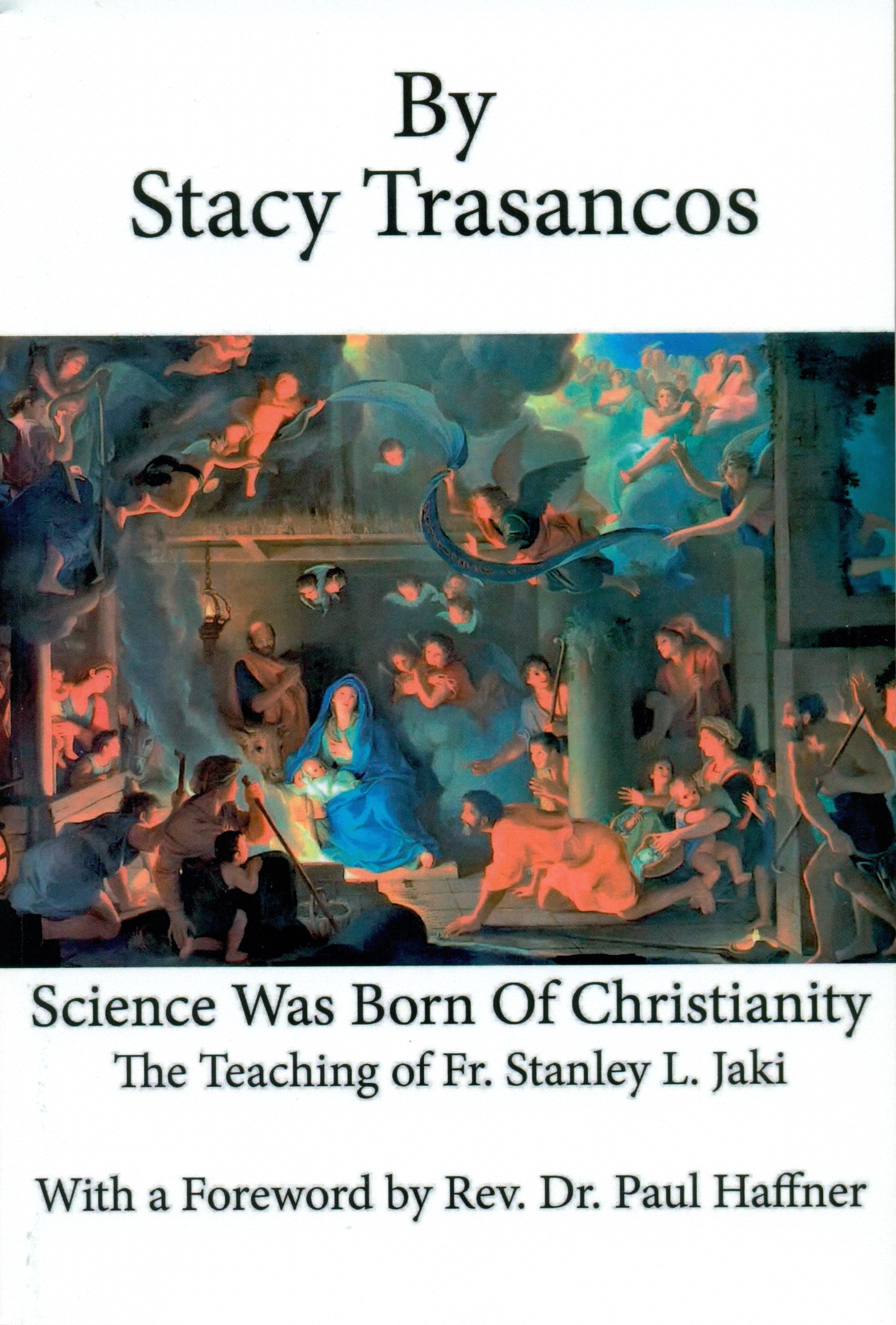
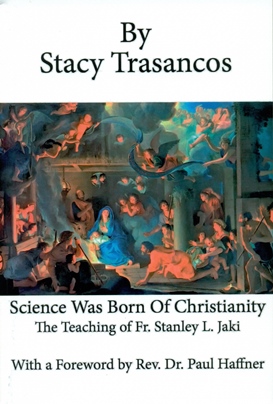 Stacy Ann Trasancos
Science Was Born of Christianity:
The Teaching of Fr. Stanley Jaki
(Titutsville, FL: The Habitation of Chimham Publishing Company, 2014), 216pp.
The book is available
here.
A review of the book can be found
here.
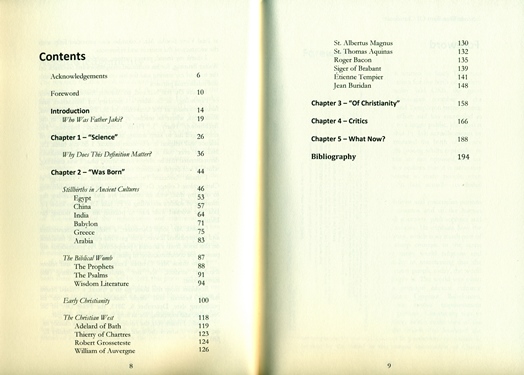
The Table of Contents can be seen here:
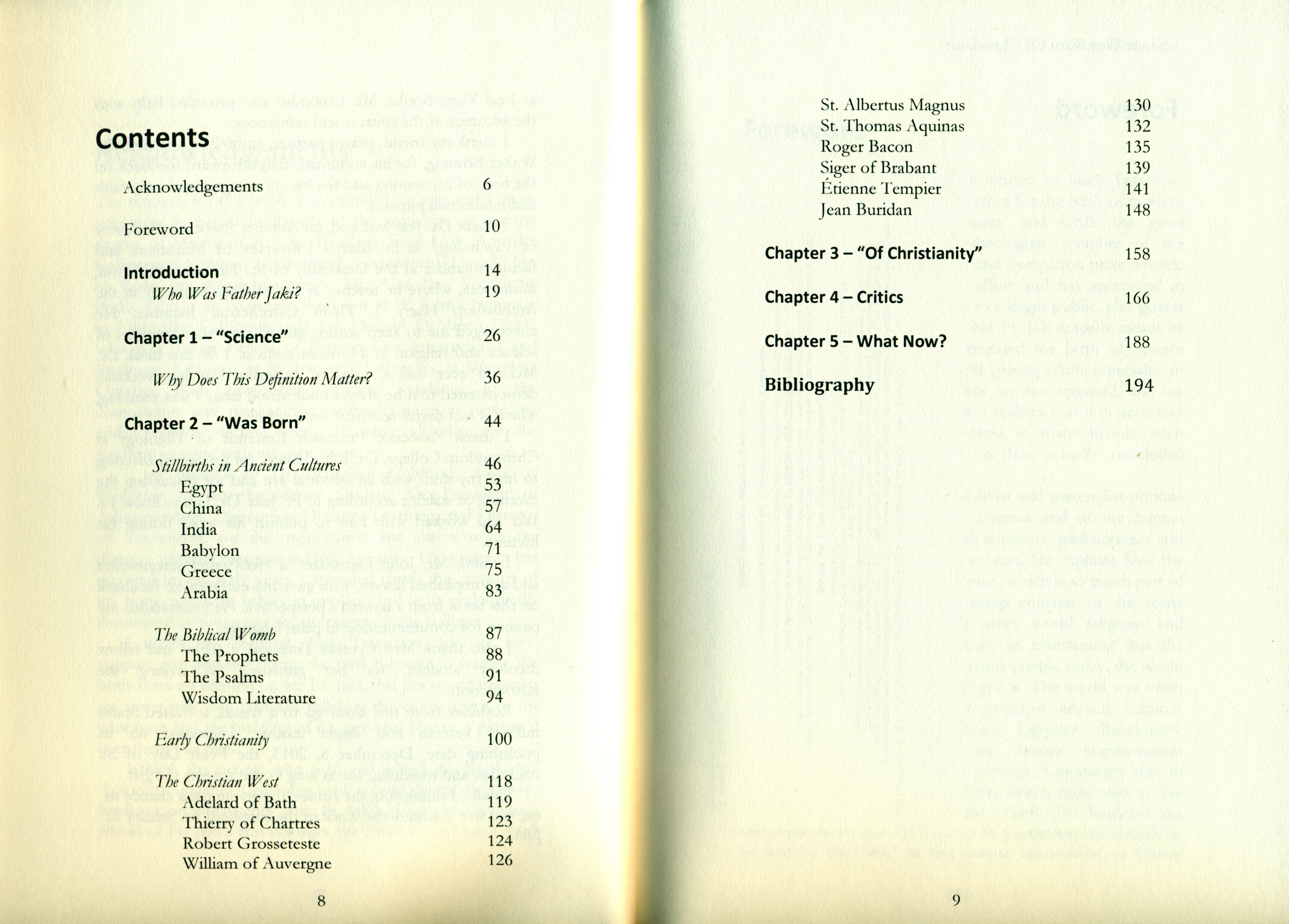
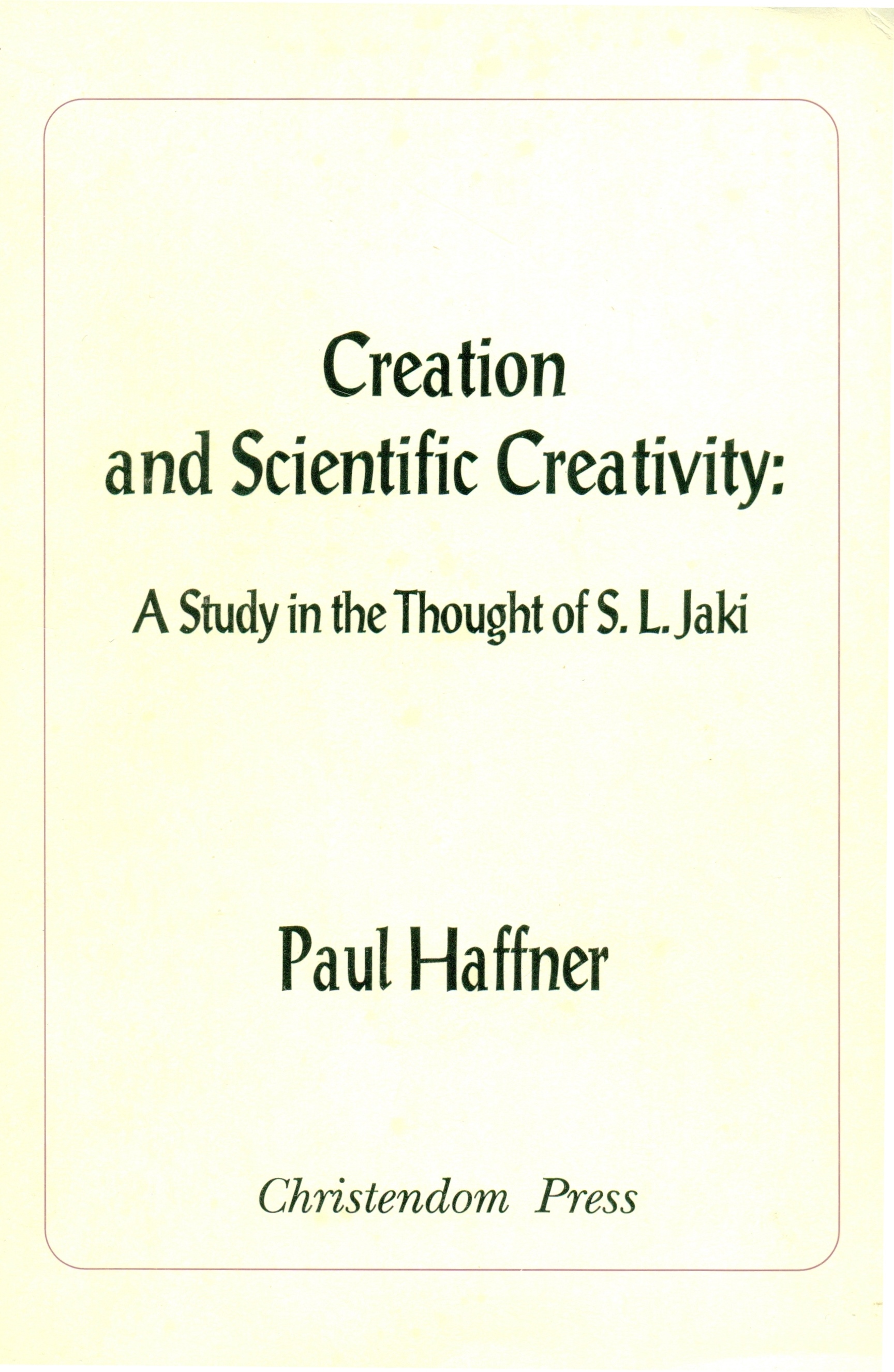
Paul Haffner
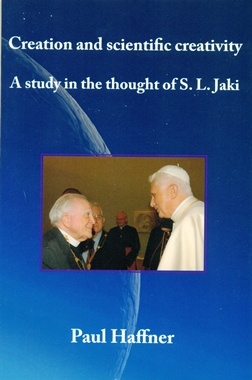
Creation and Scientific Creativity: A Study in the Thought of S.L. Jaki
(Leominster: Gracewing, 2009), xiv + 329pp.
The first biography of Fr. Stanley Jaki.
The first edition of this work (1991) was revised by Jaki himself.
This work focuses on the close link joining science and Christianity, despite the differences between them. Through his study of modern science, theology, and history, Stanley Jaki showed faith and reason are not mutually exclusive. The problems arise because of those ideologies which seek to eliminate God from the ultimate equation. Jaki highlighted the Christian origins of the modern natural sciences. He showed that the concept of the cosmos as both contingent and rational, together with the acceptance that God could work through secondary causes, providing the unique environment for the natural sciences to flourish, from the Middle Ages onwards. He explored the crucial role played by belief in creation out of nothing and in time, reinforced by faith in the Incarnation, in enabling this birth of science.
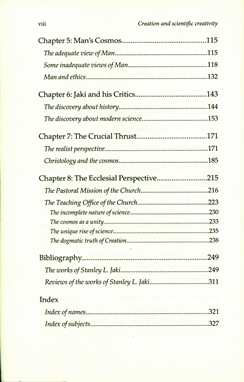
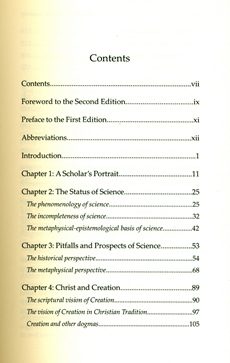
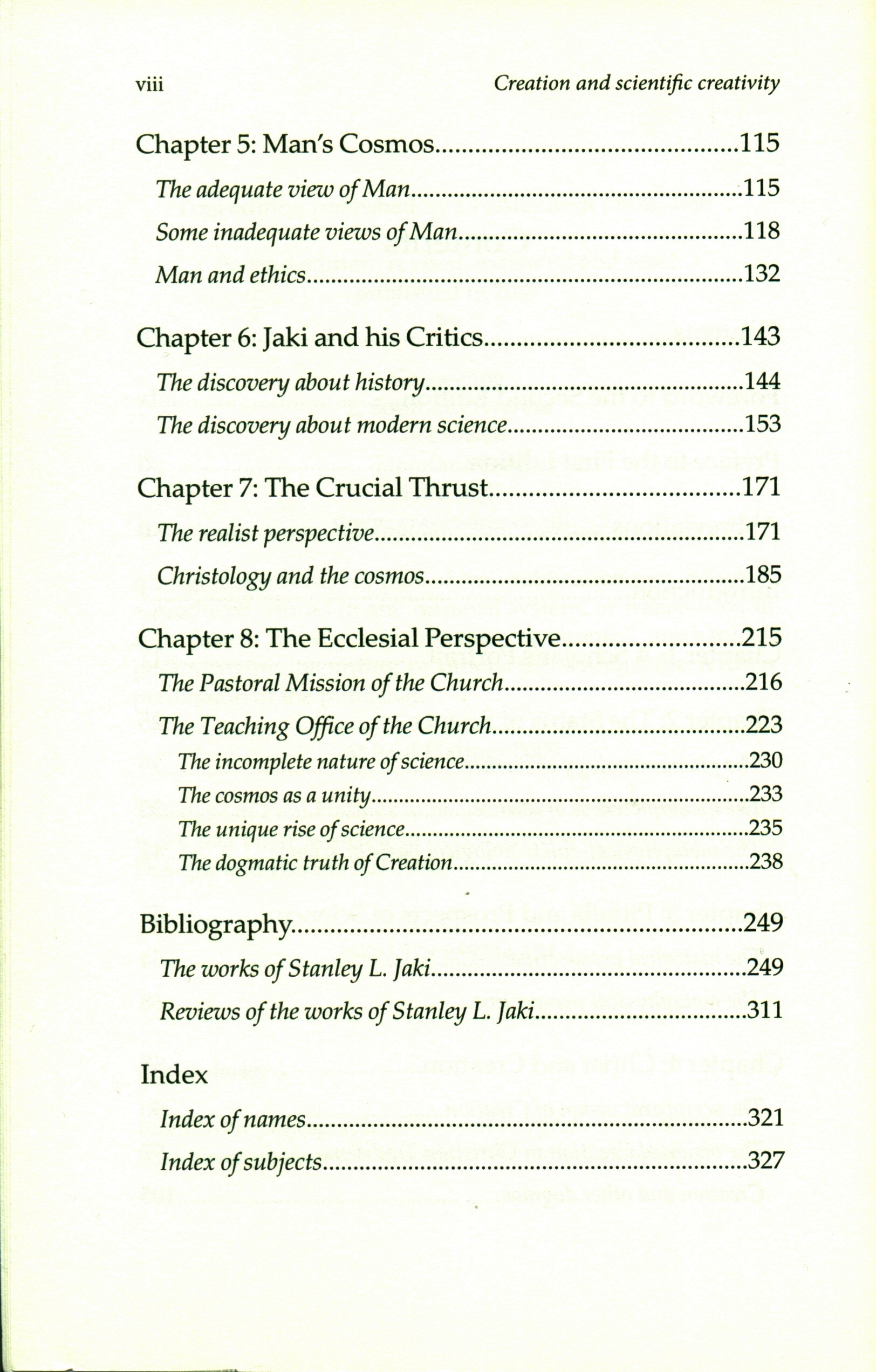
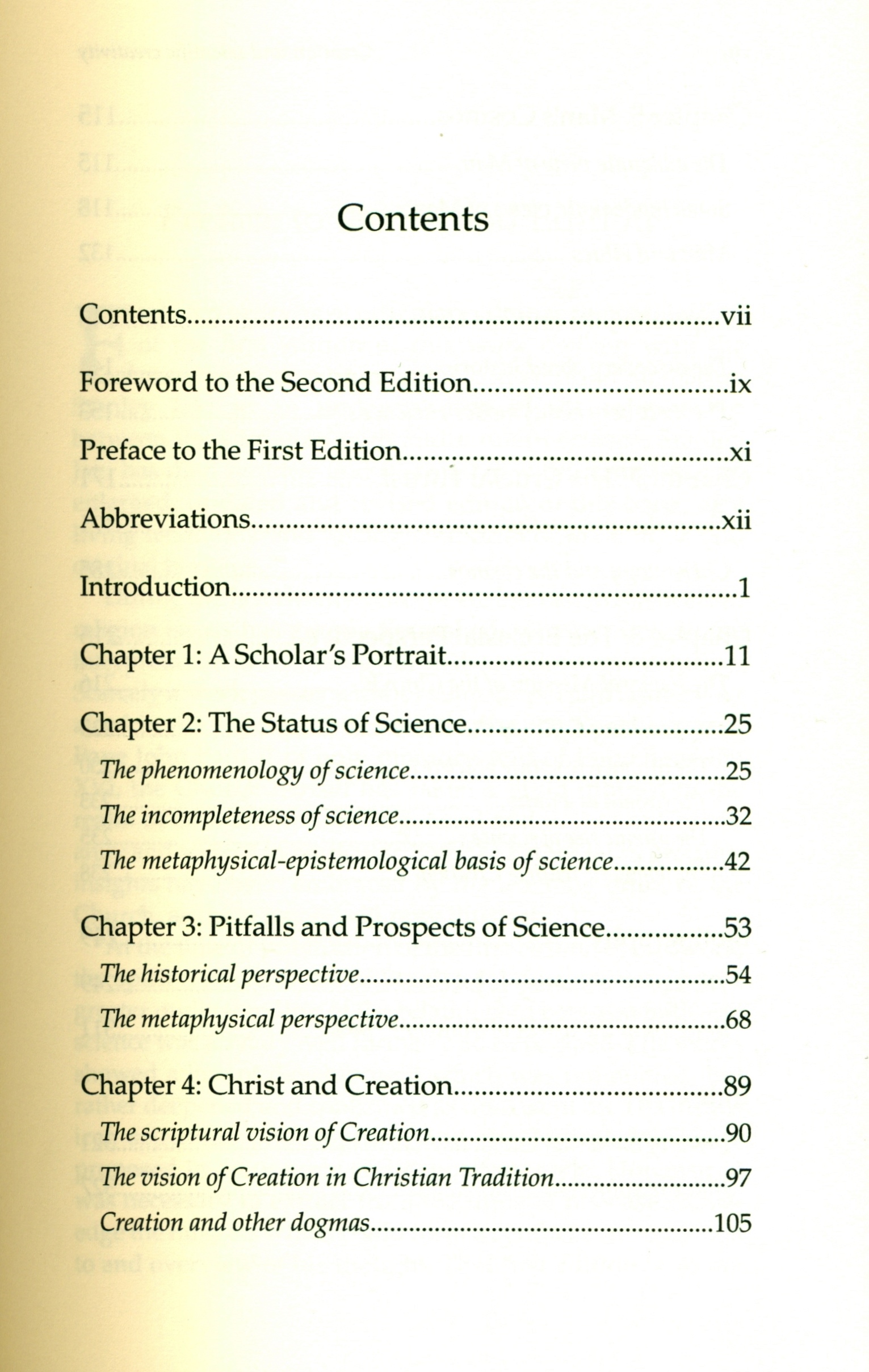
The book contains a list of Stanley Jaki’s publications, up to the first months of
the year 2009, at pp. 249-309.
Also included is a list of reviews of Jaki’s works, at pp. 311-320.
The book is available
here.
The Table of Contents can be seen here:
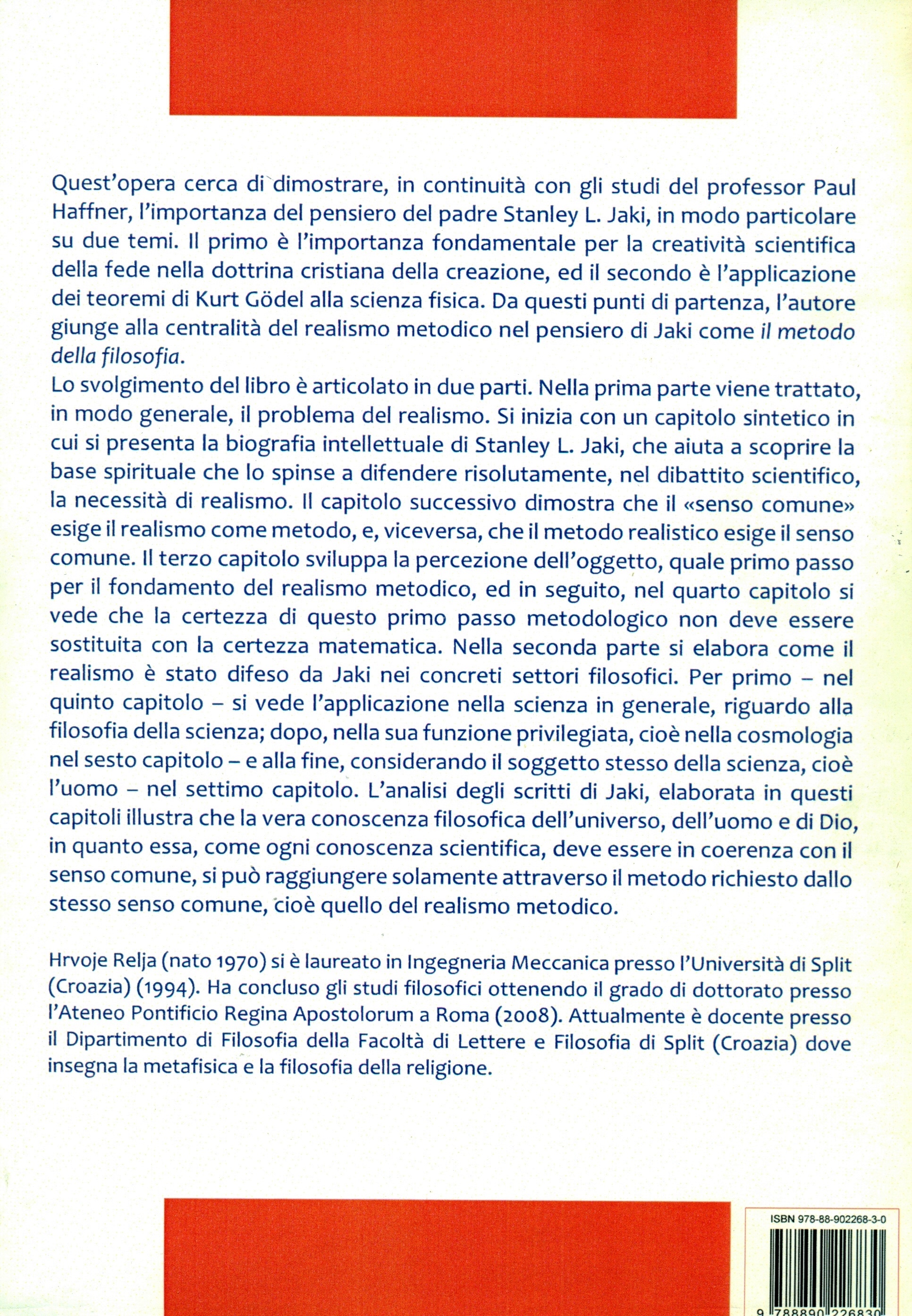
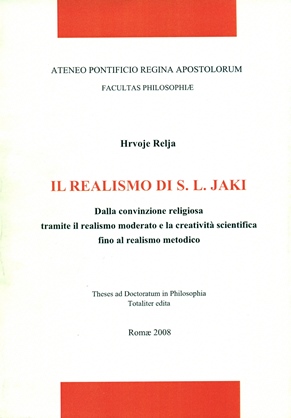 Hrvoje Relja
Il realismo di S.L. Jaki:
Dalla convinzione religiosa tramite il realismo moderato e la creatività scientifica fino al realismo metodico
(Roma: Ateneo Pontificio Regina Apostolorum, 2008), 217pp.
Tesi per il dottorato in filosofia di Hrvoje Relia.
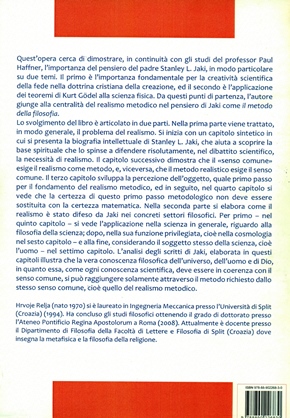
Quest’opera cerca di dimostrare, in continuità con gli studi del professor Paul Haffner, l’importanza del pensiero del padre Stanley L. Jaki, in modo particolare su due temi. Il primo è l’importanza fondamentale per la creatività scientifica della fede nella dottrina cristiana della creazione, ed il secondo è l’applicazione dei teoremi di Kurt Gödel alla scienza fisica. Da questi punti di partenza, l’autore giunge alla centralità del realismo metodico nel pensiero di Jaki come il metodo della filosofia.
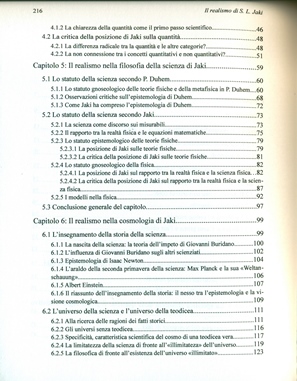
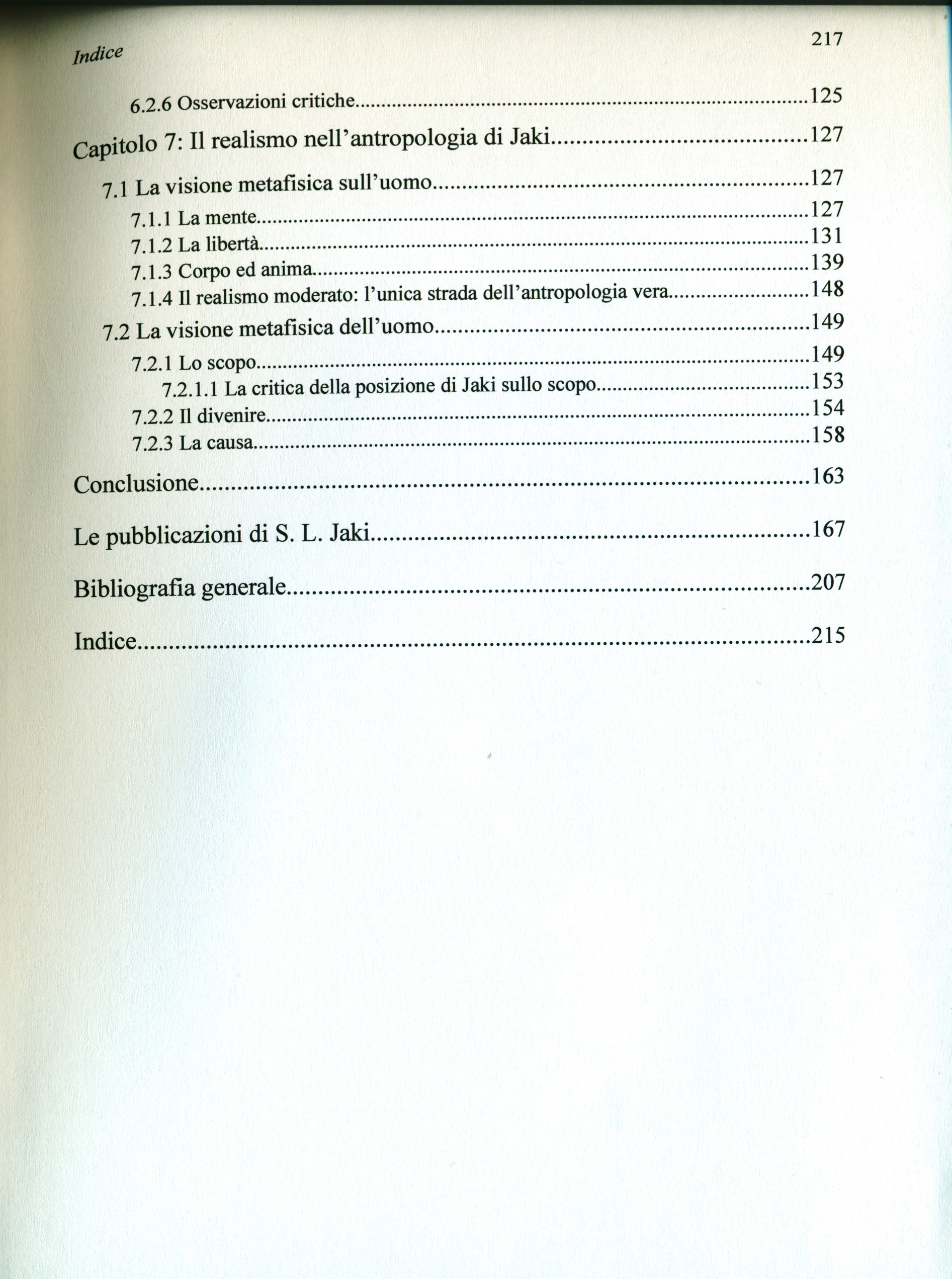
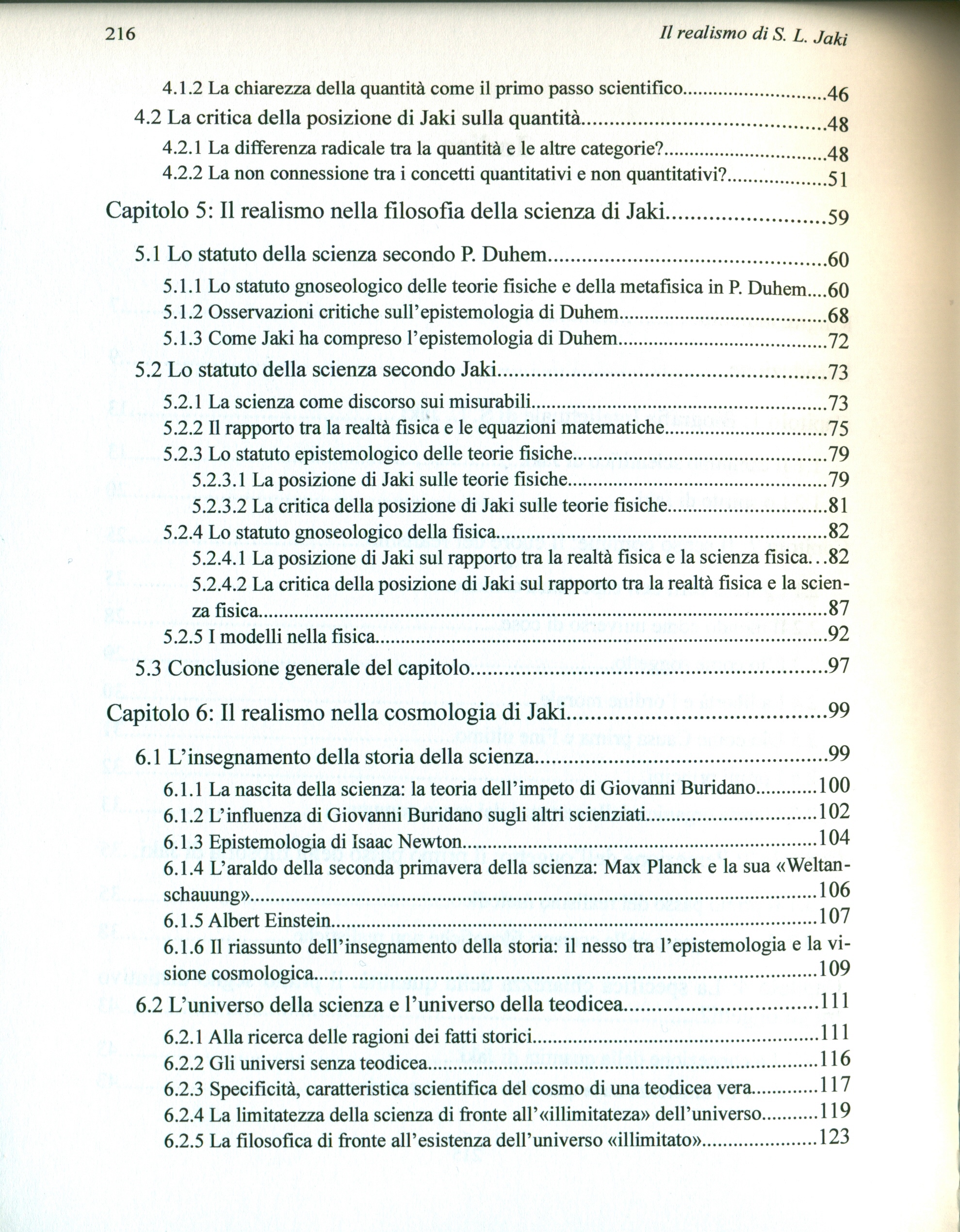
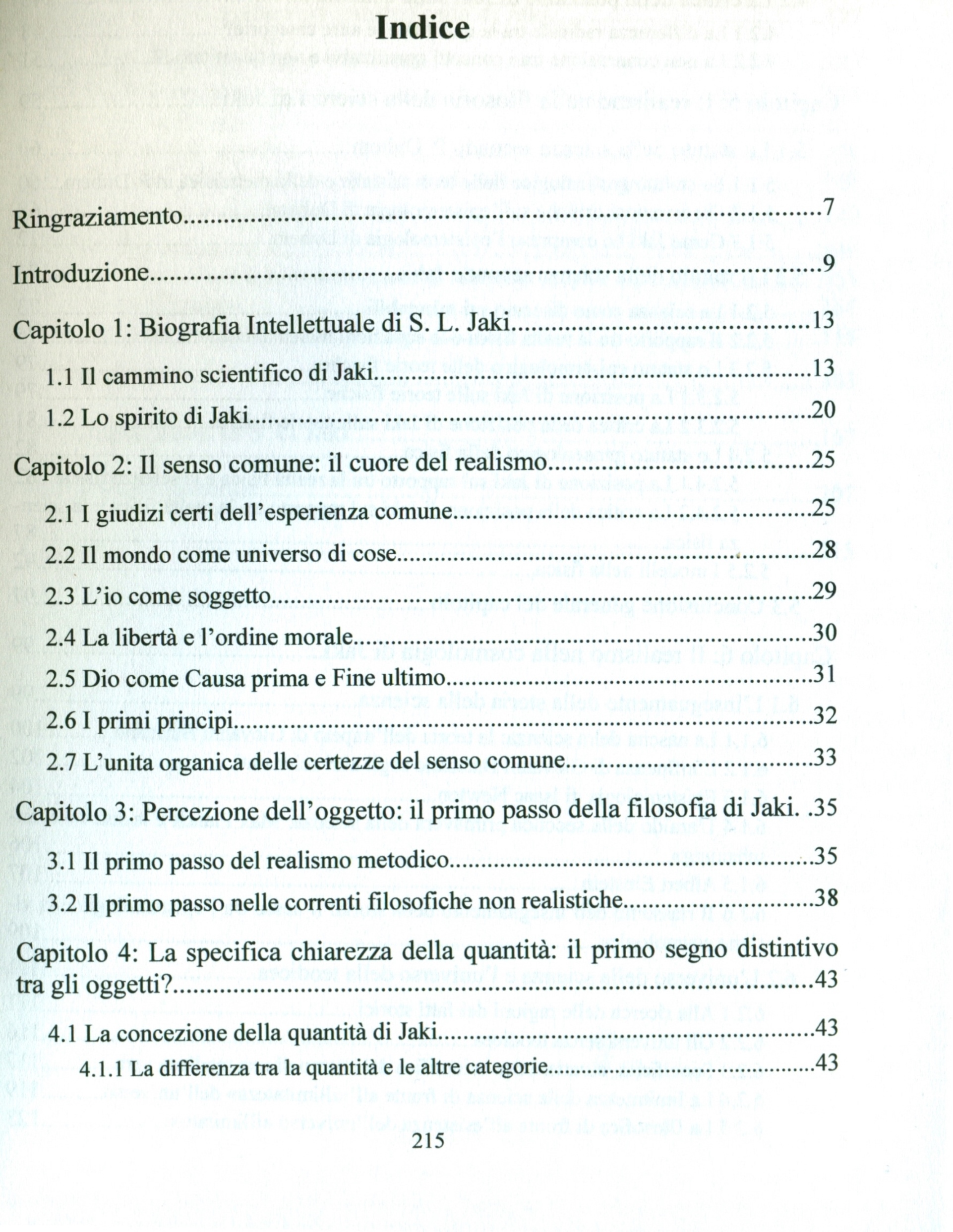
Lo svolgimento del libro è articolato in due parti. Nella prima parte viene trattato, in modo generale, il problema del realismo. Si inizia con un capitolo sintetico in cui si presenta la biografia intellettuale di Stanley L. Jaki, che aiuta a scoprire la base spirituale che lo spinse a difendere risolutamente, nel dibattito scientifico, la necessità di realismo. Il capitolo successivo dimostra che il «senso comune» esige il realismo come metodo, e, viceversa, che il metodo realistico esige il senso comune. Il terzo capitolo sviluppa la percezione dell’oggetto, quale primo passo per il fondamento del realismo metodico, ed in seguito, nel quarto capitolo si vede che la certezza di questo primo passo metodologico non deve essere sostituita con la certezza matematica. Nella seconda parte si elabora come il realismo è stato difeso da Jaki nei concreti settori filosofici. Per primo–nel quinto capitolo–si vede l’applicazione nella scienza in generale, riguardo alla filosofia della scienza; dopo, nella sua funzione privilegiata, cioè nella cosmologia nel sesto capitolo–e alla fine, considerando il soggetto stesso della scienza, cioè l’uomo–nel settimo capitolo. L’analisi degli scritti di Jaki, elaborata in questi capitoli illustra che la vera conoscenza filosofica dell’universo, dell’uomo e di Dio, in quanto essa, come ogni conoscenza scientifica, deve essere in coerenza con il senso comune, si può raggiungere solamente attraverso il metodo richiesto dallo stesso senso comune, cioè quello del realismo metodico.
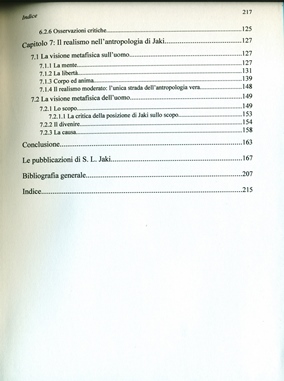
Contiene una lista delle pubblicazioni di Stanley Jaki fino a inizio 2008, alle pp. 167-205.
The above text, in English:
This work seeks to demonstrate, in continuity with the studies of Professor Paul Haffner, the importance of the thought of Father Stanley L. Jaki, focusing on two themes in particular. The first is the fundamental importance of faith in the Christian doctrine of creation for scientific creativity, and the second is the application of Kurt Gödel’s theorems to physical science. From these starting points, the author arrives at the centrality of methodical realism in Jaki’s thought as the method of philosophy.
The book is divided into two parts. The first part deals, in general terms, with the problem of realism. It begins with a brief chapter presenting Stanley L. Jaki’s intellectual biography, which helps to uncover the spiritual foundation that drove him to resolutely defend the necessity of realism in scientific debate. The next chapter demonstrates that ®common sense» requires realism as a method, and, conversely, that the realistic method requires common sense. The third chapter develops the perception of the object, as the first step towards the foundation of methodical realism, and then, in the fourth chapter, we see that the certainty of this first methodological step must not be replaced by mathematical certainty. The second part elaborates on how realism was defended by Jaki in specific philosophical fields. First, in the fifth chapter, we examine its application to science in general, with regard to the philosophy of science; then, in its privileged function, namely, cosmology, in the sixth chapter; and finally, considering the very subject of science, namely, humanity, in the seventh chapter. The analysis of Jaki’s writings, elaborated in these chapters, illustrates that a true philosophical knowledge of the universe, humanity, and God, since it, like all scientific knowledge, must be consistent with common sense, can only be achieved through the method required by common sense itself, namely, that of methodical realism.
Il libro è disponibile / The book is available;
qui / here.
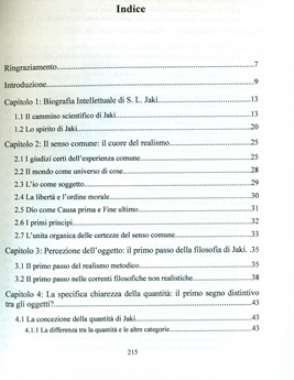
L’Indice del libro si può vedere qui:
Jáki Szaniszló László
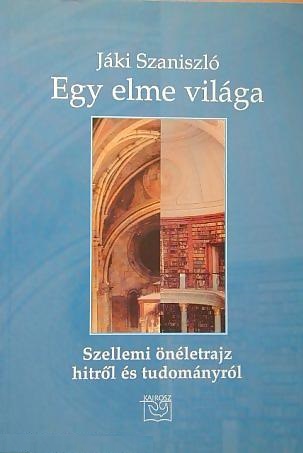 Egy elme világa - Szellemi önéletrajz hitről és tudományról
(Budapest: Kairosz Kiadó, 2003), 440pp.
Hungarian translation by Boldizsár Fejérvári of
A Mind’s Matter: An Intellectual Autobiography
Stanley Jaki
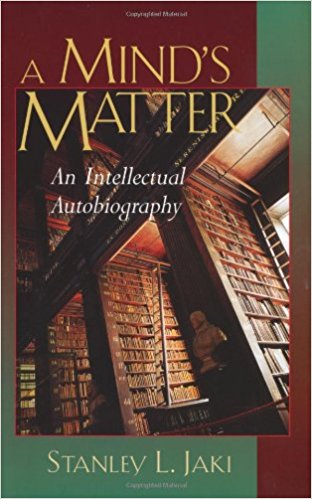 A Mind’s Matter: An Intellectual Autobiography
(Grand Rapids, MI: Wm. B. Eerdmans, 2002), xiv + 309pp.
A Mind’s Matter: An Intellectual Autobiography
(Grand Rapids, MI: Wm. B. Eerdmans, 2002), xiv + 309pp.
In writing A Mind’s Matter one of his generation’s finest philosophers looks back at his own scholarship and the intellectual framework that produced it—not least his staunch belief in the crucial role of religious convictions in academic thought.
Stanley Jaki’s explosive productivity canvasses a wide range of relevant topics, most notably the history of science, and has earned him such signal honors as the Gifford lectureship and the Templeton Prize. A Hungarian by birth, Jaki has since 1950 lived in the United States, where one’s religion is supposed to be a strictly private affair. Yet as a Catholic priest of the Benedictine Order, Jaki has never made secret his dislike of the "rule" that expects to eliminate religious factors from the so-called academic equation. To his mind those factors matter very much indeed.
In this powerful intellectual autobiography, Jaki reflects on the course of his thinking, asking in what sense the religious factors he holds dear can also promote scholarship, particularly in the sensitive field of science and religion. The answer is set forth in a combination of topical and chronological meditations that will be of great value to anyone pursuing academic work today.
Contains a list of the author’s publications, up to the first months of
the year 2002, at pp. 259-309.
The book is available
here.
Contact:
For any remark about this page, please contact Antonio Colombo
(azc100 at gmail dot com)
 On April 24, 2024, at Seton Hall University leading scholars from throughout
the world in theology, philosophy, and the sciences gathered for the 2024
Stanley Jaki International Congress. This event marked the centenary of
Father Stanley Jaki’s birth in 1924, and examined the enduring significance of
his thought.
On April 24, 2024, at Seton Hall University leading scholars from throughout
the world in theology, philosophy, and the sciences gathered for the 2024
Stanley Jaki International Congress. This event marked the centenary of
Father Stanley Jaki’s birth in 1924, and examined the enduring significance of
his thought.
 La materia di una mente: Un’autobiografia intellettuale
 L’eredità di Padre Stanley L. Jaki, a dieci anni dalla sua scomparsa
The Legacy of Fr. Stanley L. Jaki, ten years after his death
L’eredità di Padre Stanley L. Jaki, a dieci anni dalla sua scomparsa
The Legacy of Fr. Stanley L. Jaki, ten years after his death
 Our Capital, Budapest has received the great honor after 1938 for the second time that the Holy Father - this time pope Francis - has appointed Budapest for the 52nd International Eucharistic Congress’ venue. The organizing committee, with the support of Péter Cardinal Erdő and János Áder President of the Republic decided to organize an international conference with the title: Faith, Science and Community. However, in December of 2019 a new virus (SARS-CoV-2) started to spread all around the world and has prevented the Eucharistic Congress and the scientific conference in Budapest to be held in 2020.
The ecumenical prayer week has just ended and the scientifical works made by the participants of the conference will be published in February to make available the ideas and thoughts of scientists of different belief, philosophers and theologians about the essence of the eucharist to all interested and participants of the Eucharistic Congress which shall be organized and held in September of 2021.
Our Capital, Budapest has received the great honor after 1938 for the second time that the Holy Father - this time pope Francis - has appointed Budapest for the 52nd International Eucharistic Congress’ venue. The organizing committee, with the support of Péter Cardinal Erdő and János Áder President of the Republic decided to organize an international conference with the title: Faith, Science and Community. However, in December of 2019 a new virus (SARS-CoV-2) started to spread all around the world and has prevented the Eucharistic Congress and the scientific conference in Budapest to be held in 2020.
The ecumenical prayer week has just ended and the scientifical works made by the participants of the conference will be published in February to make available the ideas and thoughts of scientists of different belief, philosophers and theologians about the essence of the eucharist to all interested and participants of the Eucharistic Congress which shall be organized and held in September of 2021.
 On April 15, 2015, a diverse international group of scholars with
expertise in fields such as philosophy, theology, chemistry,
physics, engineering and computer science, gathered at Seton Hall
University (SHU) in South Orange, New Jersey, USA for the Father
Jaki International Congress.
On April 15, 2015, a diverse international group of scholars with
expertise in fields such as philosophy, theology, chemistry,
physics, engineering and computer science, gathered at Seton Hall
University (SHU) in South Orange, New Jersey, USA for the Father
Jaki International Congress.
 Lucía Guerra Menéndez, Rafael Pascual, Antonio Colombo (eds.)
Proceedings of the Summer Course
Lucía Guerra Menéndez, Rafael Pascual, Antonio Colombo (eds.)
Proceedings of the Summer Course
 Peter Floriani
 Stacy Ann Trasancos
 Commemorazione di Padre Stanley Jaki OSB
 Stacy Ann Trasancos
 Hrvoje Relja
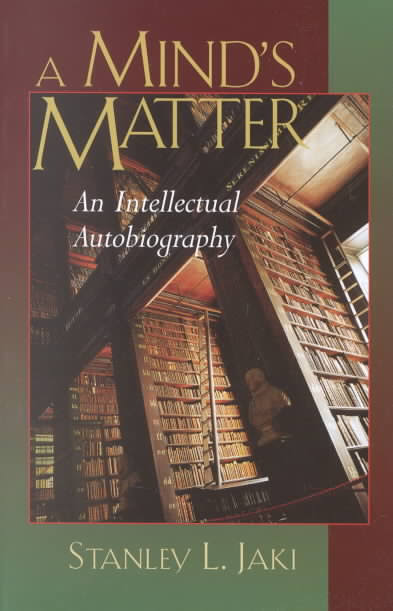 A Mind’s Matter: An Intellectual Autobiography
(Grand Rapids, MI: Wm. B. Eerdmans, 2002), xiv + 309pp.
A Mind’s Matter: An Intellectual Autobiography
(Grand Rapids, MI: Wm. B. Eerdmans, 2002), xiv + 309pp.